DyeConverter · Editorial
Field notes onnatural color.
Short, illustrated notes from the front of synthetic dye reformulation: how natural colors behave, why they fail, and what the 2027 phase-out means at the bench. Every post has its own page with the full text, indexed and citable.
66 posts ·Long-form articles
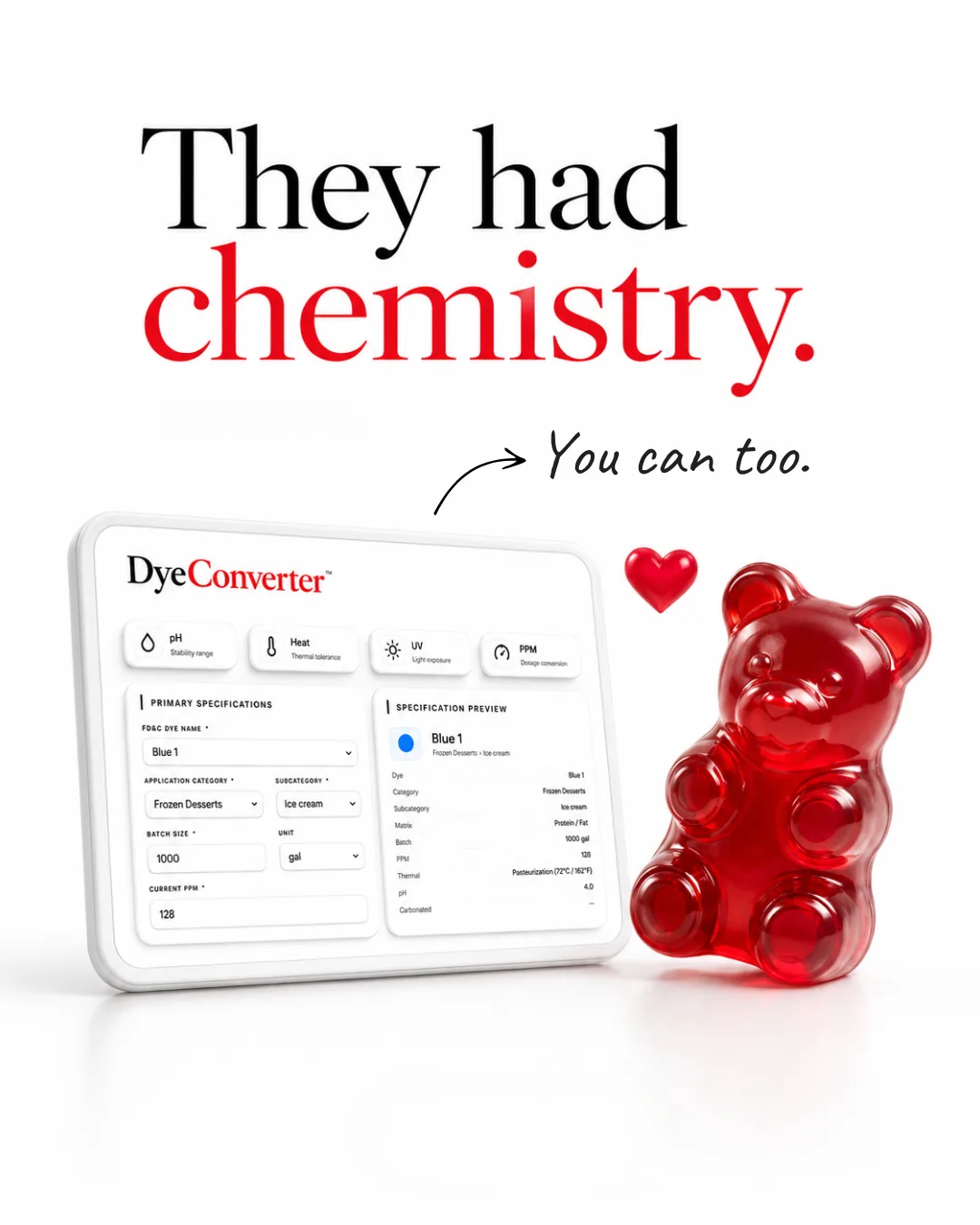
Some matches are just chemistry.
Some matches are just chemistry. A natural colorant and your product either get along, through the heat, the pH, the light, the shelf life, or they don't. The trick is knowing which pairing works before you commit. DyeConverter™ plays…
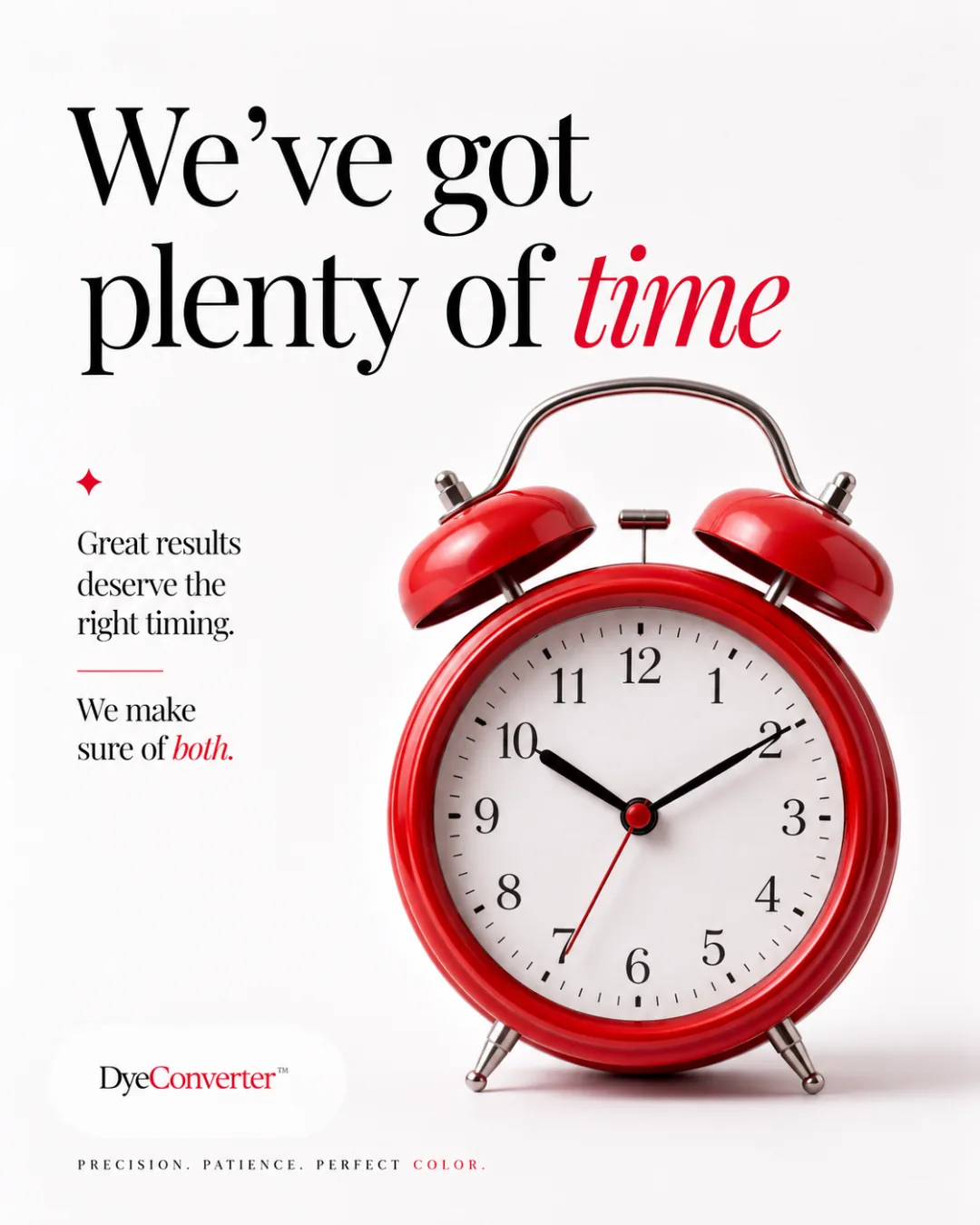
They say time stops for no one.
They say time stops for no one. That is especially true for natural dyes. A synthetic dye can sit on a shelf for years without blinking. Natural color is a different story: it fades, it shifts, it browns. Time works against it from the…
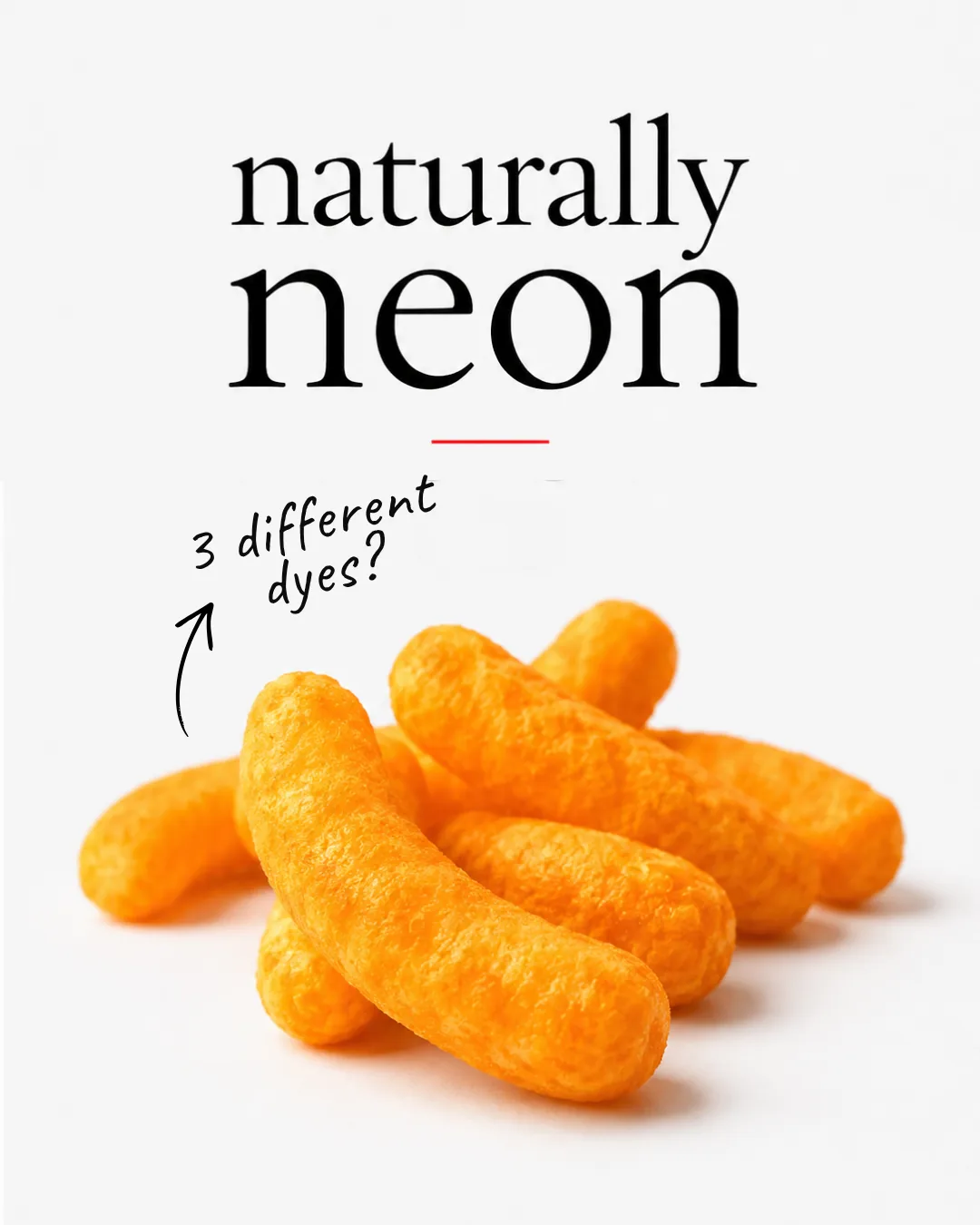
The cheese puff wears the loudest orange in the snack aisle.
The cheese puff wears the loudest orange in the snack aisle. Right now, that glow comes from a single synthetic dye, Yellow 6. Here's the myth worth busting: going natural does not mean going pale. You can keep every bit of that neon. You…
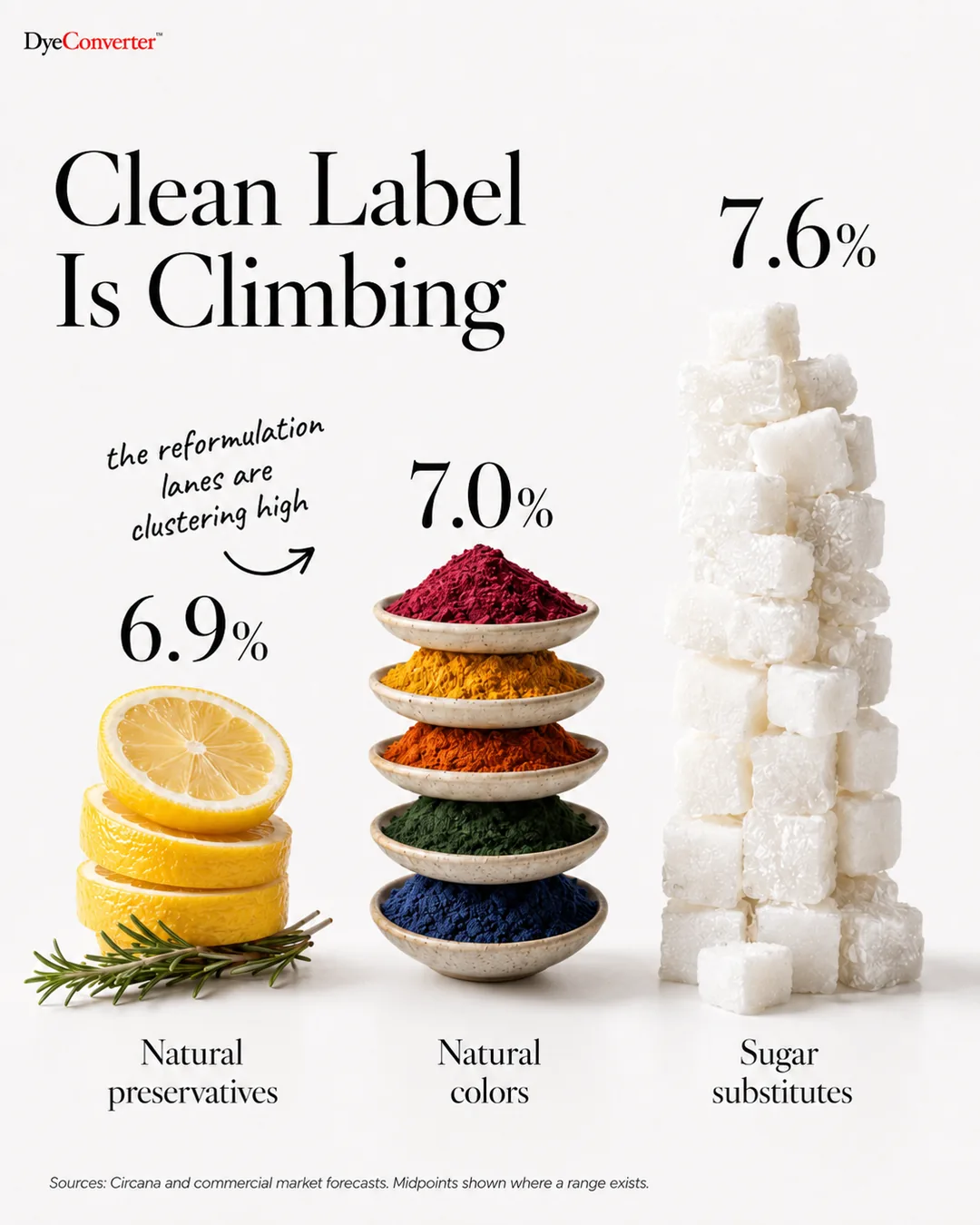
Zoom out from color and a pattern appears.
Zoom out from color and a pattern appears. Natural preservatives, forecast to grow about 6.9%. Natural colors, about 7.0%. Sugar substitutes, about 7.6%. Different ingredients, different suppliers, different science, all climbing at nearly…
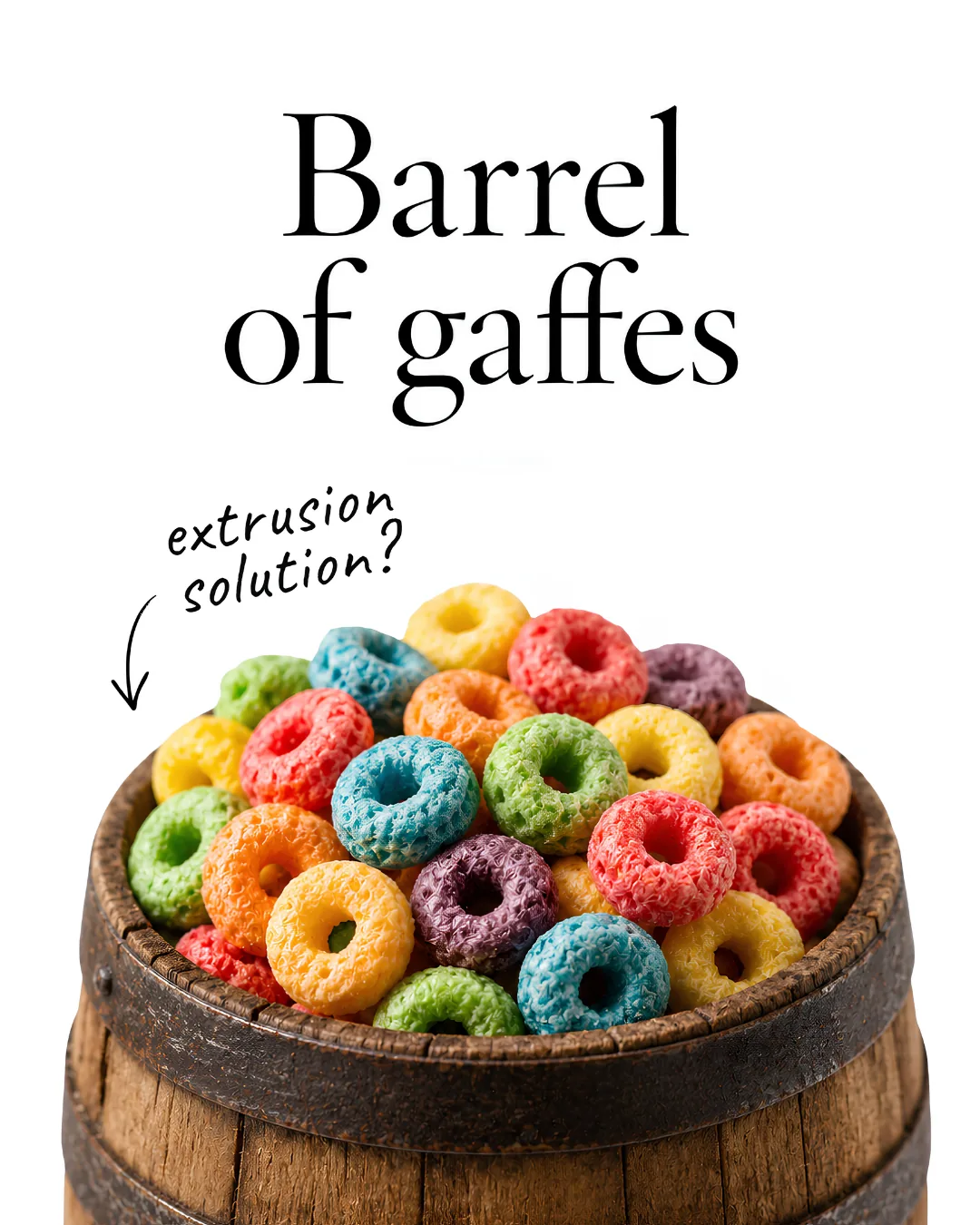
That rainbow ring survived something brutal.
That rainbow ring survived something brutal. To shape it, colored dough is forced through an extruder, a steel barrel of high heat, pressure, and shear. Synthetic dyes shrug it off. Most naturals don't. Beetroot can lose half its color in…
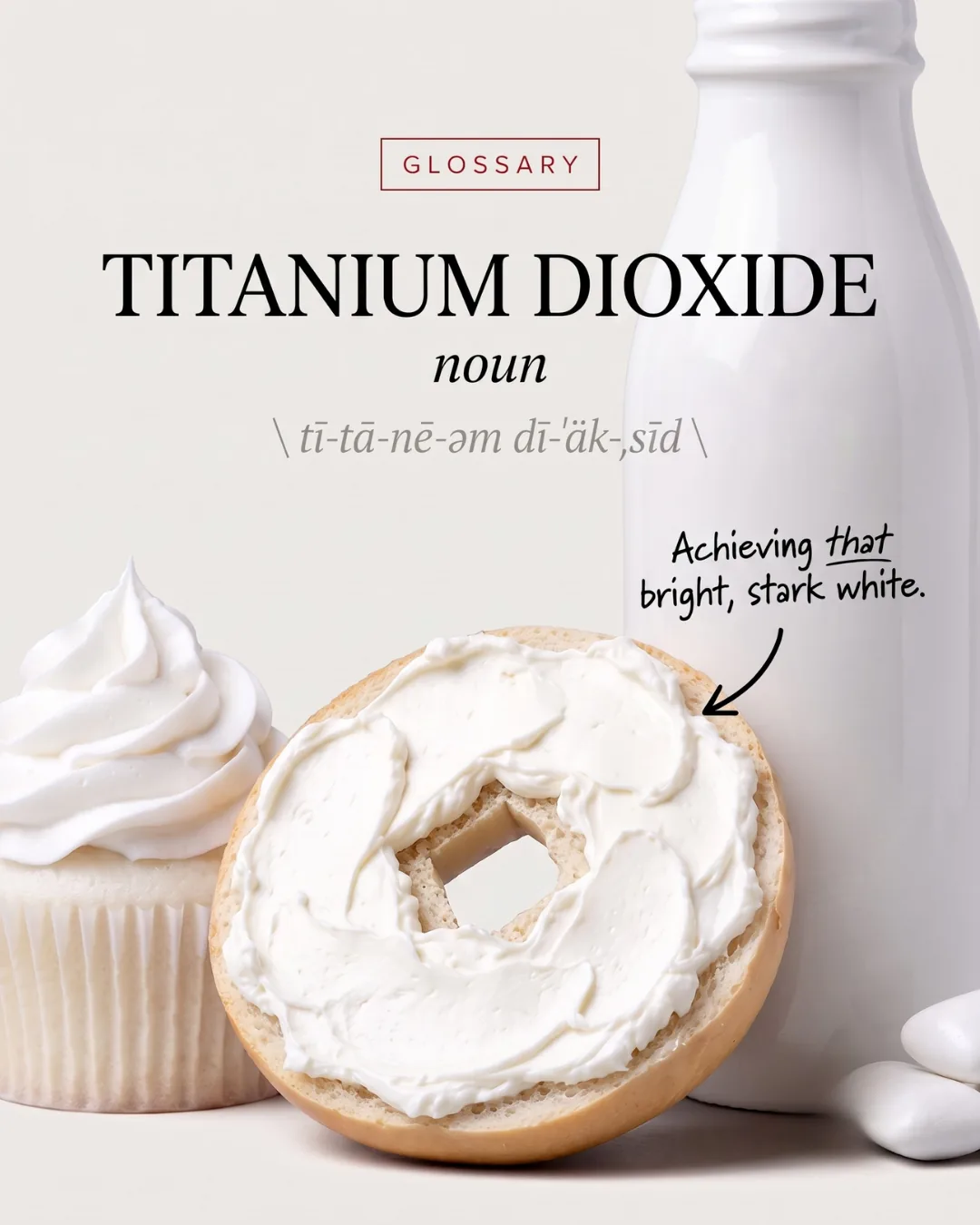
Titanium dioxide is the ingredient behind that bright, stark, almost unreal white.
Titanium dioxide is the ingredient behind that bright, stark, almost unreal white. The frosting that glows. The coating that looks freshly painted. The candy shell with no undertone at all. The EU pulled it from food in 2022. It is still…
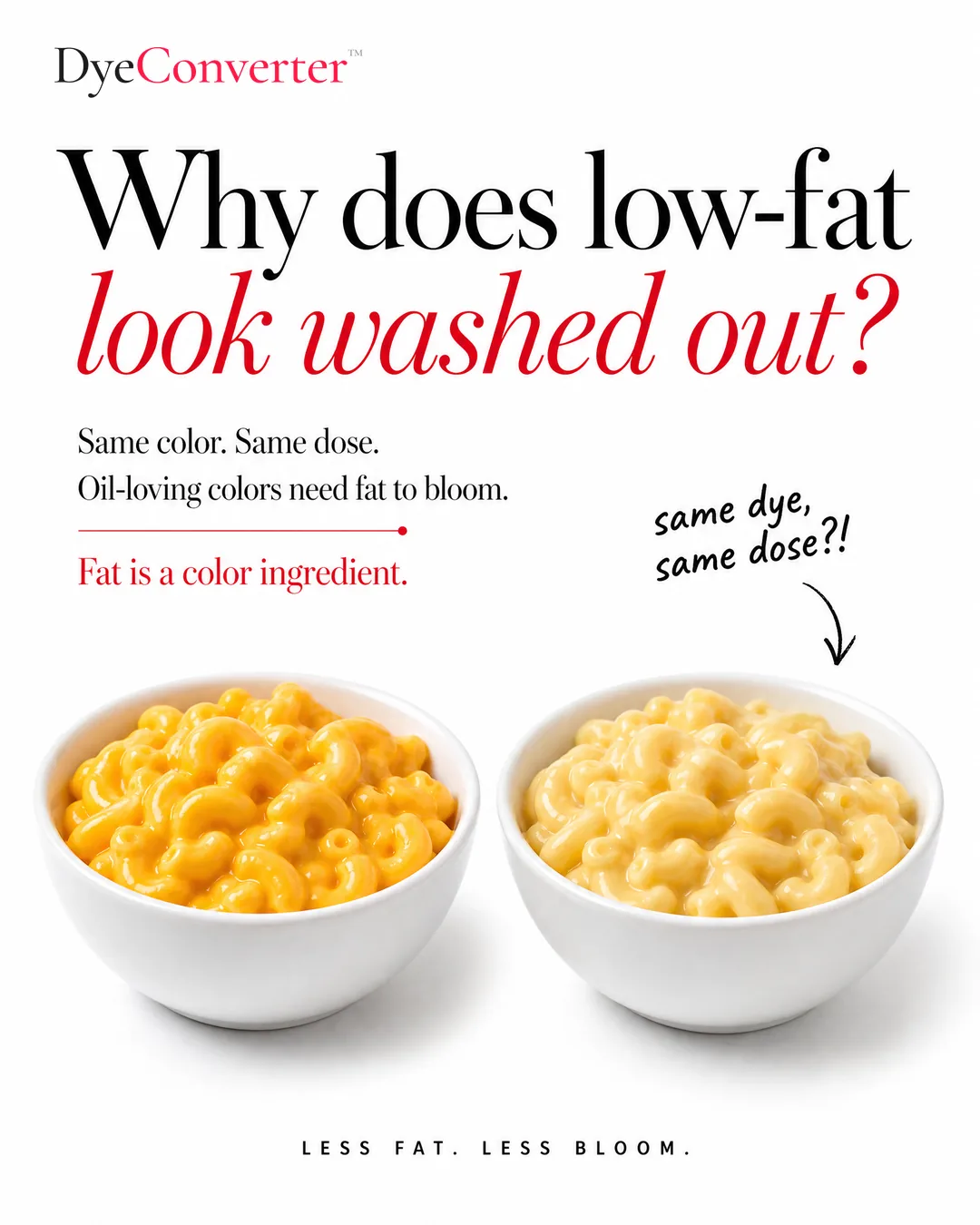
Same color. Same dose. So why does the low-fat mac and cheese look like it needs a nap?
Same color. Same dose. So why does the low-fat mac and cheese look like it needs a nap? Blame the fat. Or rather, the missing fat. That golden orange usually comes from annatto, paprika or beta-carotene. They're carotenoids, and…
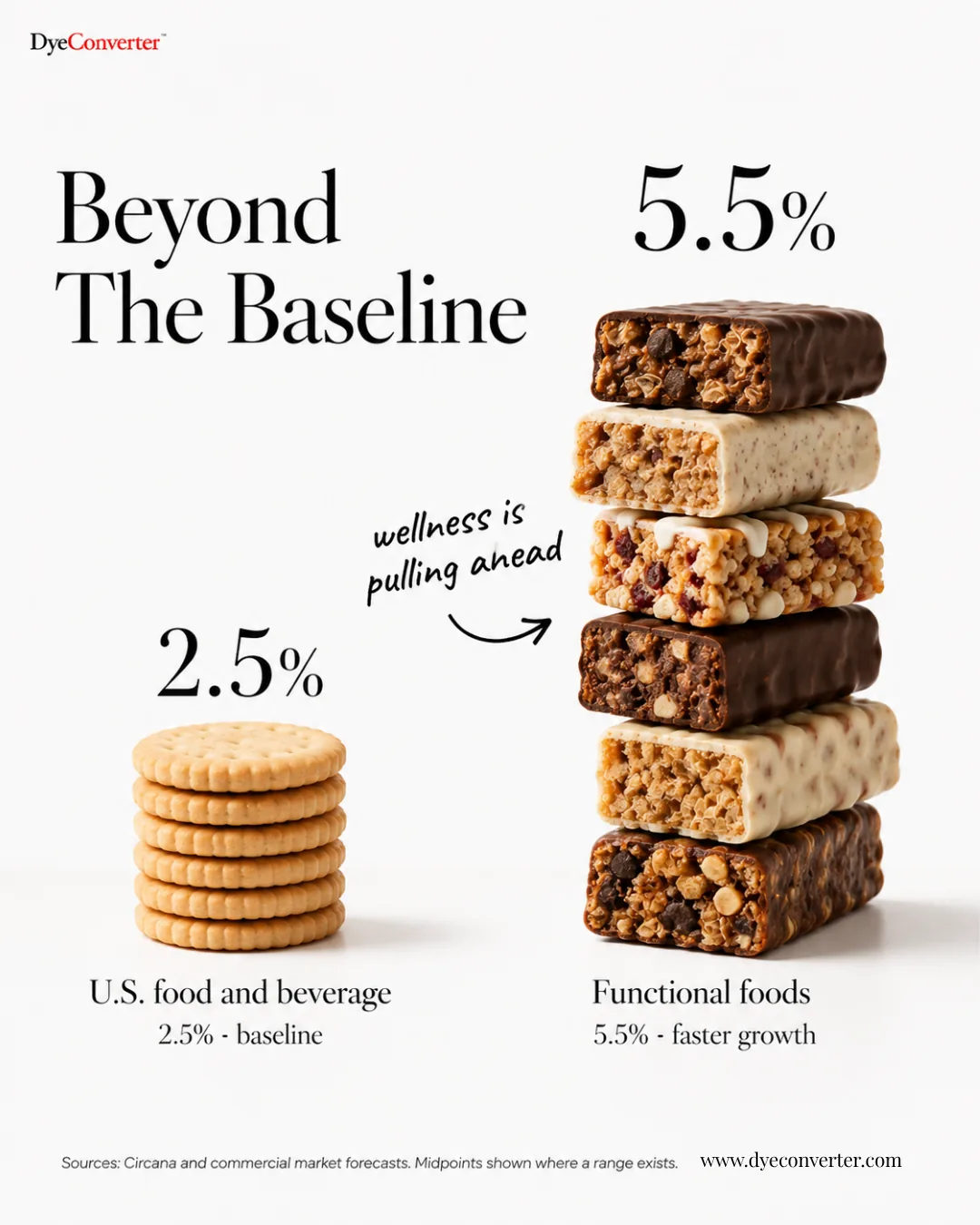
The center of the store is growing 2.5%.
The center of the store is growing 2.5%. The wellness aisle is growing more than double that. Functional foods, the ones people buy for protein, fiber, probiotics, and real benefit, are forecast to grow about 5.5%. Packaged food overall…
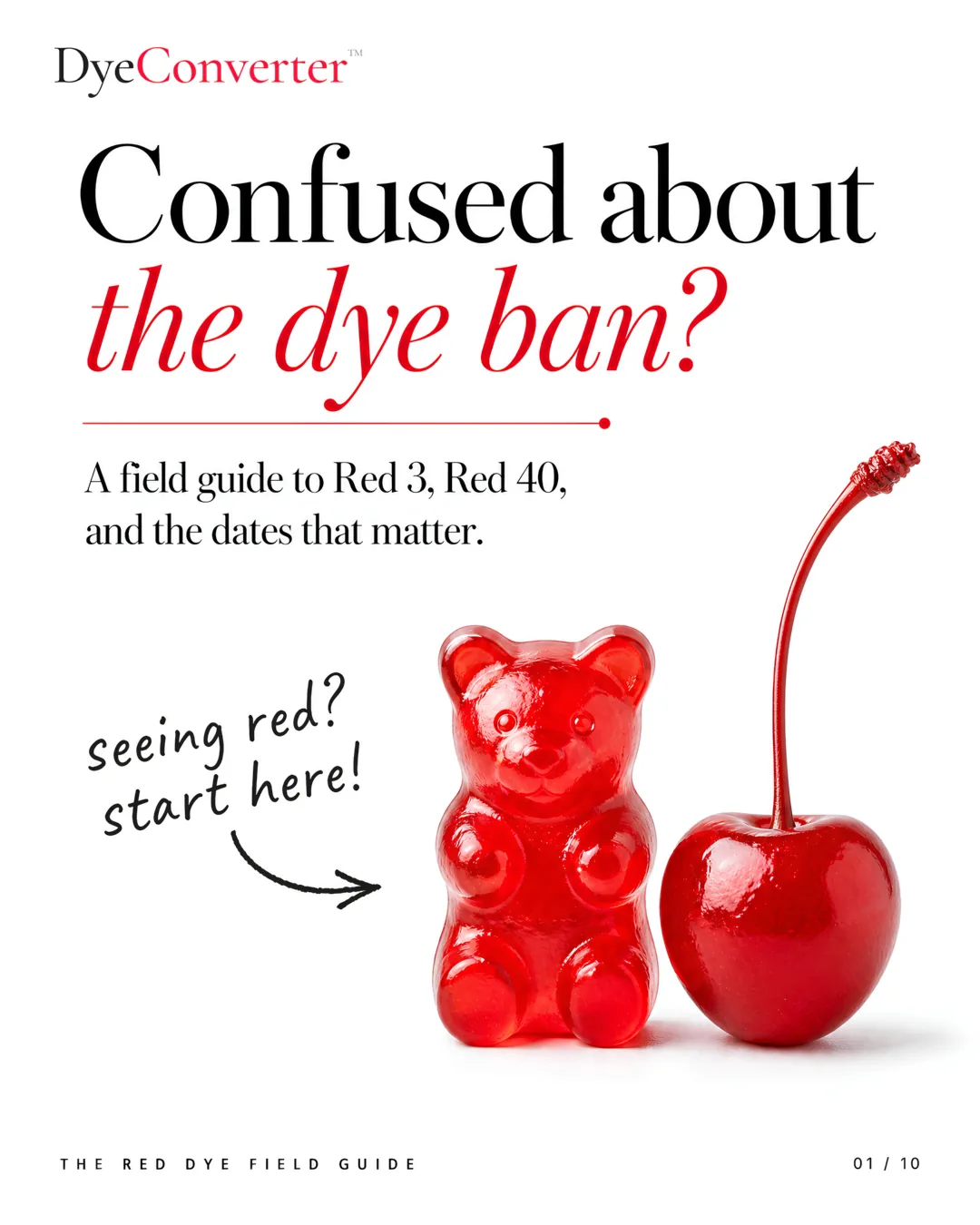
Confused about the dye ban? You're not alone, and the rules keep moving.
Confused about the dye ban? You're not alone, and the rules keep moving. The FDA quietly pushed its target for Red 40 and five other petroleum dyes from the end of 2026 to the end of 2027. West Virginia's statewide ban is on hold in…
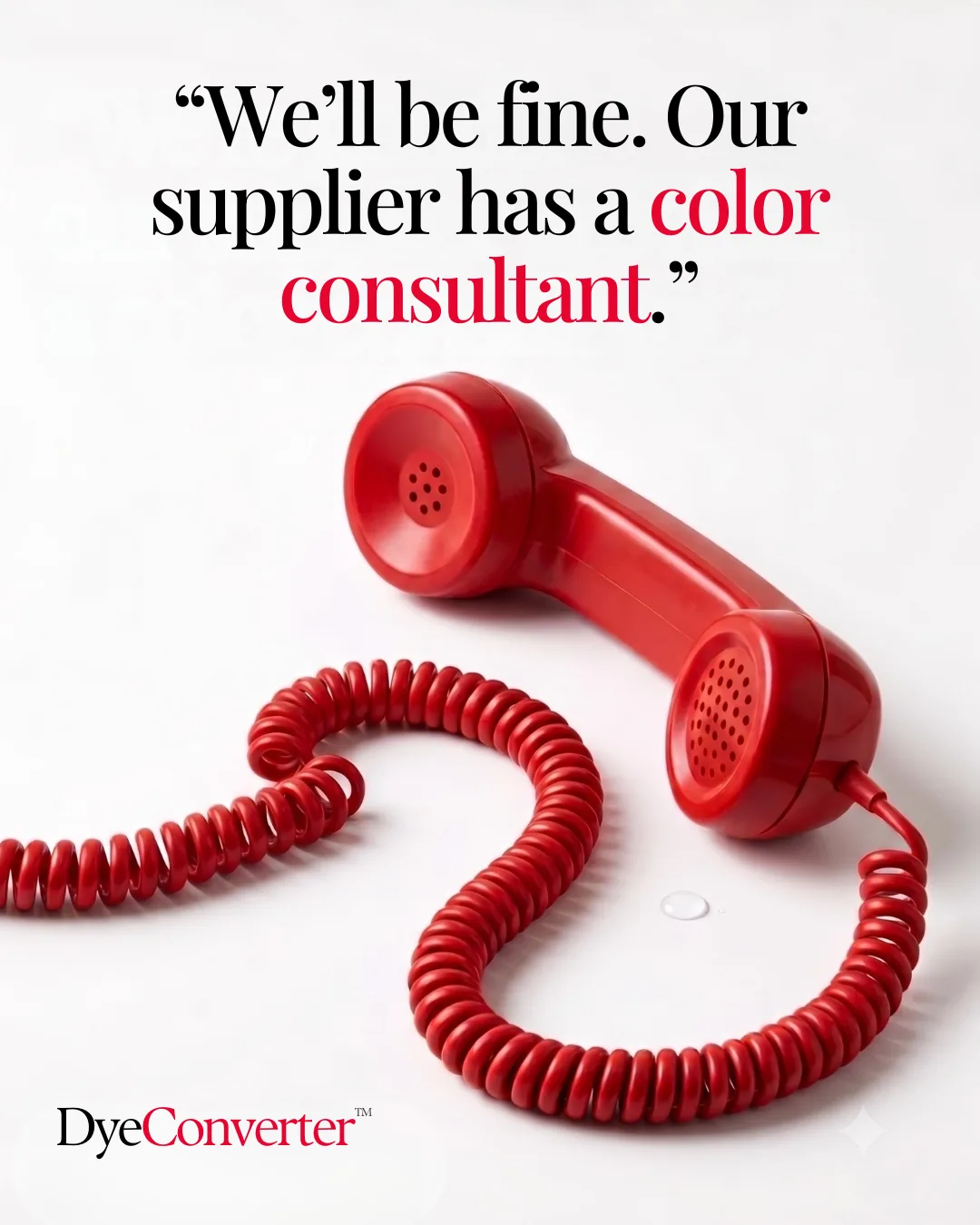
That sentence assumes the consultant has the bandwidth to help you.
That sentence assumes the consultant has the bandwidth to help you. Right now, they might not. The natural color market is overrun. Every dye and color house is being squeezed from both ends at once: a supply chain scrambling to keep up…
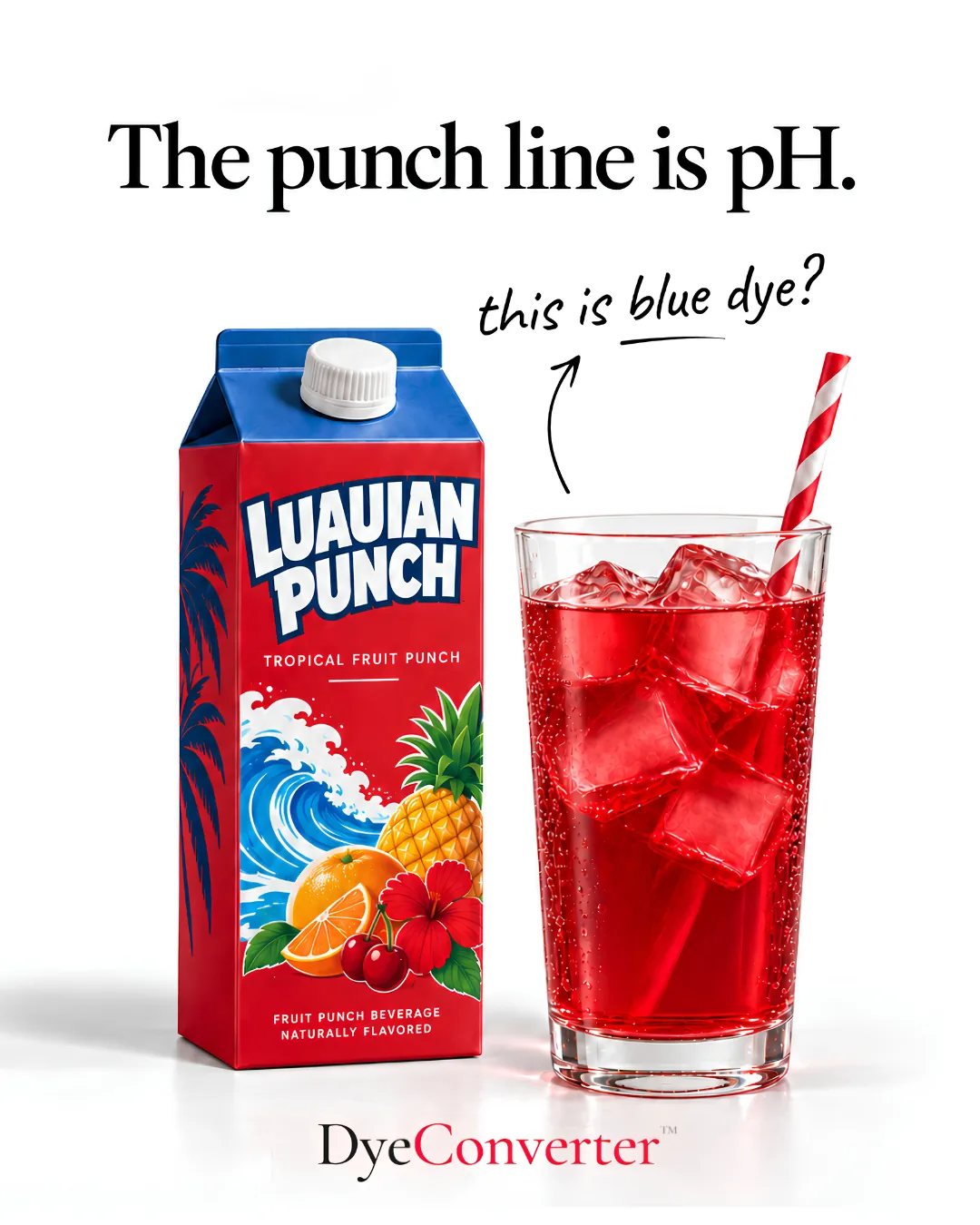
Blue in the bottle. Red in the glass.
Blue in the bottle. Red in the glass. Same dye. Butterfly pea flower extract is the color that makes lattes blue. Drop it into tropical punch and it doesn't stay blue; it doesn't want to. The pigment is a family of ternatins, delphinidin…
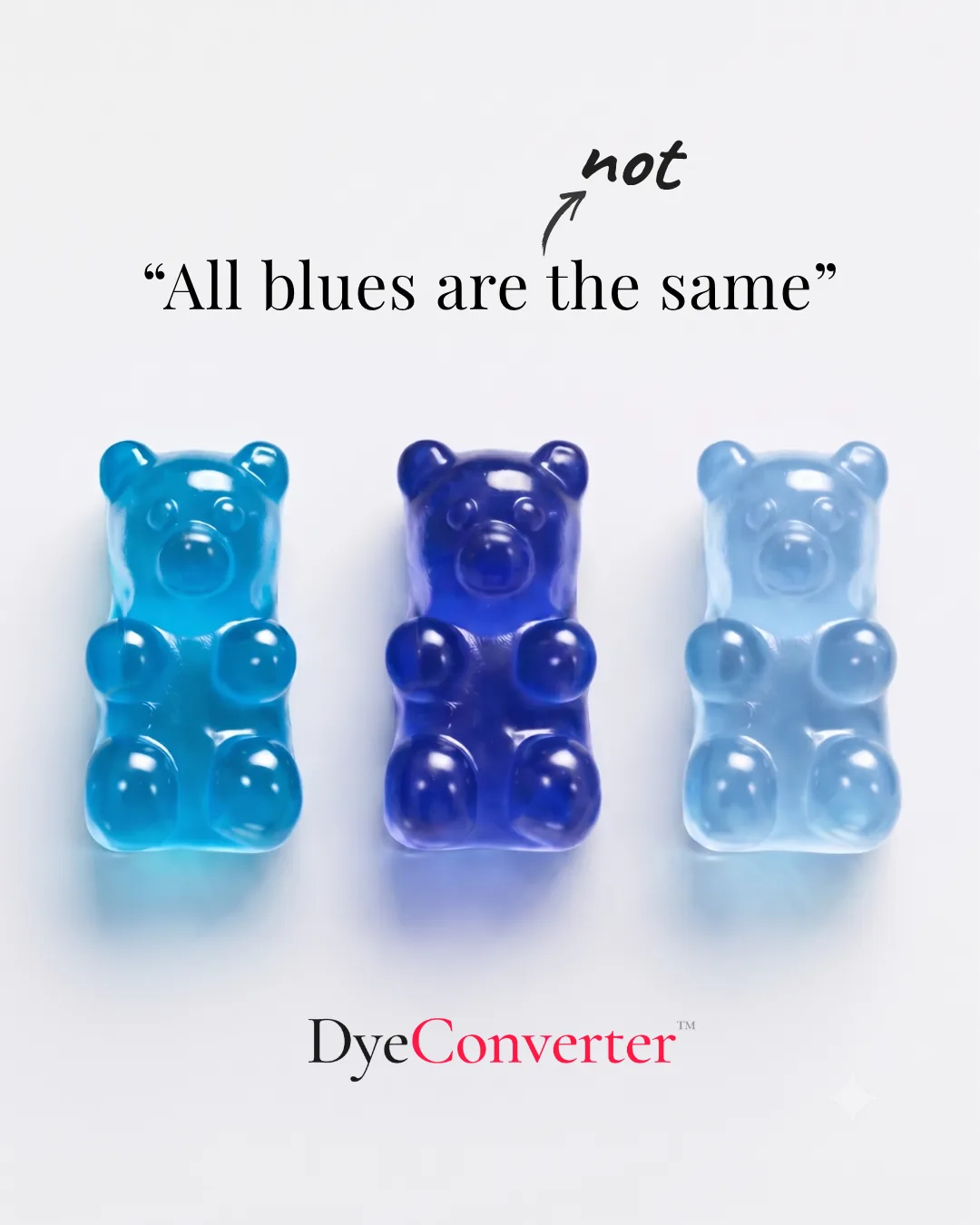
"All blues are the same." They are not.
"All blues are the same." They are not. There are only a handful of natural blues, and every one behaves differently. Spirulina is a protein: vivid, but heat and light tear it apart. Gardenia blue, cleared by the FDA in 2025, is far more…
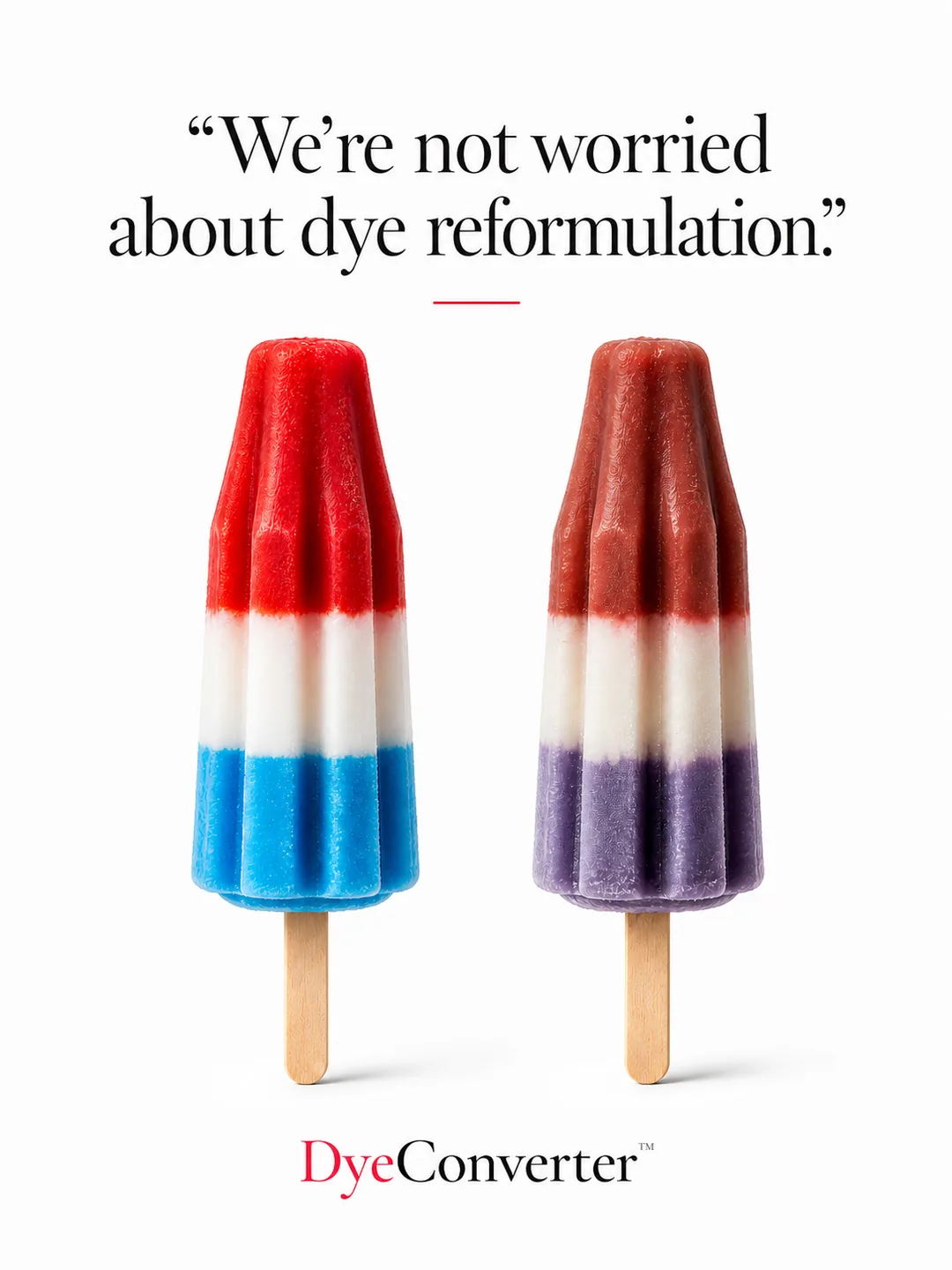
Look closely. One of these is a bomb pop.
Look closely. One of these is a bomb pop. The other is what happens when you treat the switch to natural color as a one-to-one swap. An easy layup. The red did not stay red. Beetroot is a betalain, and betalains break down under heat and…
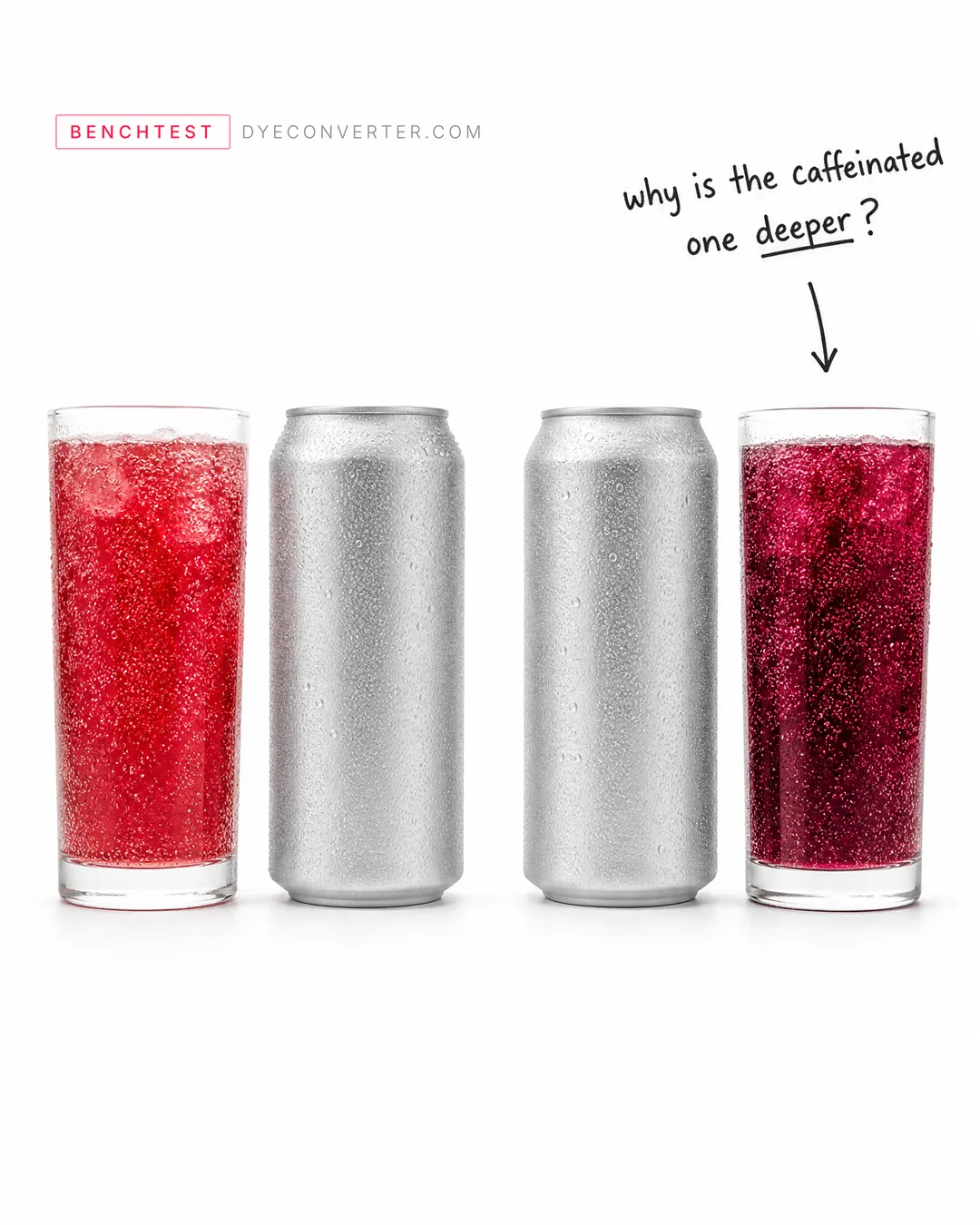
Same berry. Same color dose.
Same berry. Same color dose. The caffeinated can pours deeper and holds its color longer. The caffeine isn't coloring anything. It's standing guard. Here's the chemistry. Berry reds are anthocyanins, and at sparkling-drink pH they live one…
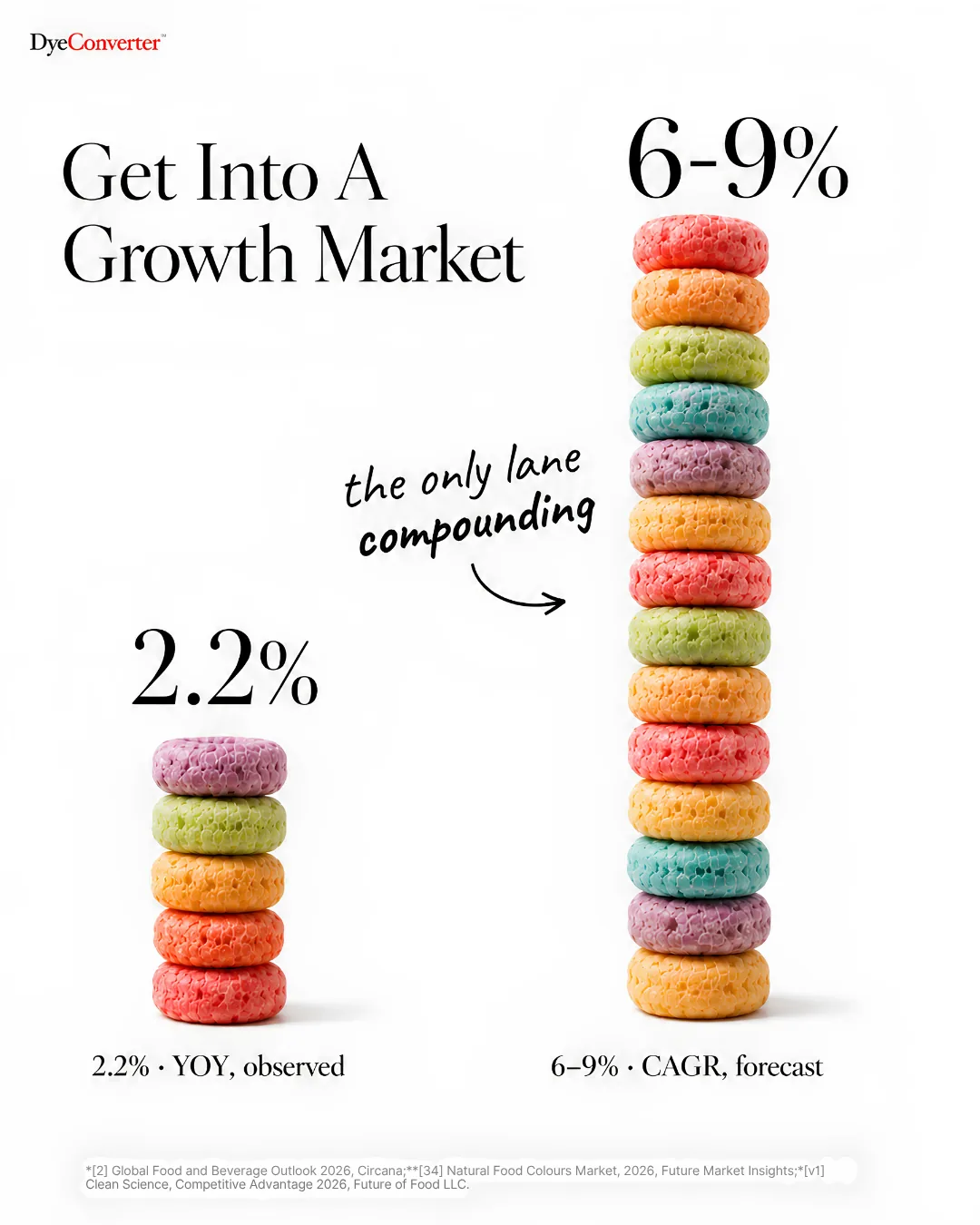
Packaged food grew 2.2% in the first half of this year.
Packaged food grew 2.2% in the first half of this year. Volume was flat. The ingredients replacing its ingredients are forecast to grow 6 to 9. That gap reframes everything. Reformulation keeps getting filed as a compliance line, absorbed…
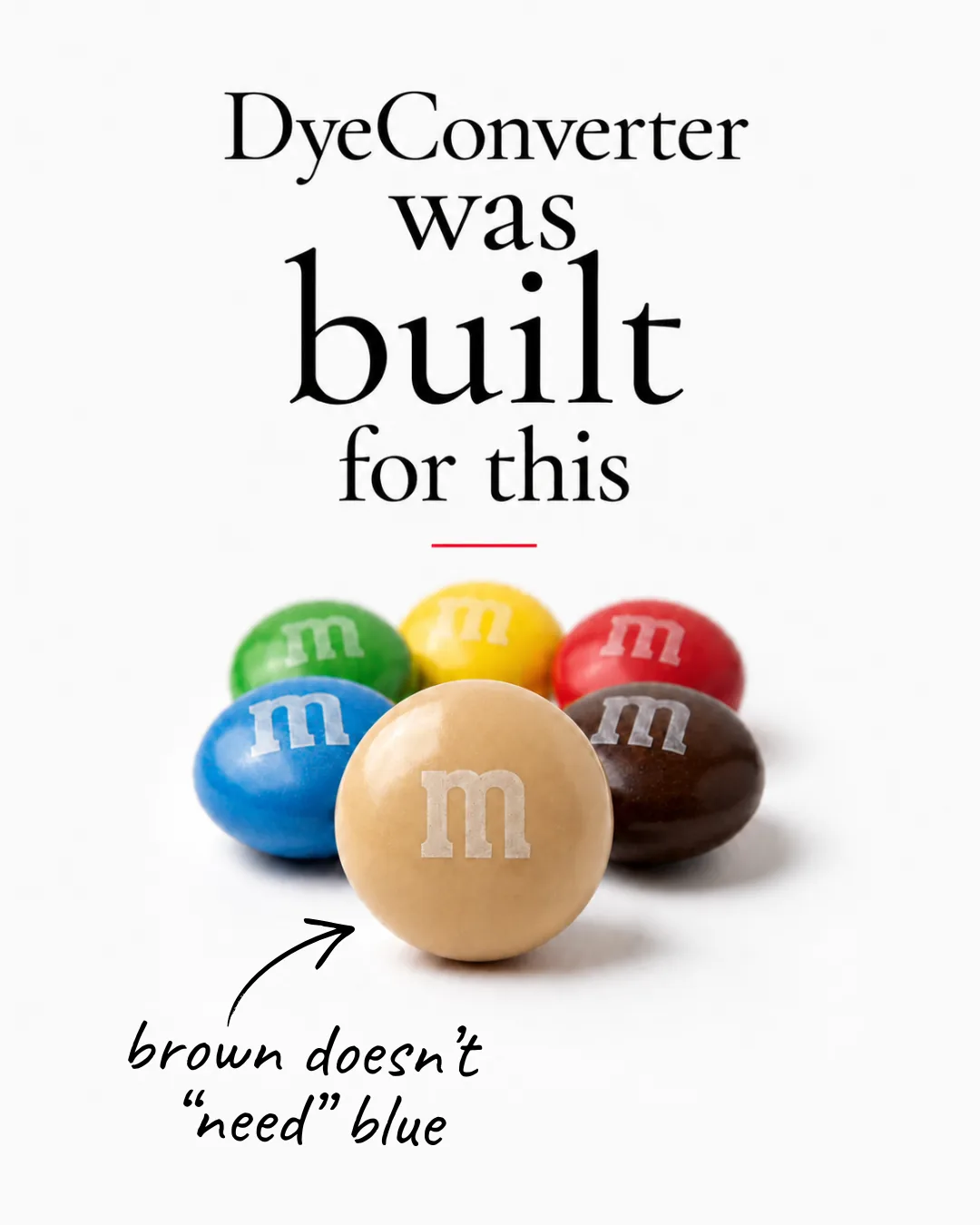
Somebody sold Mars a magic bullet: one natural color to stand in for three.
Somebody sold Mars a magic bullet: one natural color to stand in for three. Spirulina gave Mars a perfect green. But green is the easy color, gettable plenty of ways. Better blues are already on the market, and if the 1980s tan M&M taught…
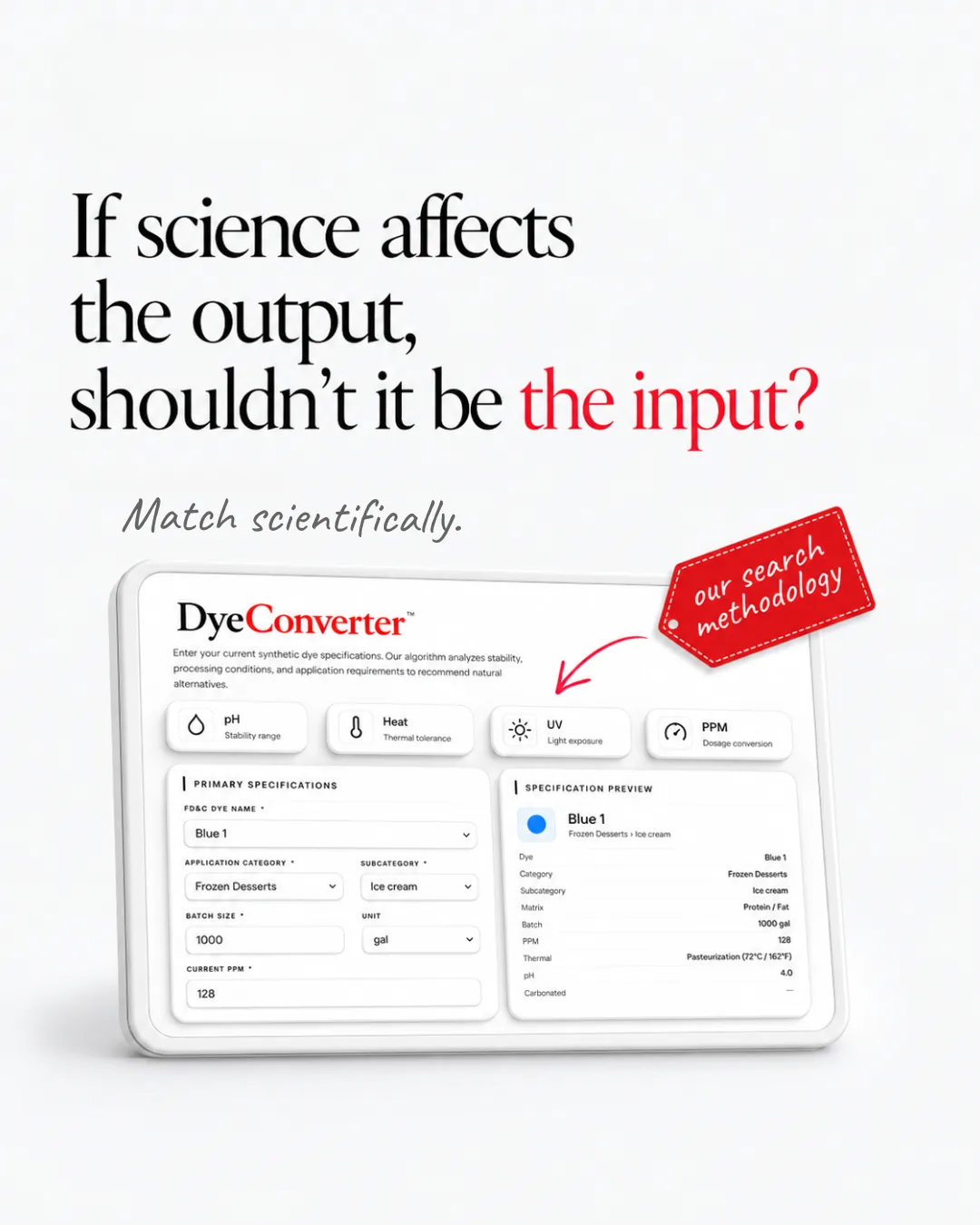
If the science decides whether your color survives, why isn't it part of the search?
If the science decides whether your color survives, why isn't it part of the search? Most color matching starts with a name. Pull Blue 1, find a "natural blue," done. But the shade on the label was never the hard part. What breaks a…
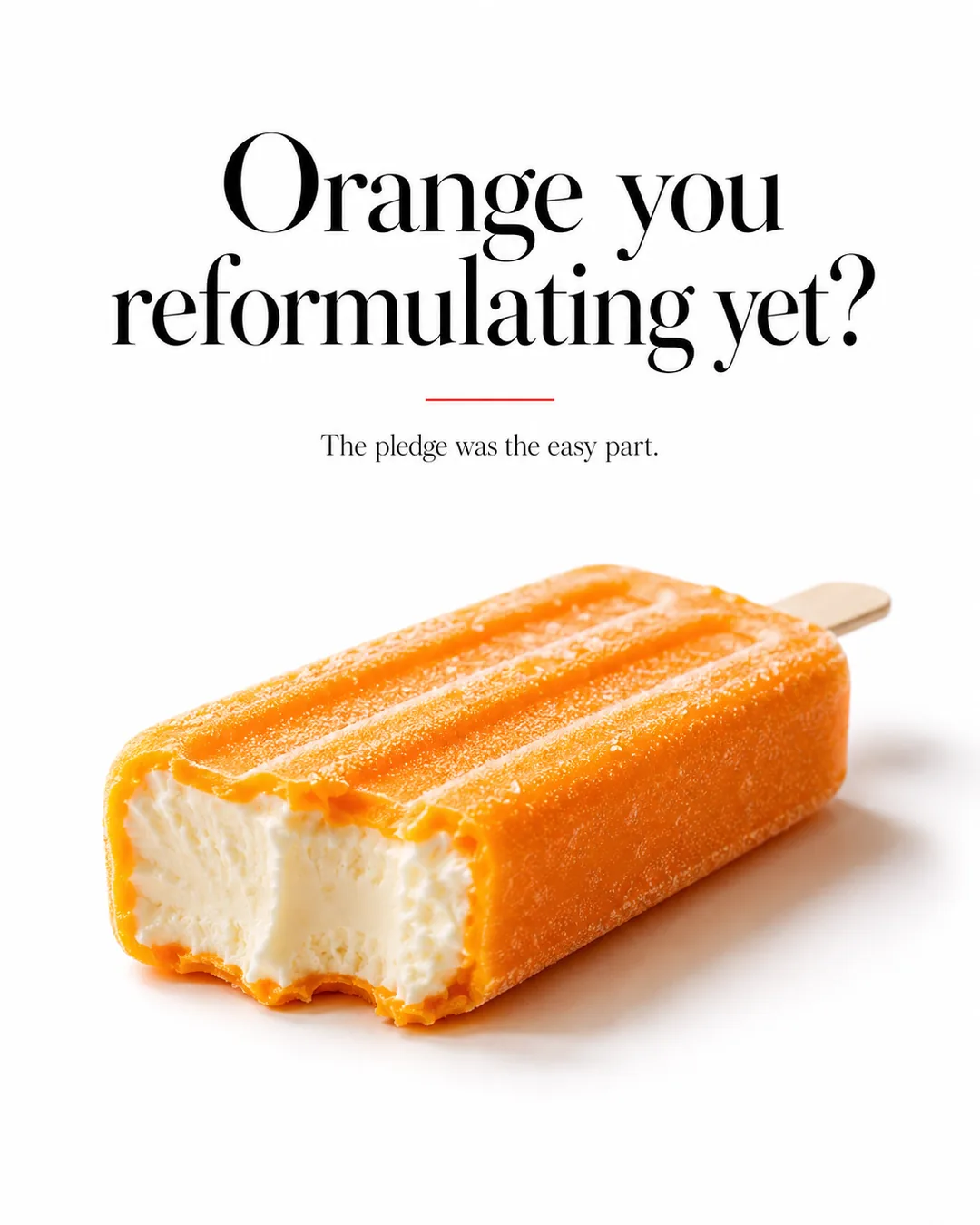
I noticed Good Humor had quietly pulled the artificial dyes from its orange creamsicle, which sent me down the rest of…
I noticed Good Humor had quietly pulled the artificial dyes from its orange creamsicle, which sent me down the rest of the freezer aisle. Here is what stood out. While a lot of brands are scrambling to reformulate before 2028, some never…
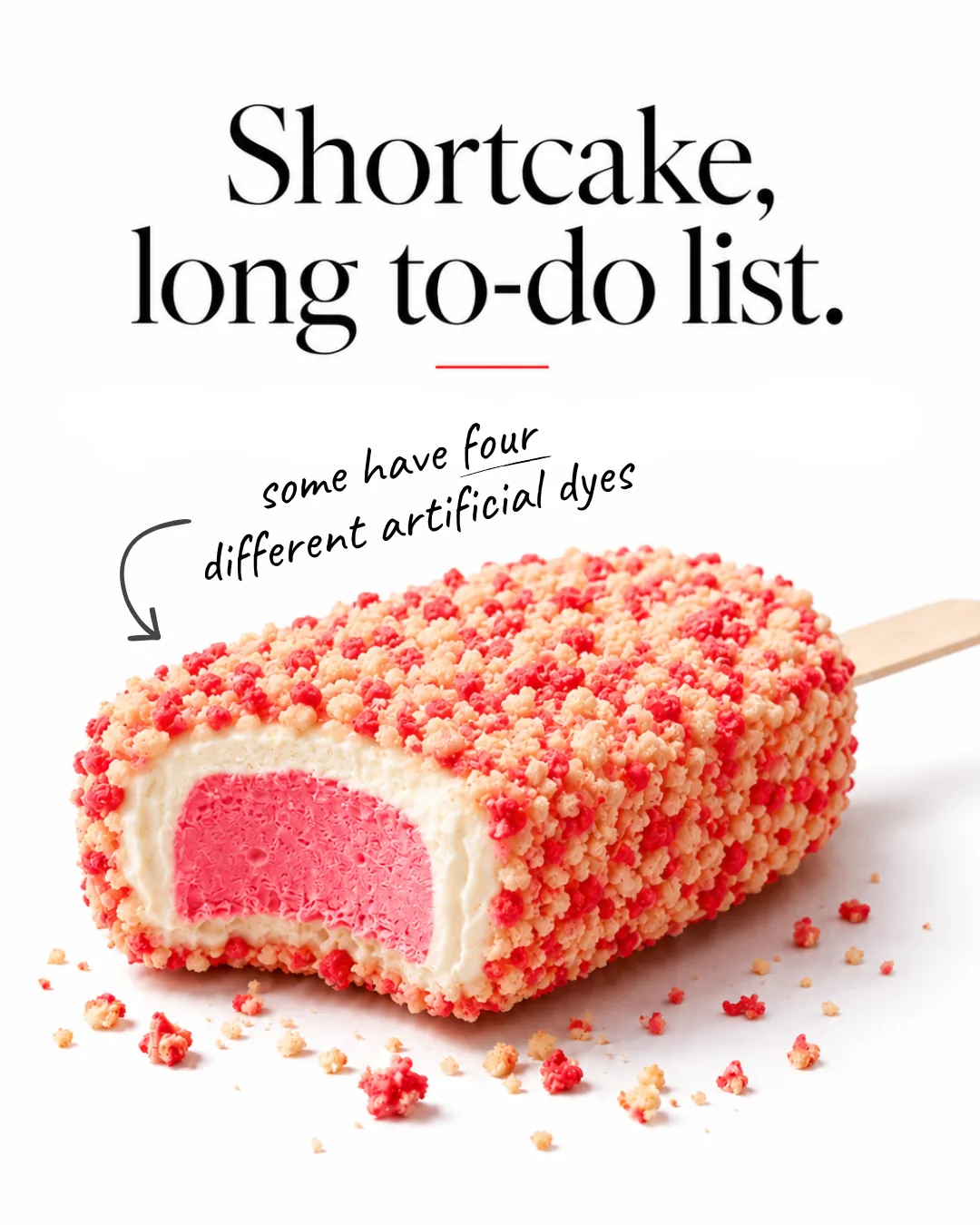
That strawberry shortcake bar is a summer icon.
That strawberry shortcake bar is a summer icon. It is also a four-color problem. The nostalgic pink center, the golden crumb, the whole look comes from four added colors working together: Red 40, Yellow 5, Blue 1, and caramel color. Three…
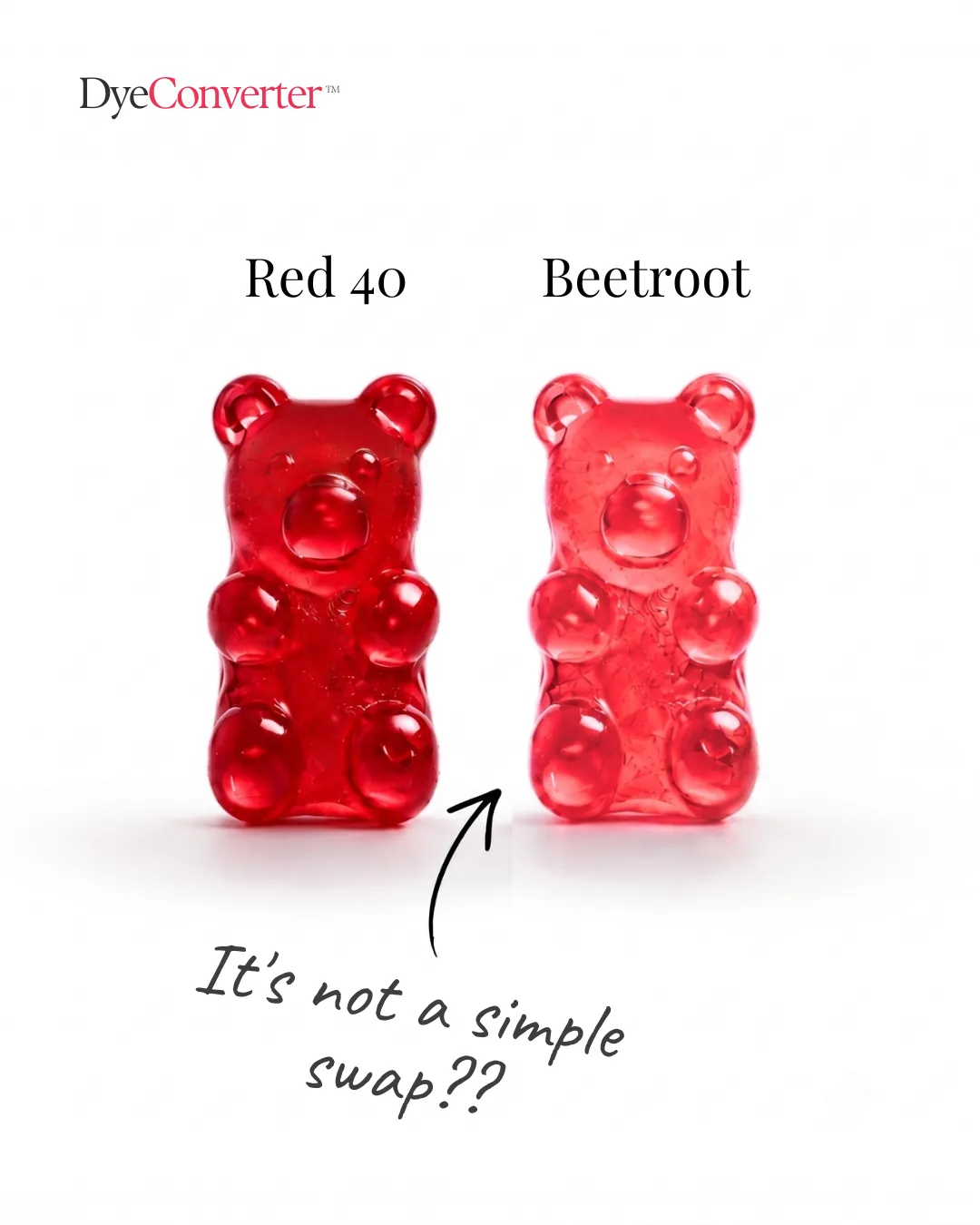
If any swap should be simple, it is this one: pull Red 40, drop in beetroot.
If any swap should be simple, it is this one: pull Red 40, drop in beetroot. Red for red. Look closer. It is already not a match. Red 40 is an orange-leaning, high-chroma red that holds through almost anything. Beetroot is a betalain: a…
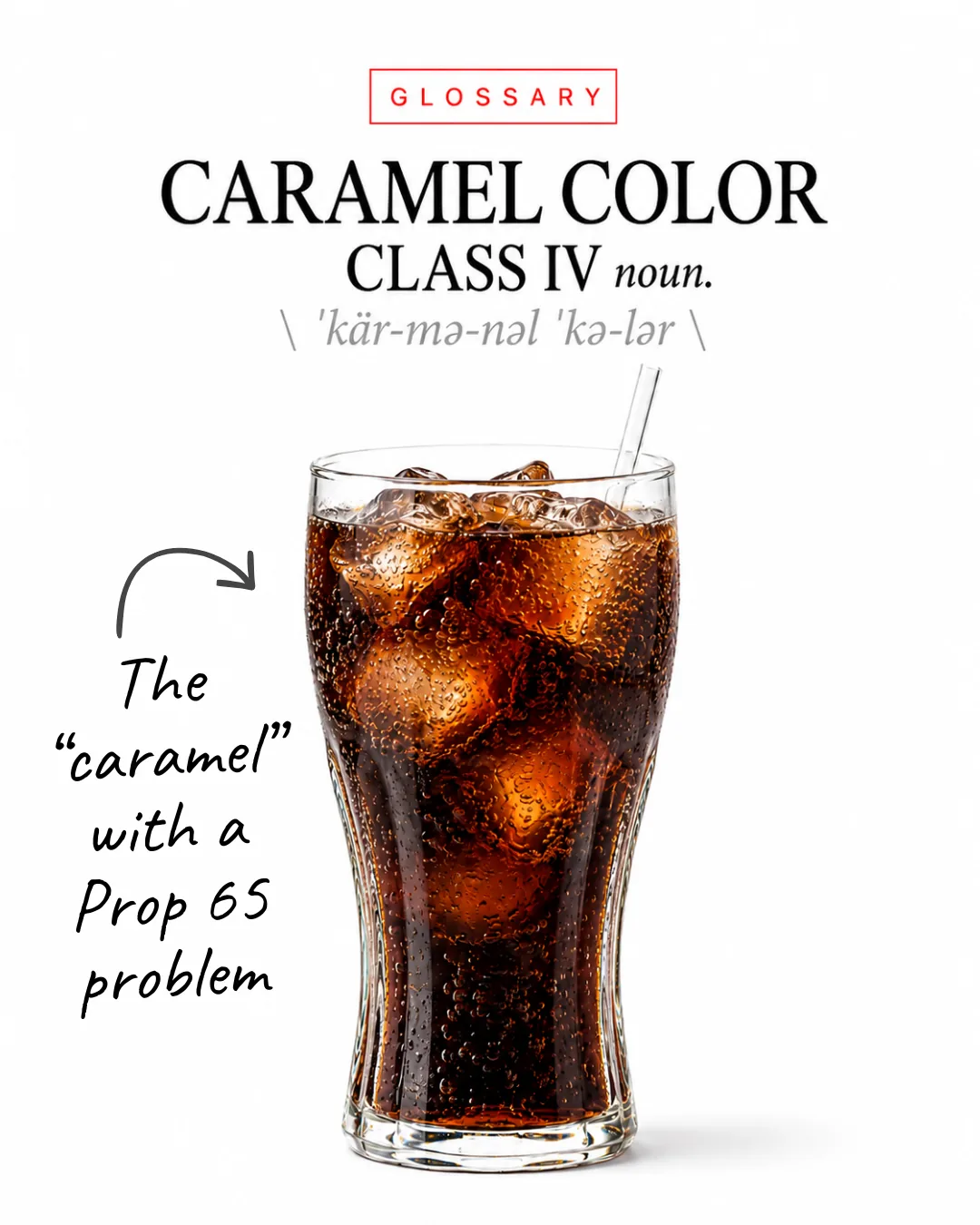
Caramel color, Class IV. The brown in nearly every cola on the shelf.
Caramel color, Class IV. The brown in nearly every cola on the shelf. It sounds like something off a candy thermometer. It is made with ammonia and sulfites. Caramel color comes in four classes, separated only by what goes into the…
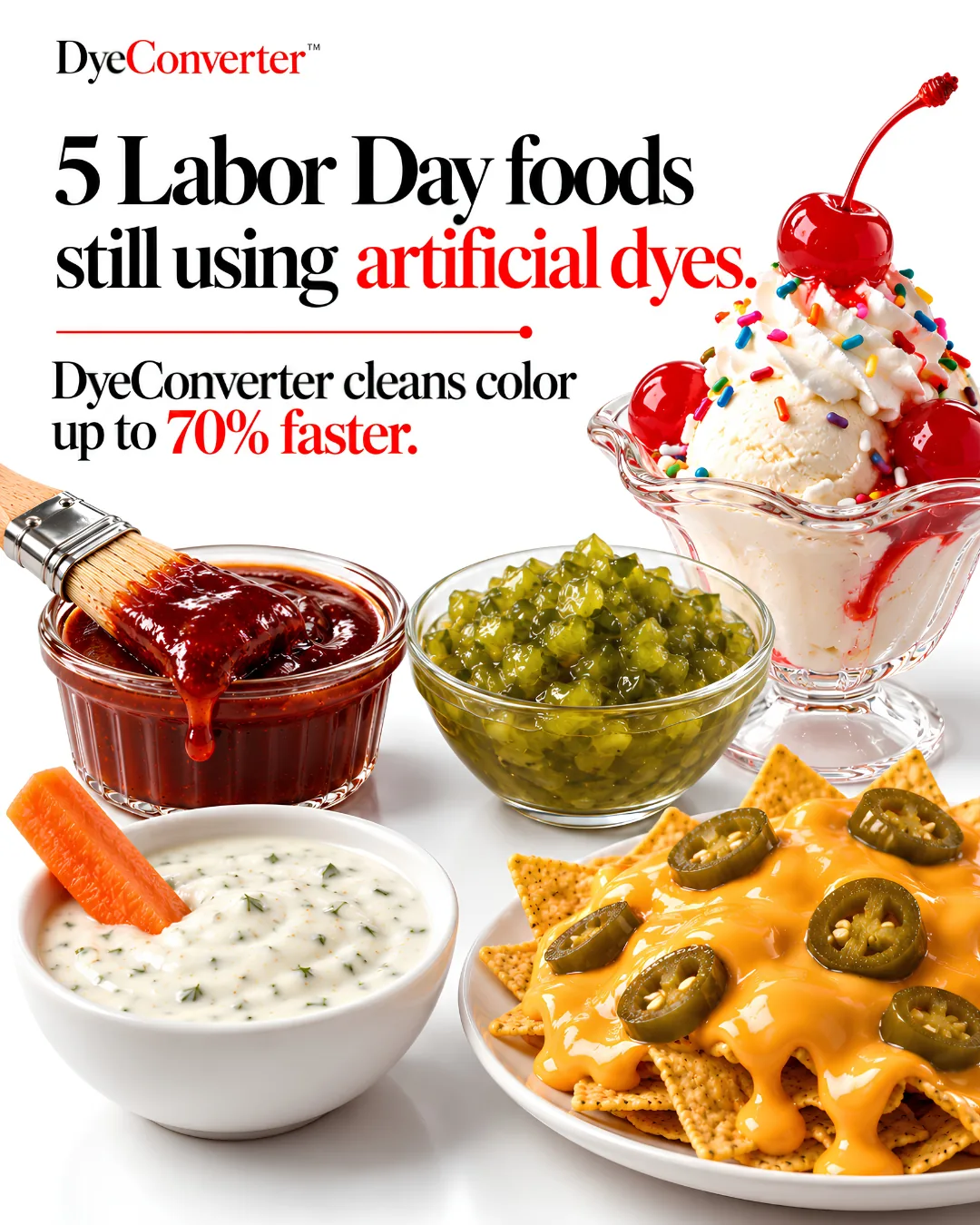
That's the countdown. Five Labor Day plates, five colors that aren't what they seem:
That's the countdown. Five Labor Day plates, five colors that aren't what they seem: The sundae, a party trick with up to nine dyes in one bowl, cherries and sprinkles doing the loudest work. Nacho cheese, glowing a yellow no cheddar ever…
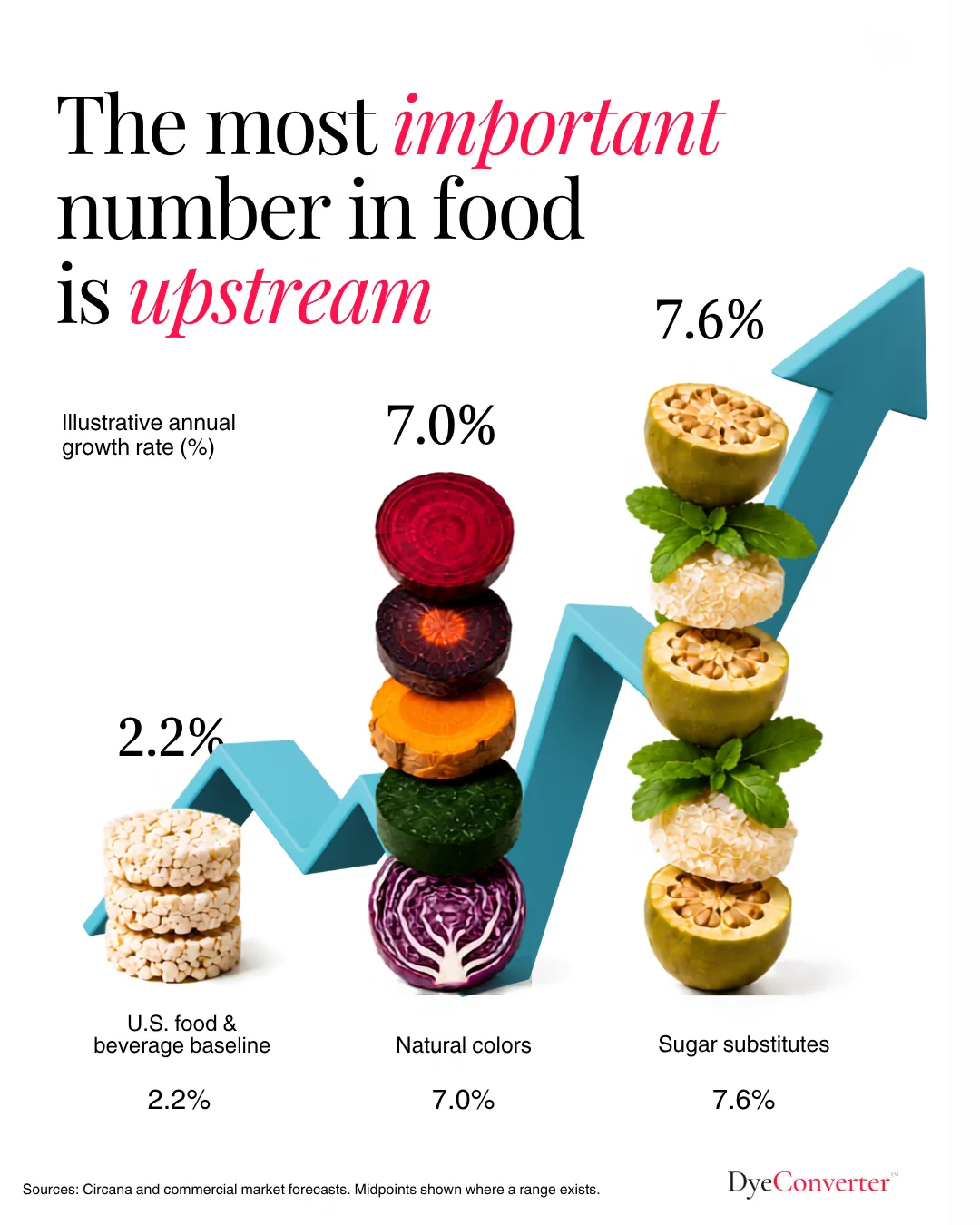
The most important growth in food right now is upstream.
The most important growth in food right now is upstream. Packaged food overall is climbing about 2.2% a year. Natural colors sit near 7.0%. Sugar substitutes near 7.6%. The ingredients going into the food are outrunning the food. That is…
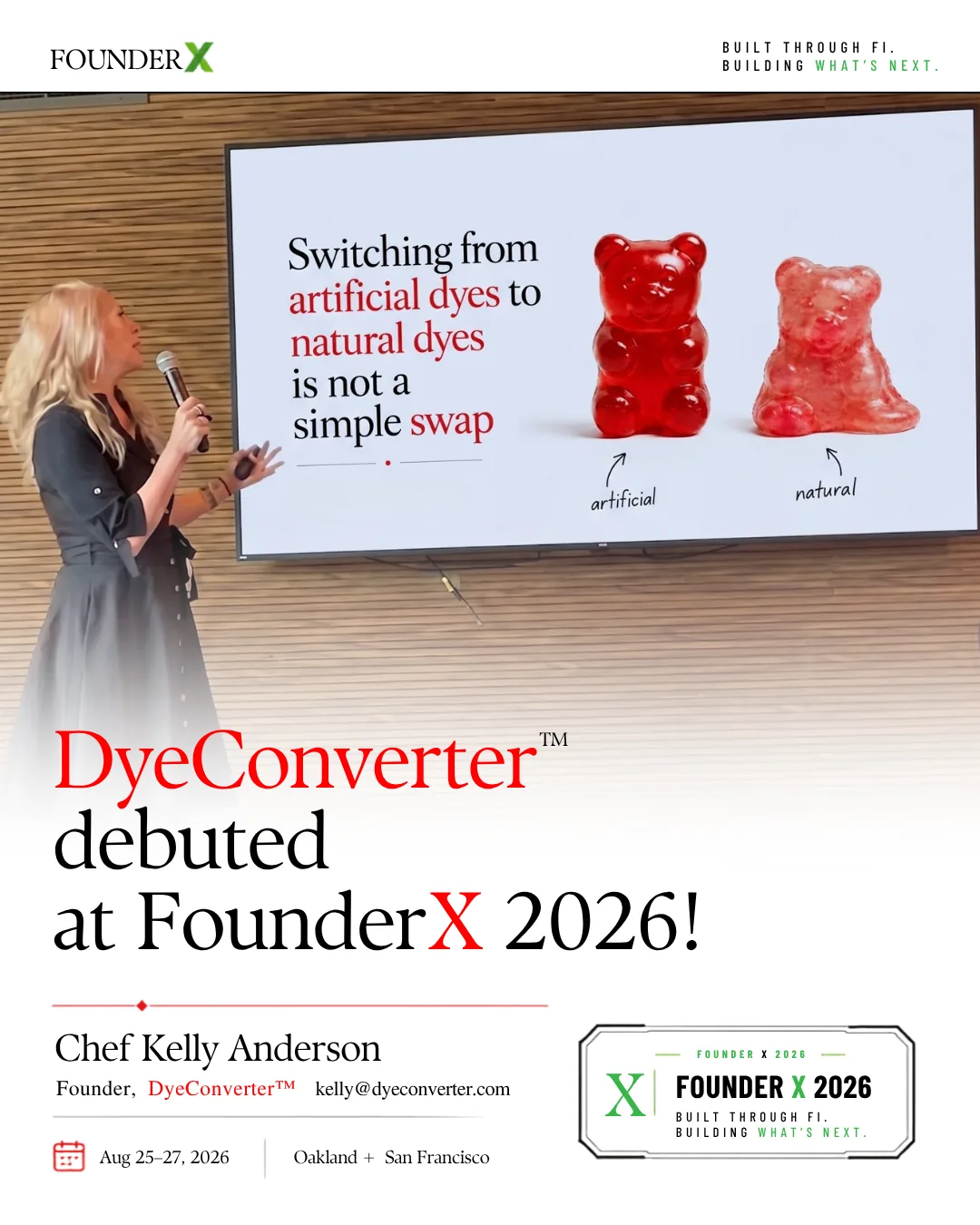
DyeConverter™ made its debut at FounderX 2026, and I could not have asked for a better room to do it in.
DyeConverter™ made its debut at FounderX 2026, and I could not have asked for a better room to do it in. Endless gratitude to the Founder Institute and the whole FounderX team for the stage, the mentorship, and the belief. To the mentors…
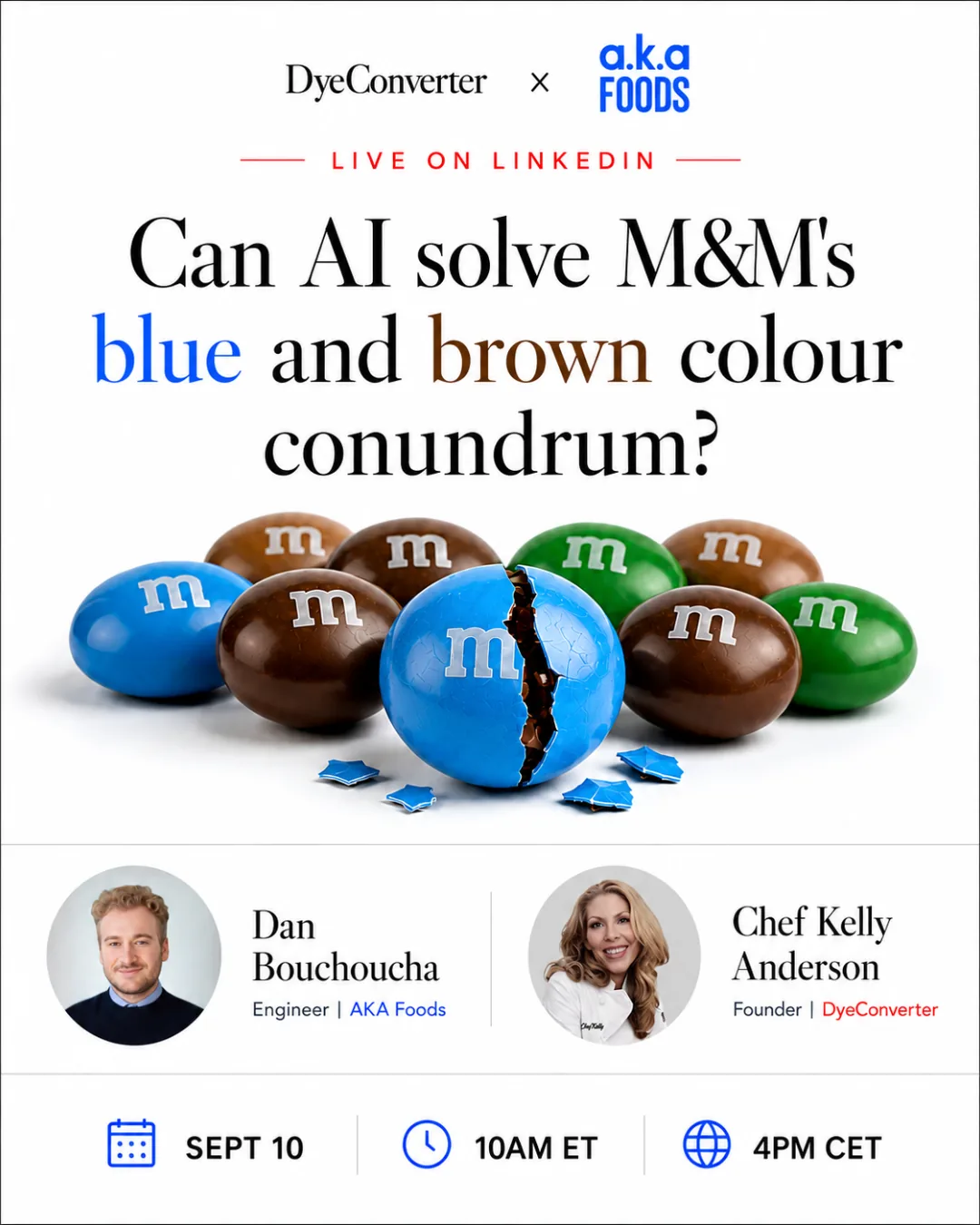
Two M&M colors didn't survive the switch to natural.
Two M&M colors didn't survive the switch to natural. That's not a tragedy. It's a great demo. When Mars rolled out dye-free M&Ms this summer, blue and brown didn't make the bag. The natural blue they reached for, spirulina, needs about…
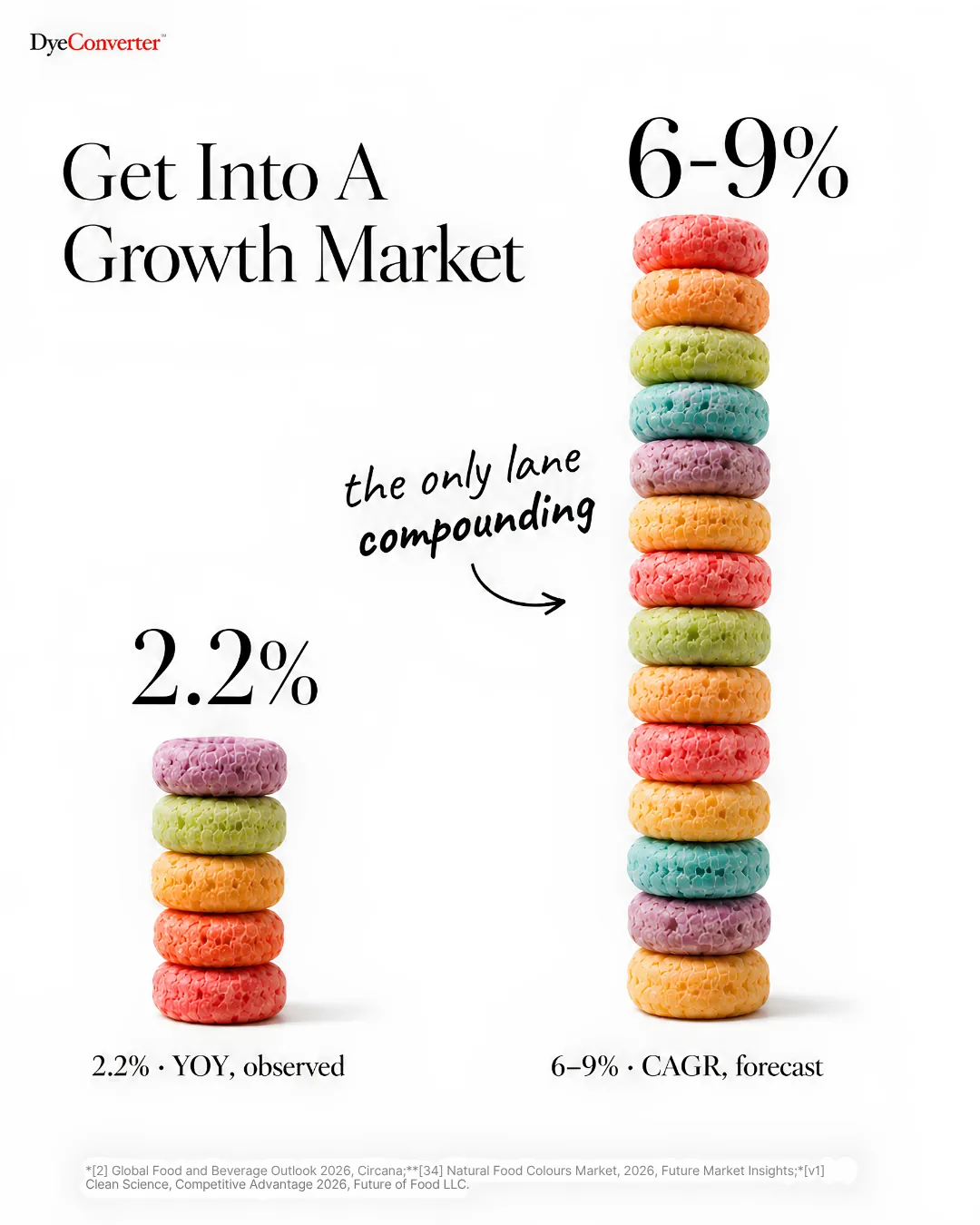
Packaged food grew 2.2% in the first half of this year, with volume flat.
Packaged food grew 2.2% in the first half of this year, with volume flat. The ingredients replacing its ingredients are forecast to grow 6 to 9. That gap reframes the whole conversation. Reformulation keeps getting filed as a compliance…
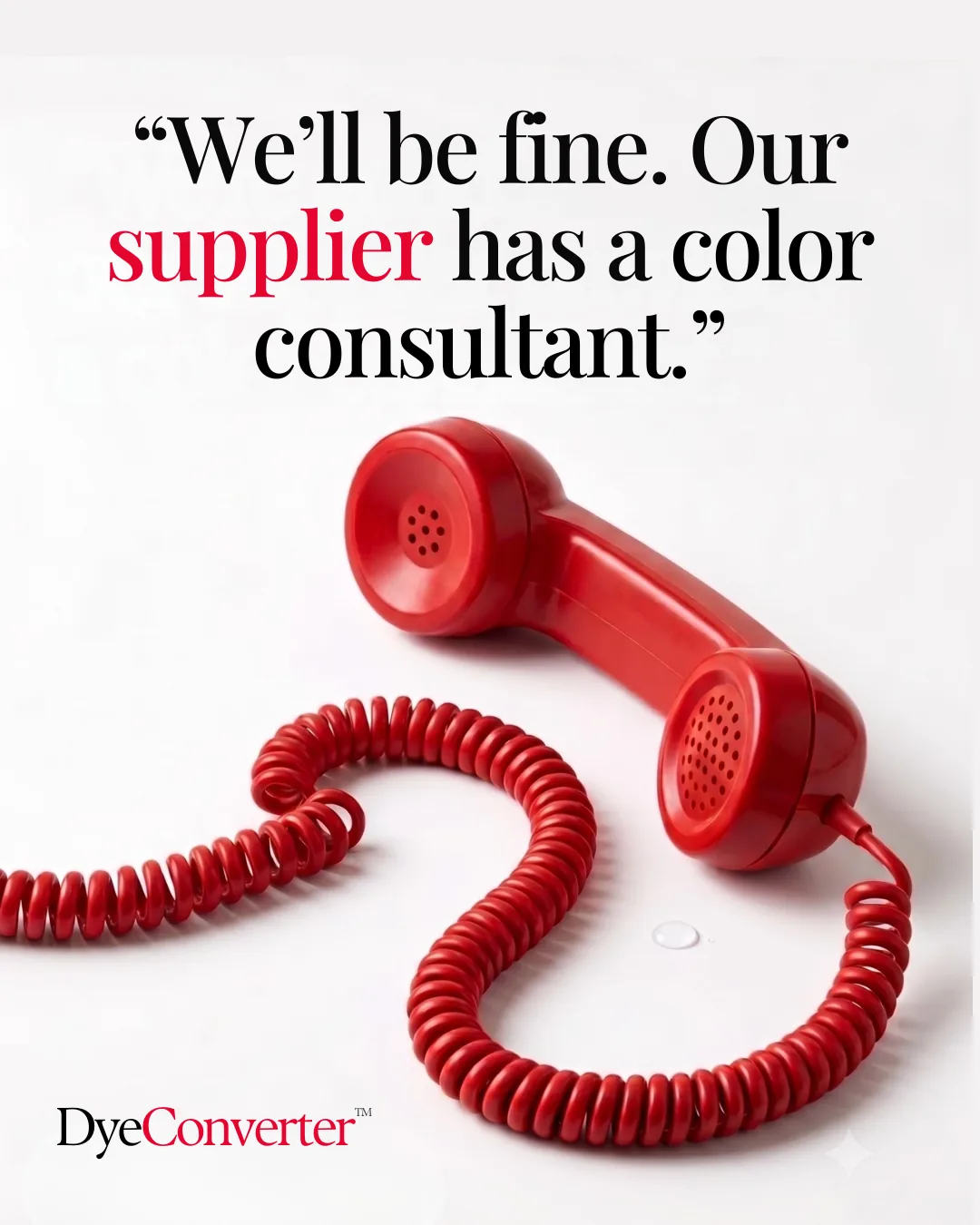
There is a quiet conflict of interest hiding in that sentence.
There is a quiet conflict of interest hiding in that sentence. A supplier's color consultant is paid by the supplier. Their job is to fit your problem to the catalog on their shelf, not to find your best answer across the whole market…
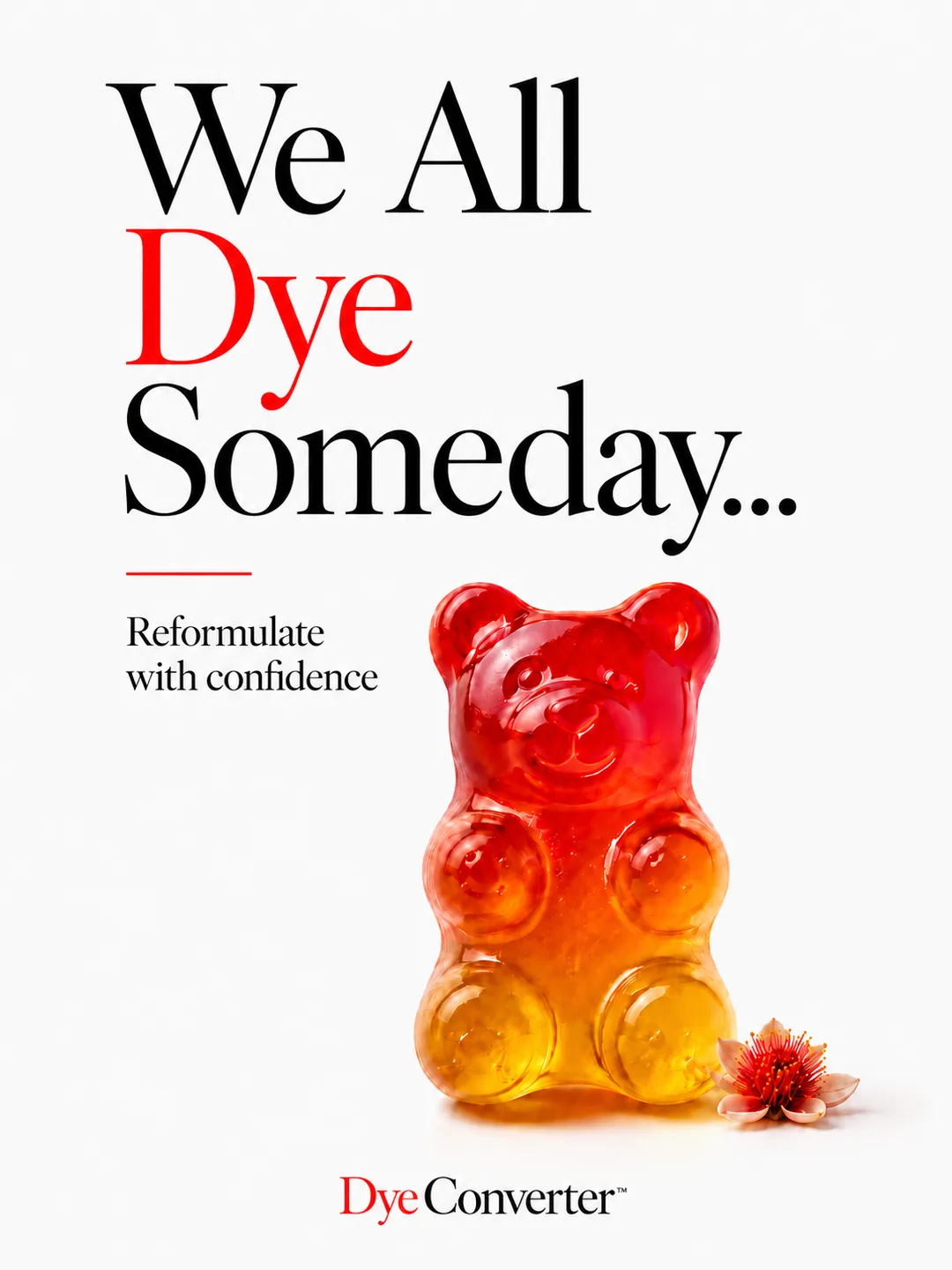
Every synthetic dye in your lineup is living on borrowed time.
Every synthetic dye in your lineup is living on borrowed time. The FDA phase-out lands at the end of 2026. That felt far away in January. It is July now, the third quarter, and "someday" quietly became a few months. Here is the…
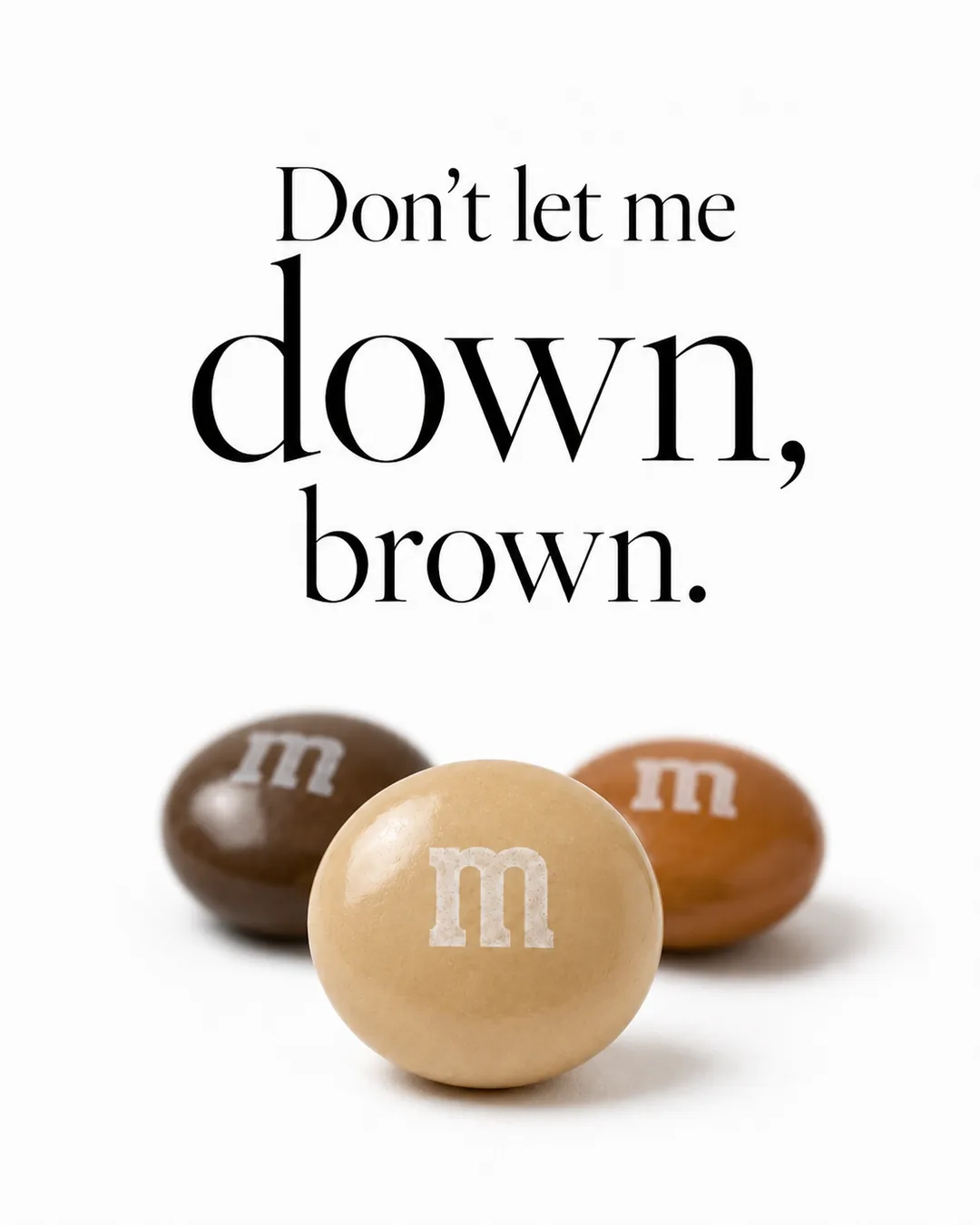
Mars is reformulating M&M's without synthetic dye, and two colors have stalled the whole launch: blue and brown.
Mars is reformulating M&M's without synthetic dye, and two colors have stalled the whole launch: blue and brown. Brown looks like the easy one. It is the hardest natural color in the building. Here's the trick most people miss: brown was…
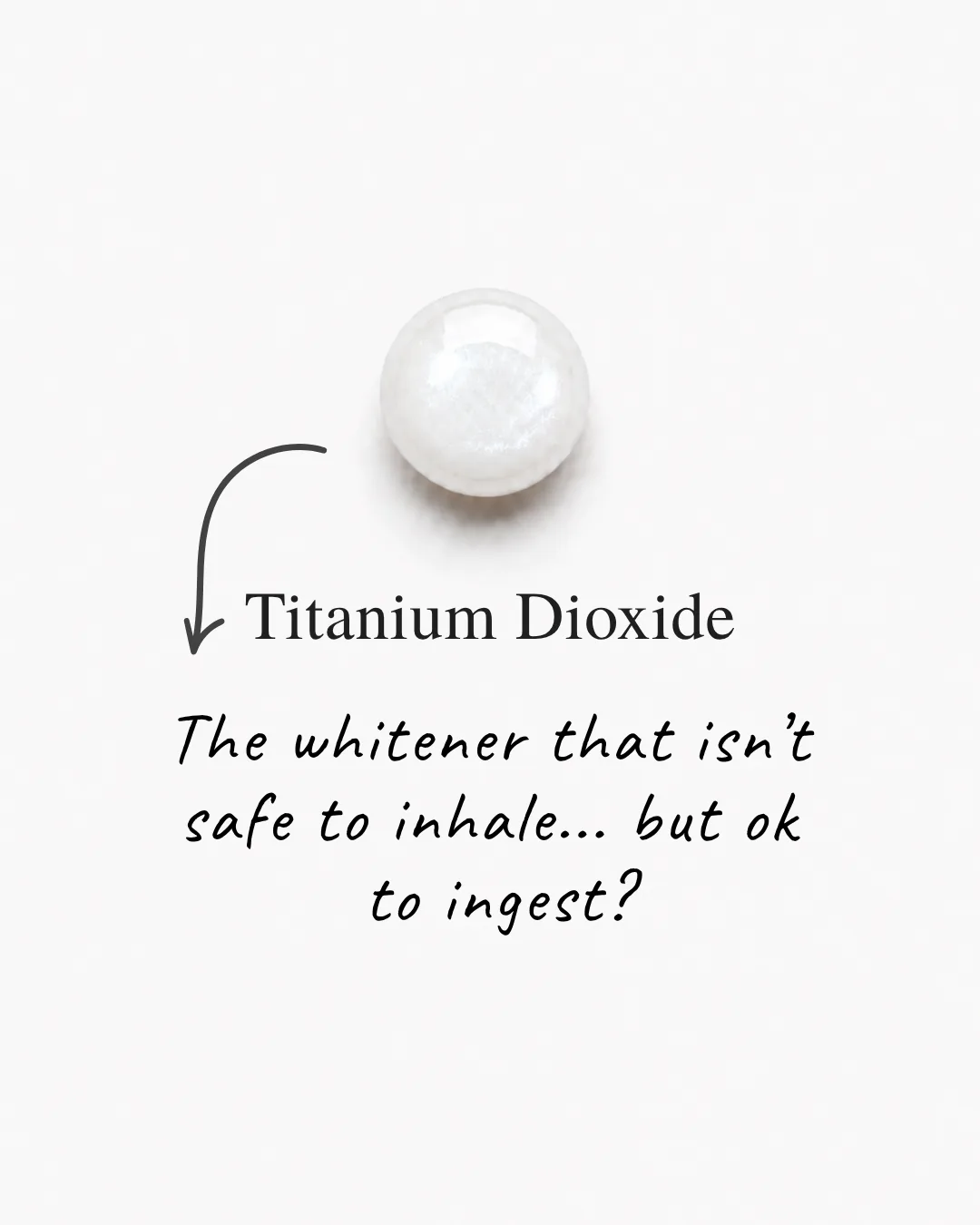
Titanium dioxide. The brightest white in the building, and it adds no color at all.
Titanium dioxide. The brightest white in the building, and it adds no color at all. It is not a dye like the rest of this lineup. It absorbs no wavelength and tints nothing. It scatters light, and that scattering is what the eye reads as…
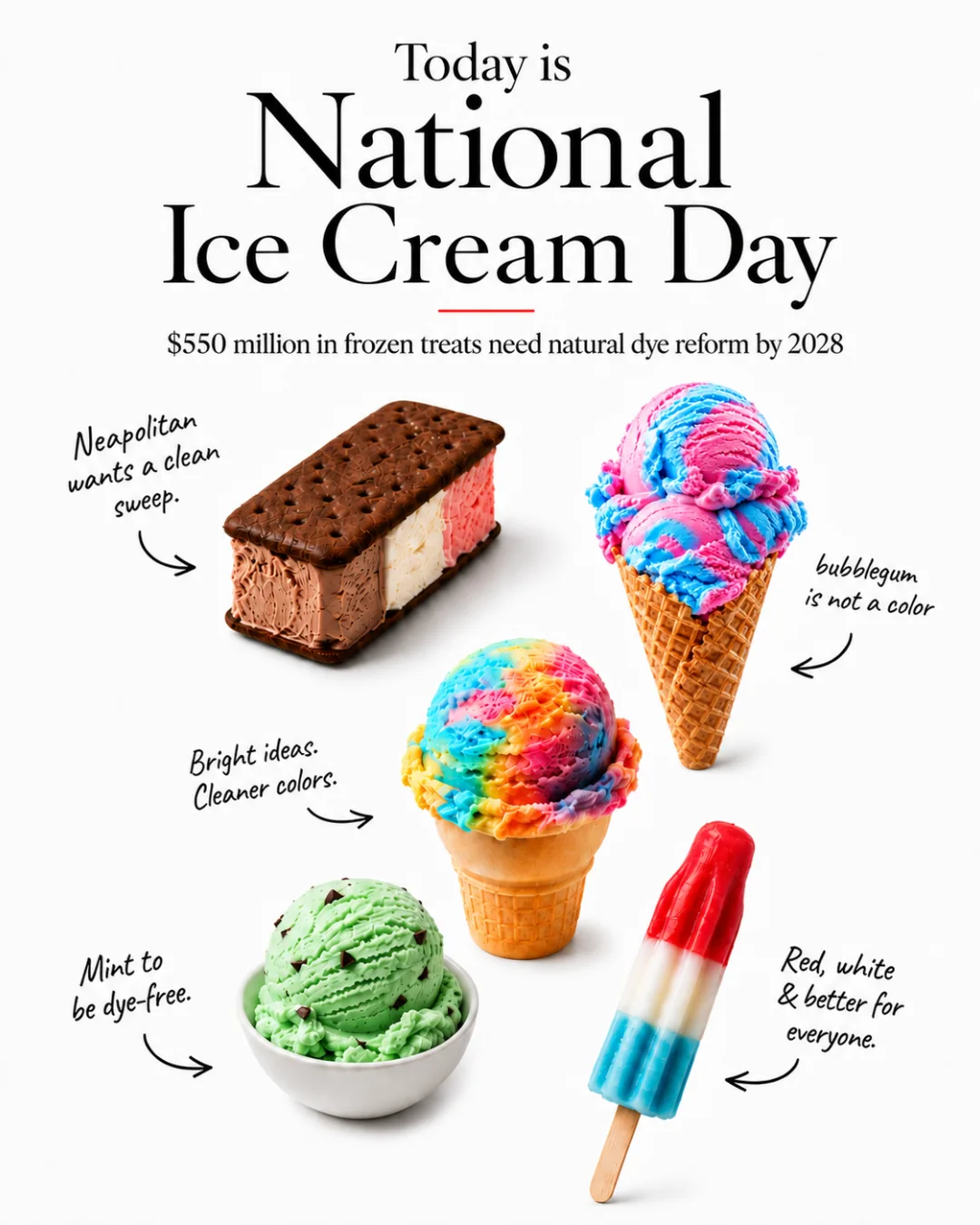
It is National Ice Cream Day, so let's keep it sweet.
It is National Ice Cream Day, so let's keep it sweet. Mint chip. Bubblegum. Rainbow. Every one a little icon, and every one about to get a cleaner-color makeover that keeps the joy and drops the synthetic dye. The treats you love are not…
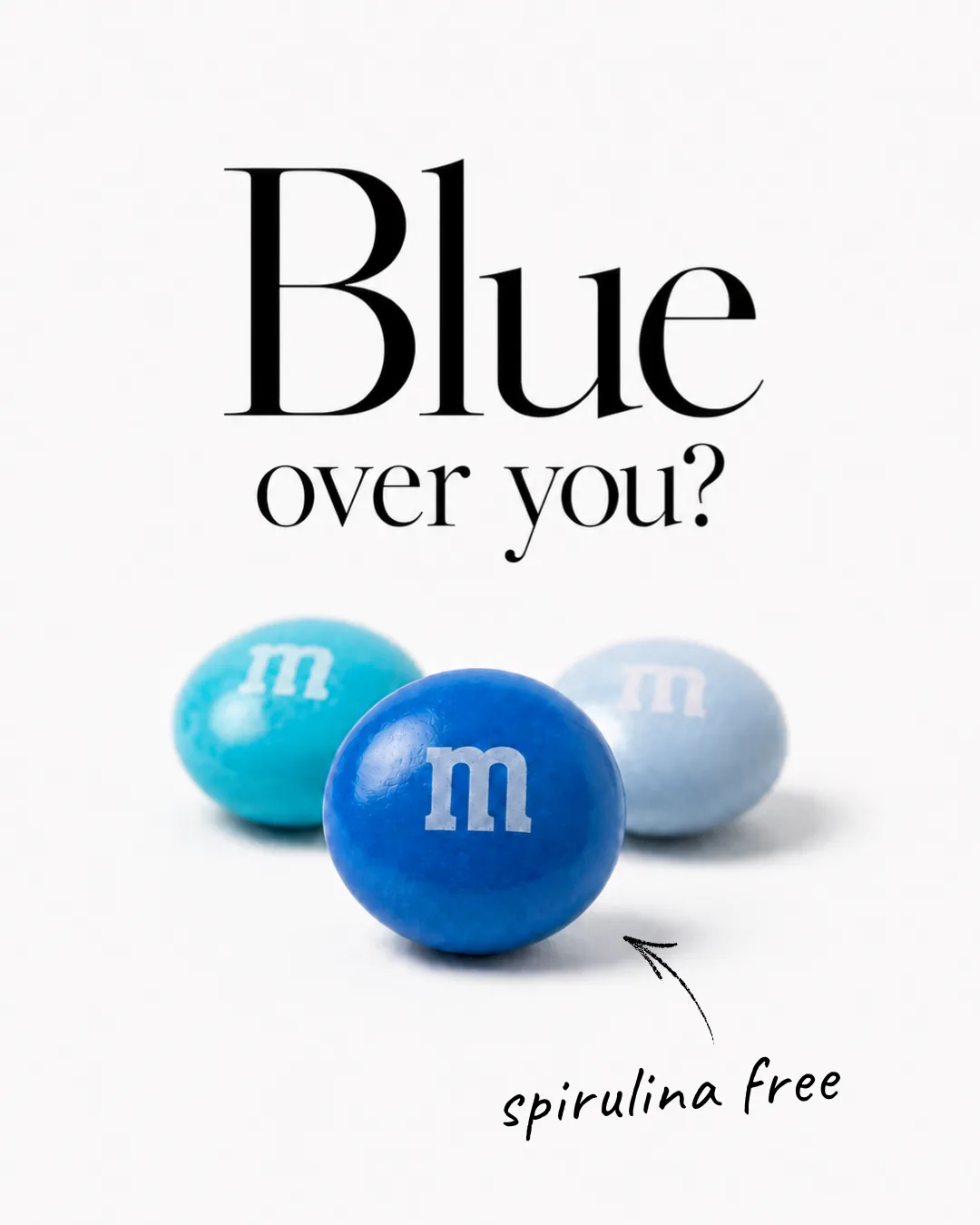
Blue over you. If you have ever tried to take a blue natural, you know the heartbreak.
Blue over you. If you have ever tried to take a blue natural, you know the heartbreak. It is the hardest color to pull from nature. Spirulina falls apart on the line, the shade drifts, the deadline creeps closer, and one by one, brands…
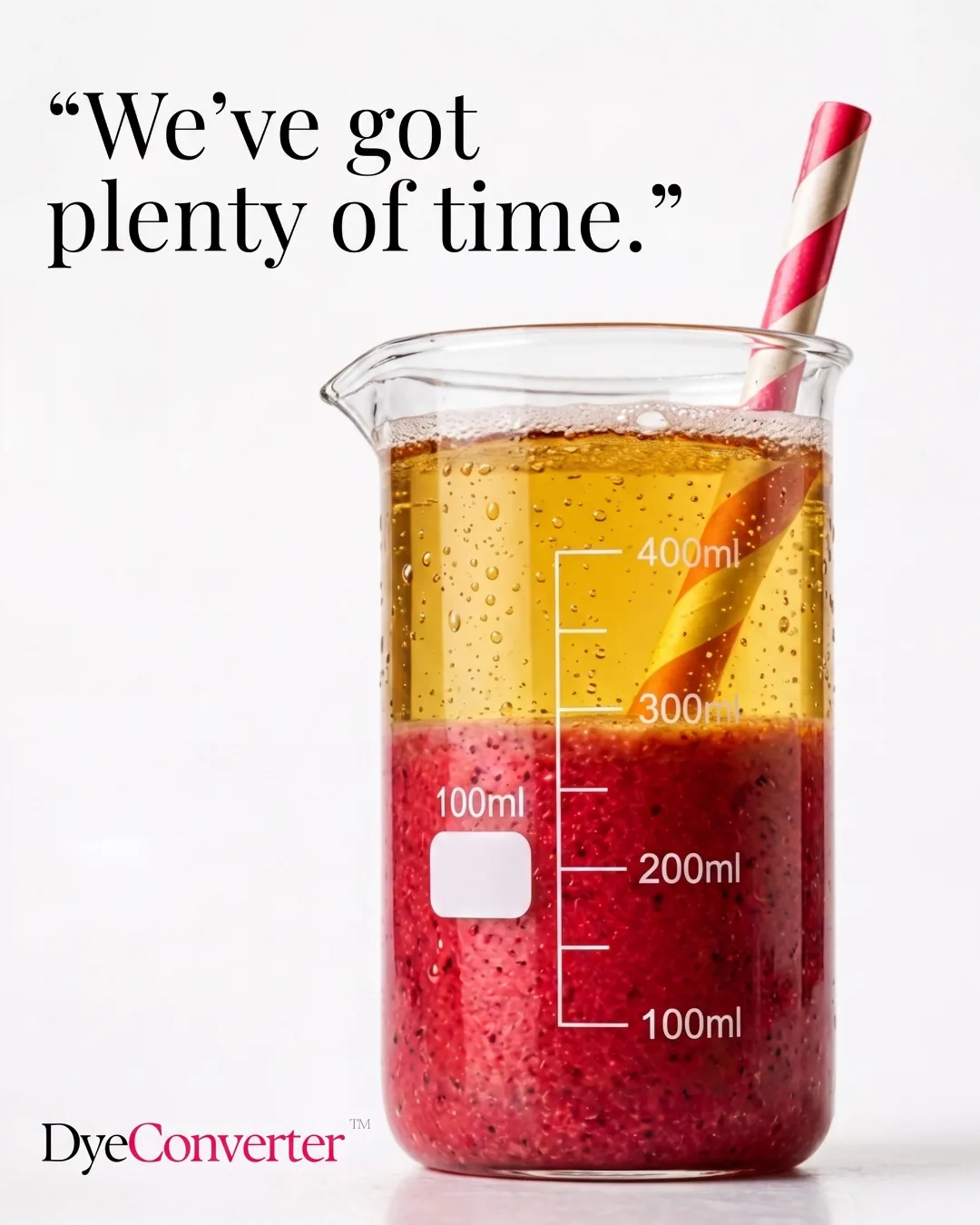
It is July, and somewhere a brand just said the most expensive words in the building: we've got plenty of time.
It is July, and somewhere a brand just said the most expensive words in the building: we've got plenty of time. The FDA phase-out lands at the end of 2026. Count the quarters that are left, and the runway is shorter than it feels. Here is…
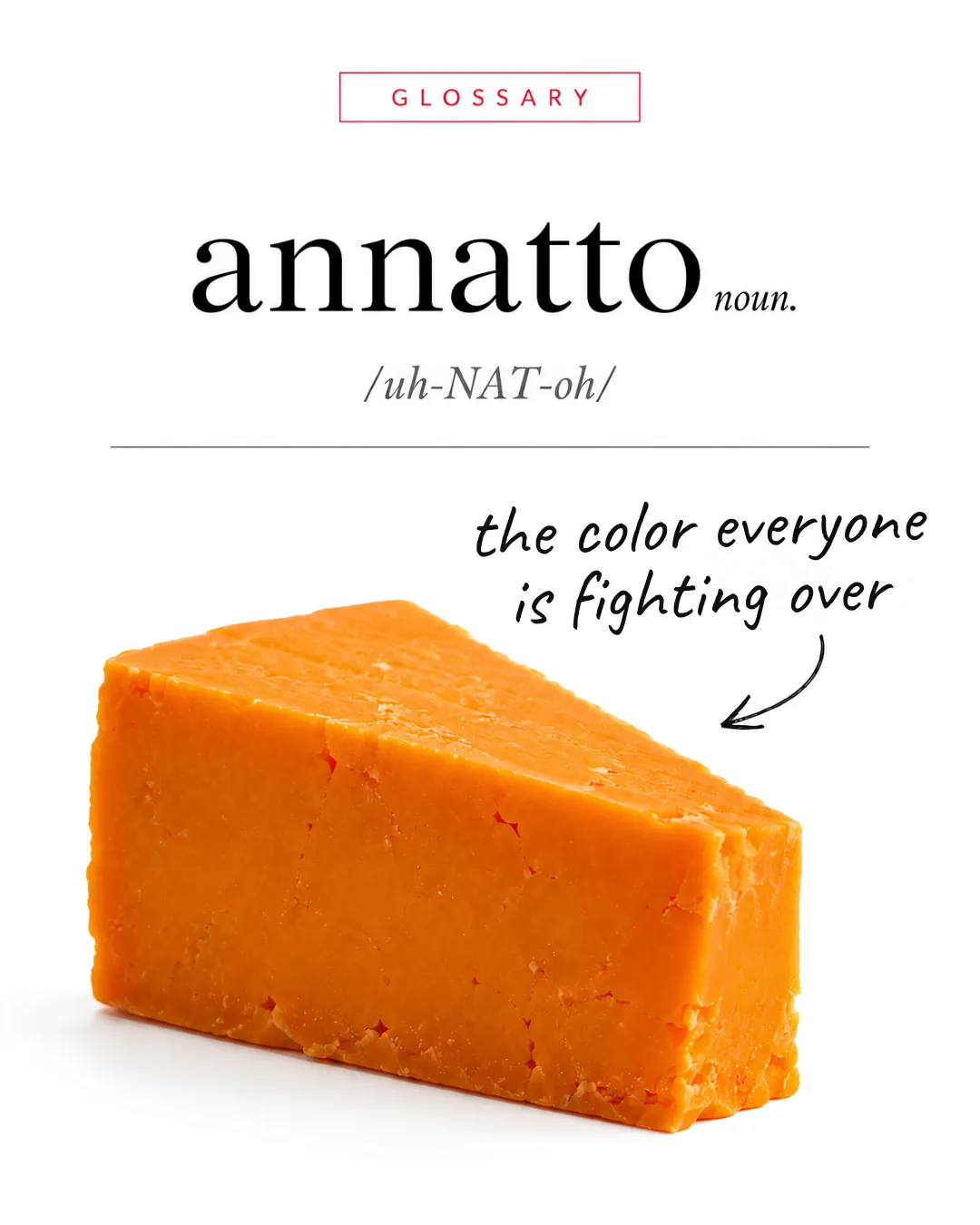
Annatto. Yes, this is why cheddar is orange.
Annatto. Yes, this is why cheddar is orange. Also why a lot of margarine is yellow, and why plenty of "no artificial colors" labels can make that claim at all. It comes from the seed of the achiote tree, a small red pod grown mostly in…
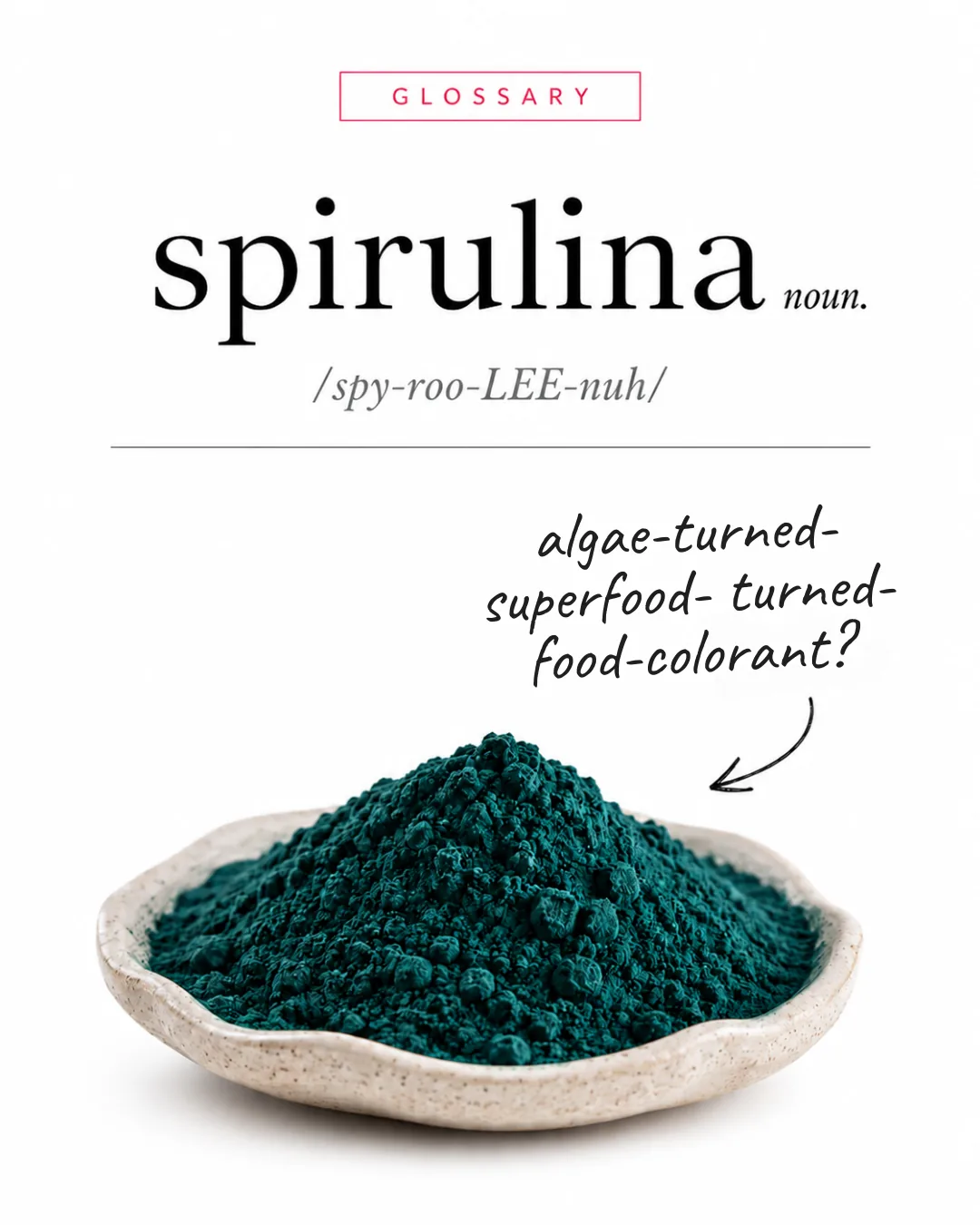
Spirulina. Yes, the blue-green algae from the smoothie aisle.
Spirulina. Yes, the blue-green algae from the smoothie aisle. It is also one of the only natural blues the food industry has. The color is phycocyanin, a brilliant blue pigment bound up in protein. That protein is the whole story: the…
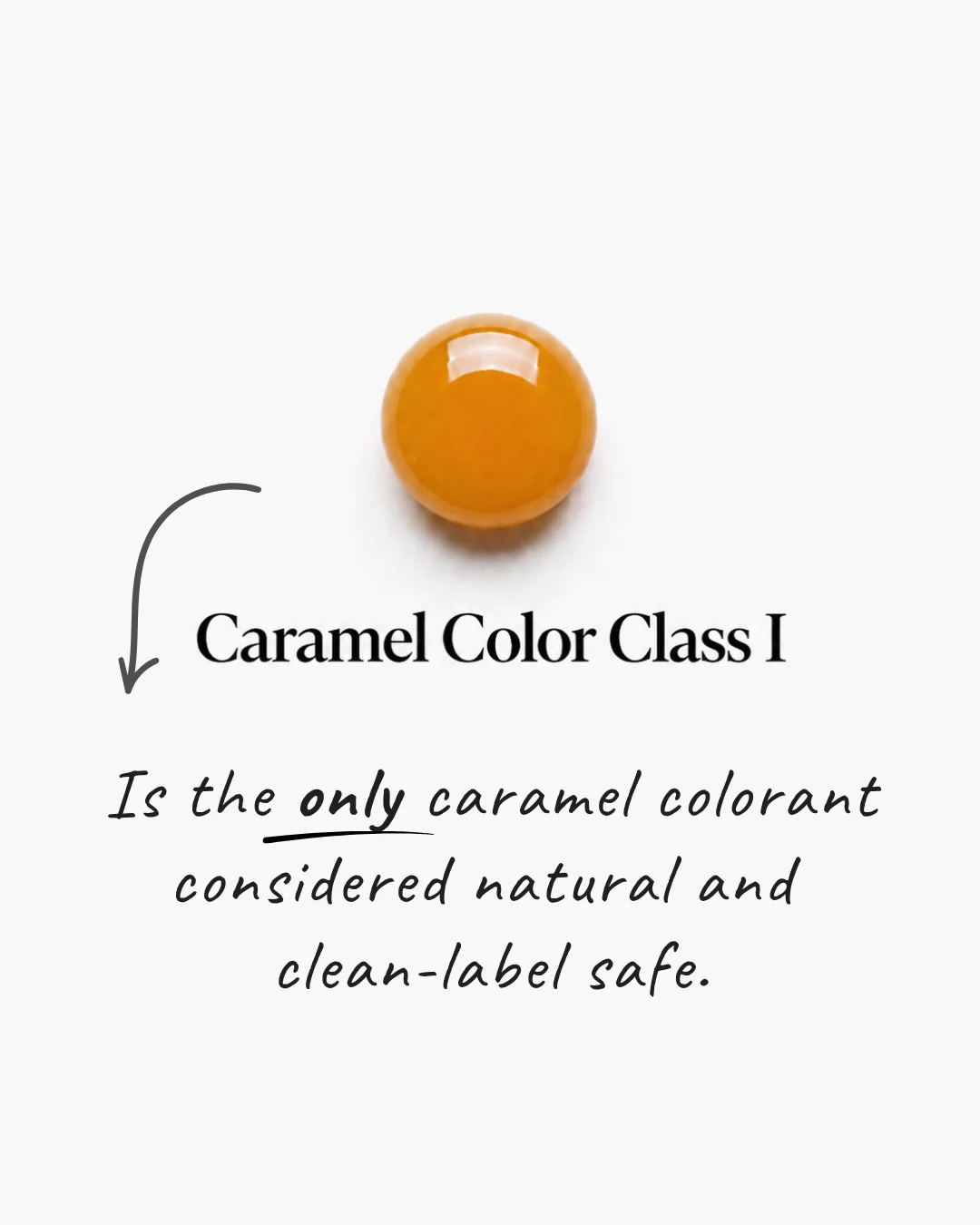
Caramel color. It sounds like something off a dessert menu.
Caramel color. It sounds like something off a dessert menu. Most of the time it is industrial color chemistry. There is not one caramel color; there are four. The only thing they share is a brown tone. What separates them is what goes into…
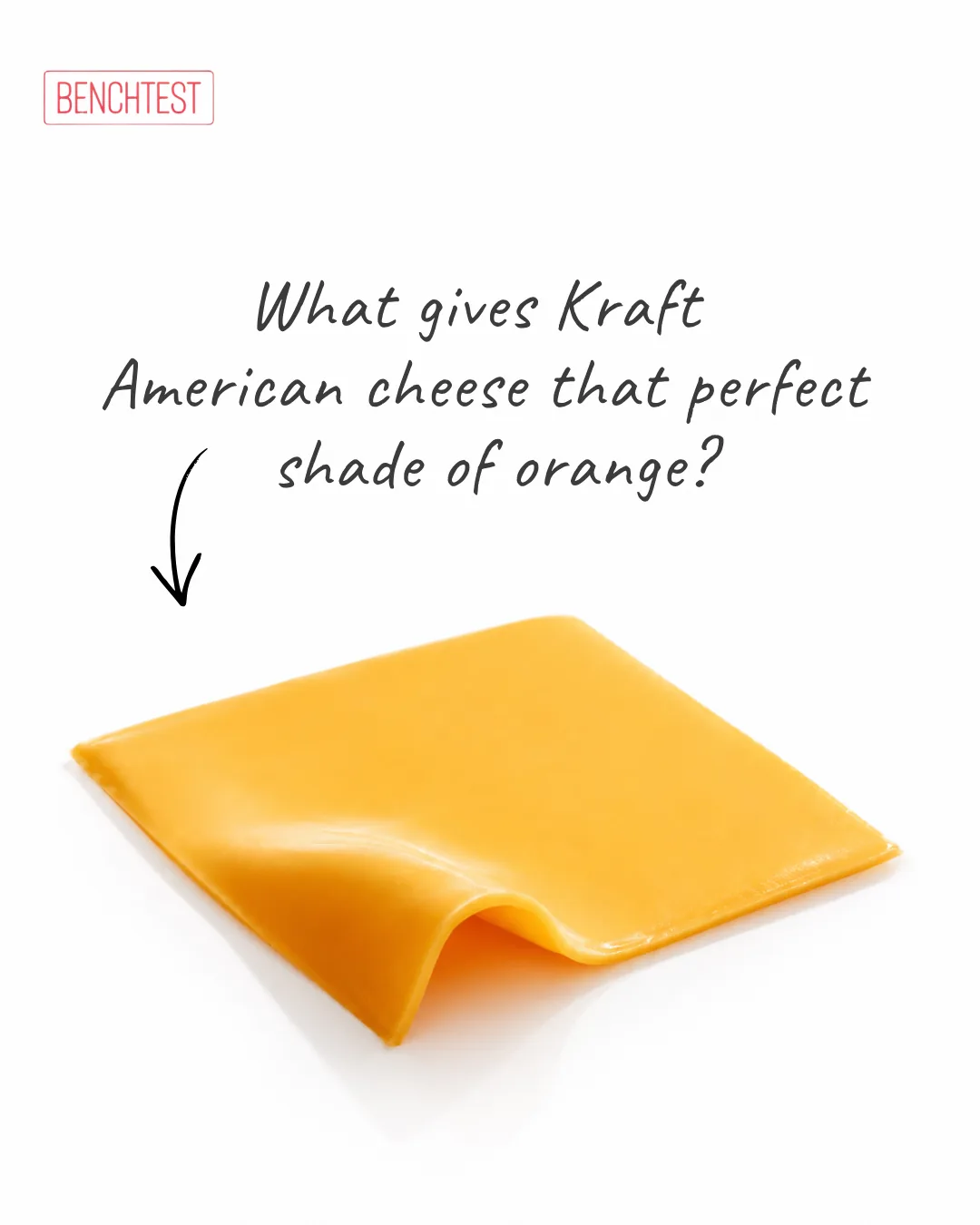
What gives Kraft American cheese that perfect shade of orange?
What gives Kraft American cheese that perfect shade of orange? Annatto and paprika extract. Two natural colorants -- a seed from a tropical tree and a powdered fruit -- doing what FD&C Yellow 5 and Yellow 6 used to do. For decades, the…
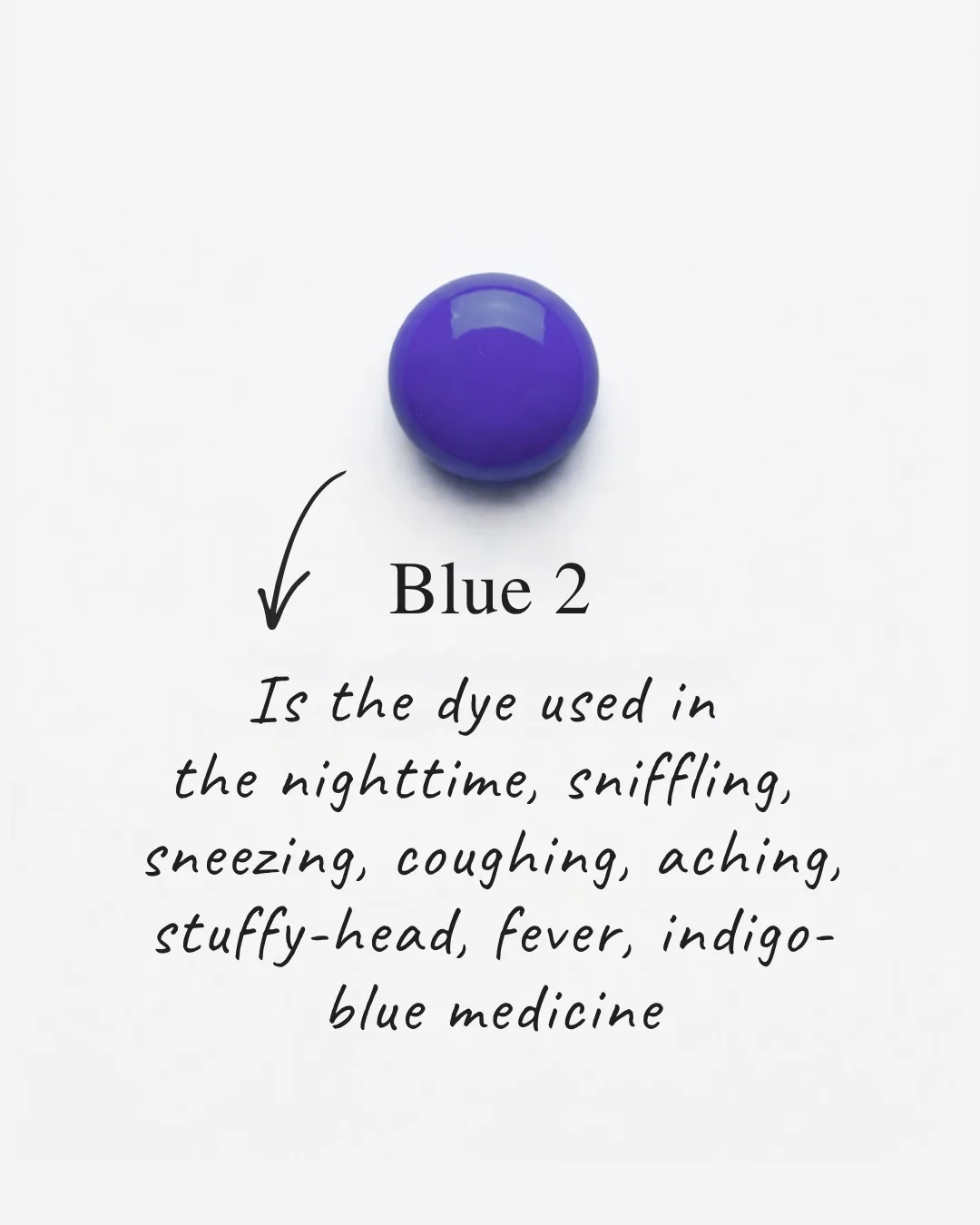
"The nighttime, sniffling, sneezing, coughing, aching, stuffy-head, fever, indigo-blue medicine" was always doing chemistry.
"The nighttime, sniffling, sneezing, coughing, aching, stuffy-head, fever, indigo-blue medicine" was always doing chemistry. The blue is the giveaway. FD&C Blue No. 2. Indigotine. The petroleum-derived dye that quietly powers the parts of…
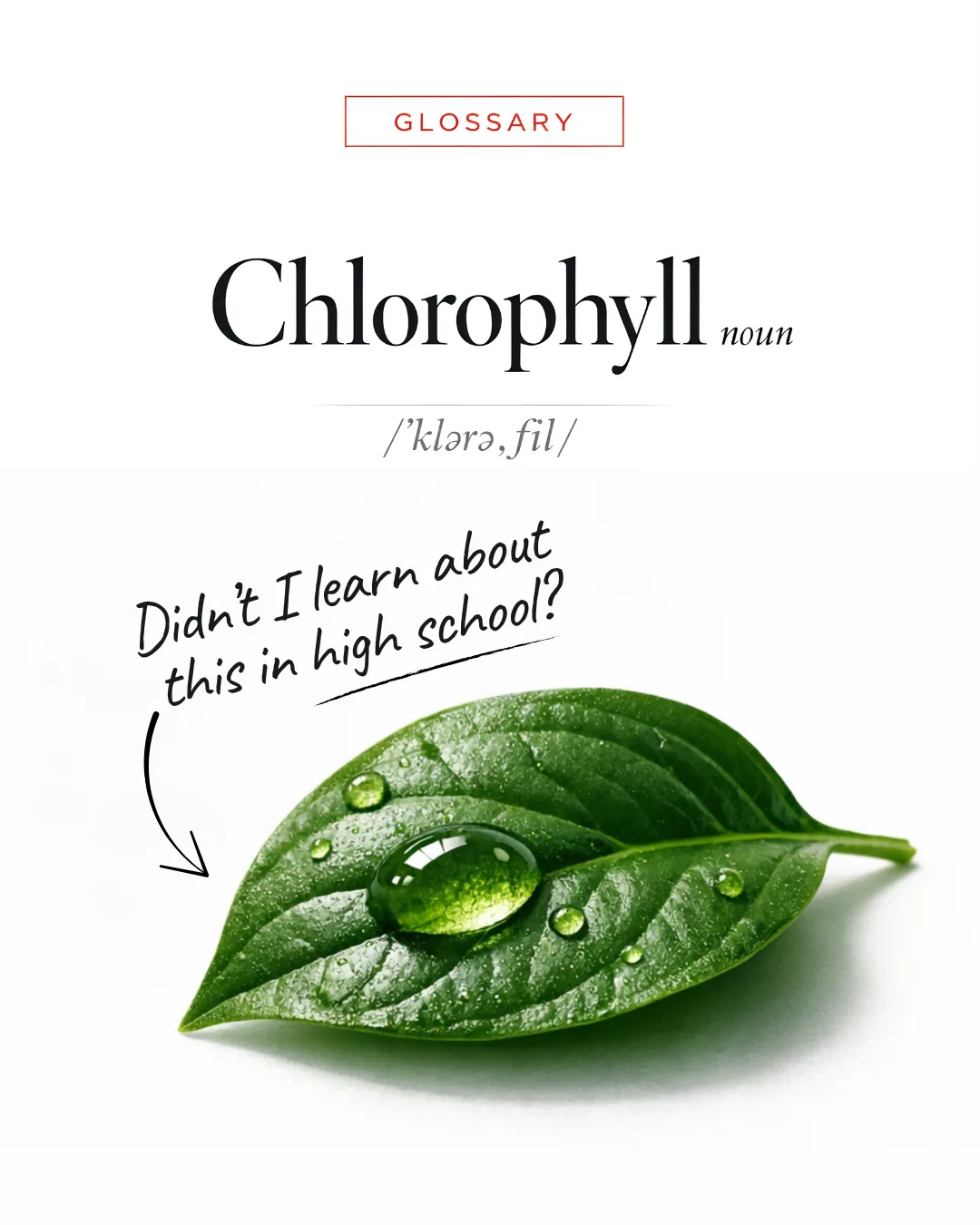
Chlorophyll. Yes, the high-school biology one.
Chlorophyll. Yes, the high-school biology one. The green pigment plants use to turn sunlight into sugar via photosynthesis. Same molecule, same function, found in every leaf you have ever pulled off a plant. And one of the most…
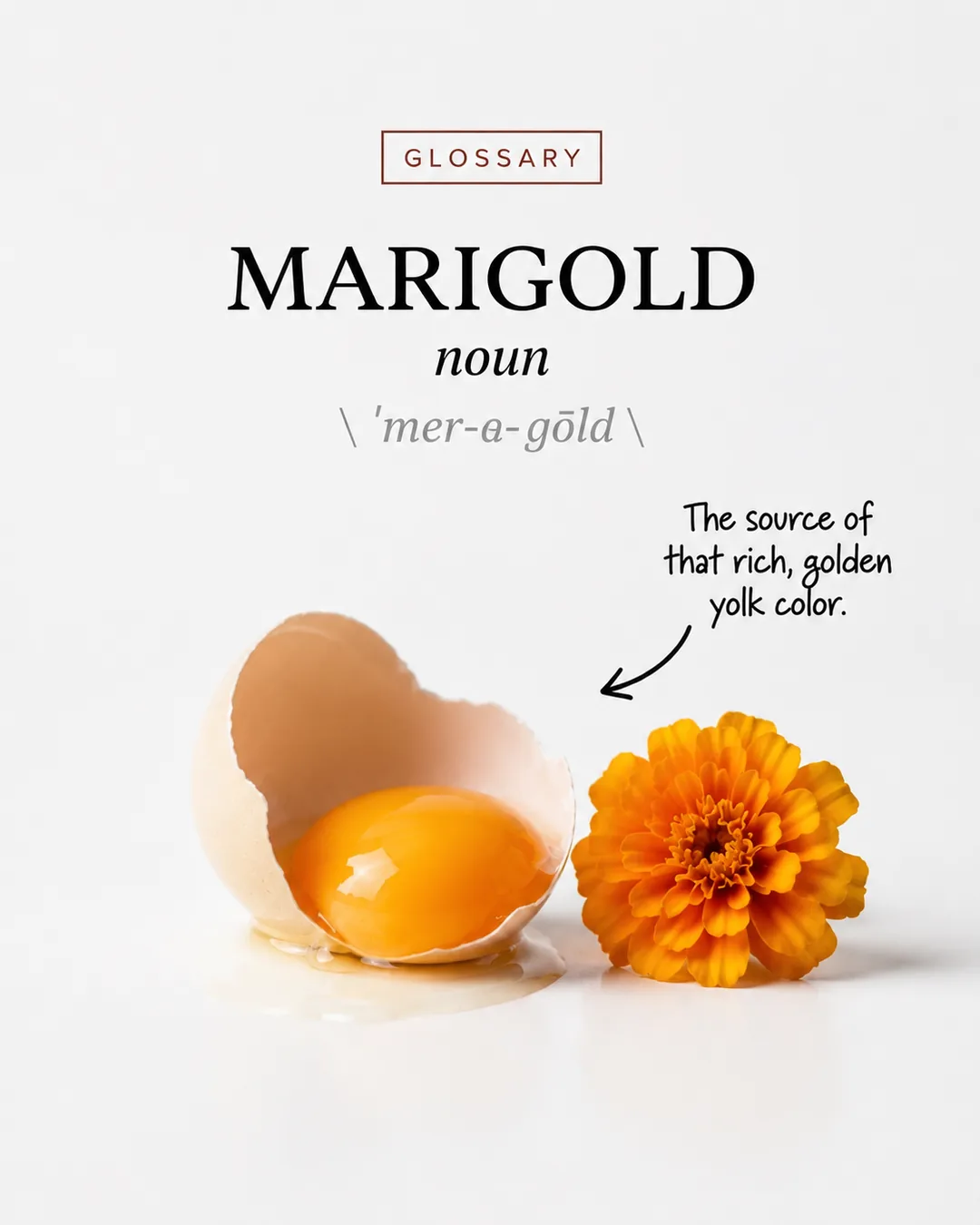
Marigold. The everyday flower behind two of the food industry's most quietly engineered colors.
Marigold. The everyday flower behind two of the food industry's most quietly engineered colors. The chemistry that does the work is lutein, a yellow carotenoid found in Tagetes (true marigold) petals. Ground, extracted, and refined into a…
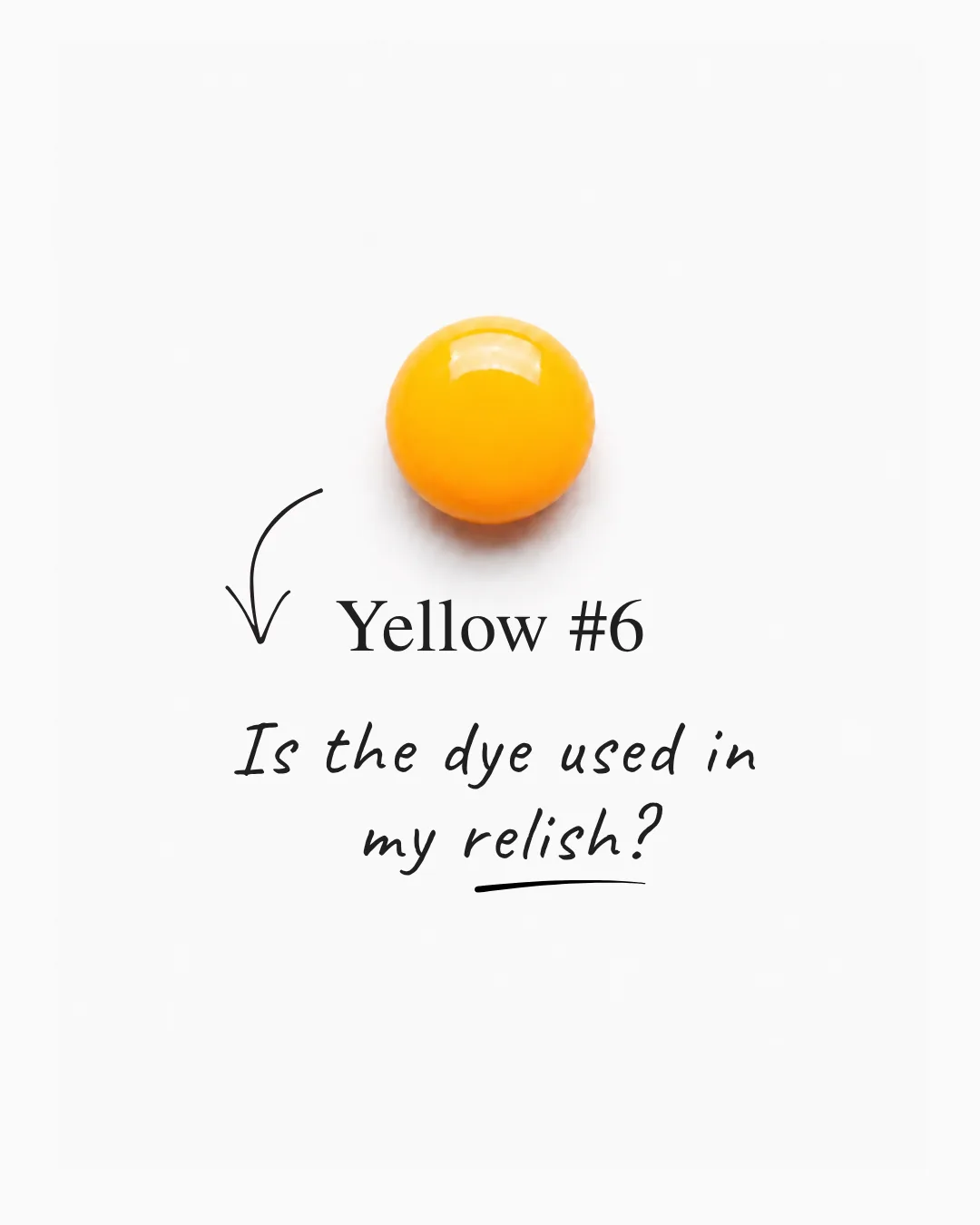
Yellow 6. The vivid orange-yellow synthetic dye behind a lot more on the shelf than most shoppers realize.
Yellow 6. The vivid orange-yellow synthetic dye behind a lot more on the shelf than most shoppers realize. Officially named FD&C Yellow No. 6. Chemically: Sunset Yellow FCF, an azo dye. Industrially: the orange in many of the snack foods…
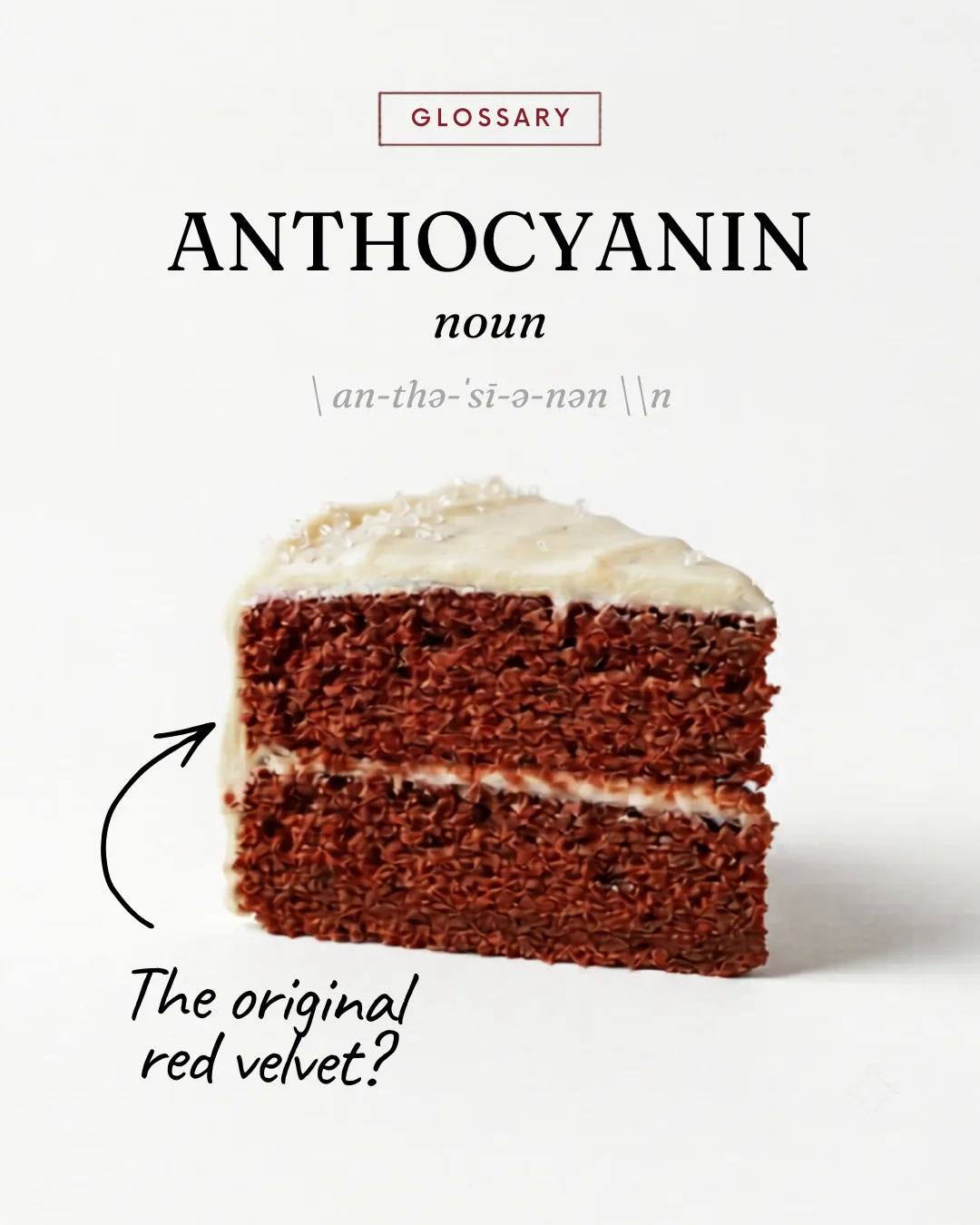
Anthocyanin. A natural plant pigment best known for the deep reds, purples, and blues in blueberries, red cabbage…
Anthocyanin. A natural plant pigment best known for the deep reds, purples, and blues in blueberries, red cabbage, butterfly pea flower, elderberry, and dark grapes. The chemistry is unusual: anthocyanins shift COLOR depending on pH. Red…
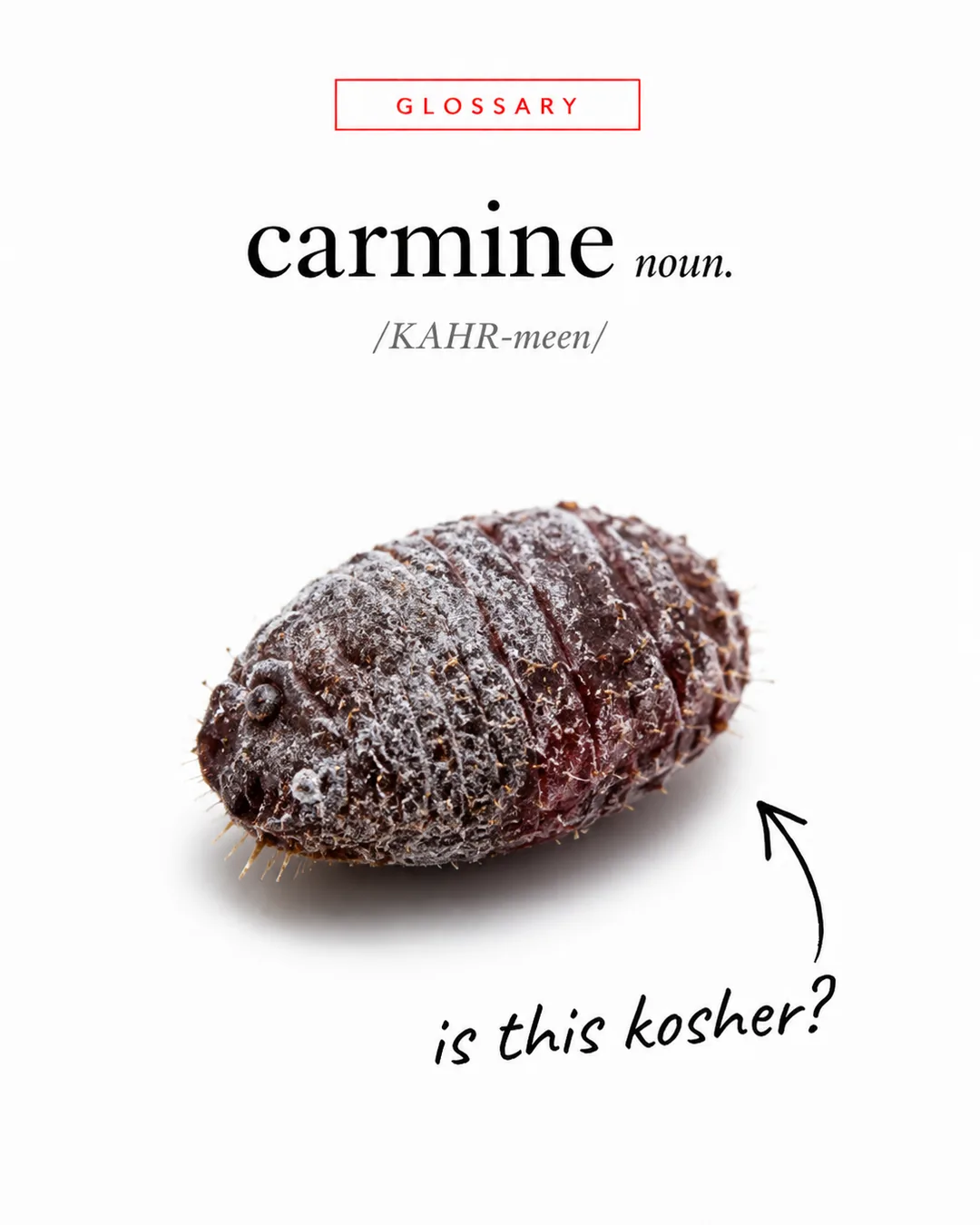
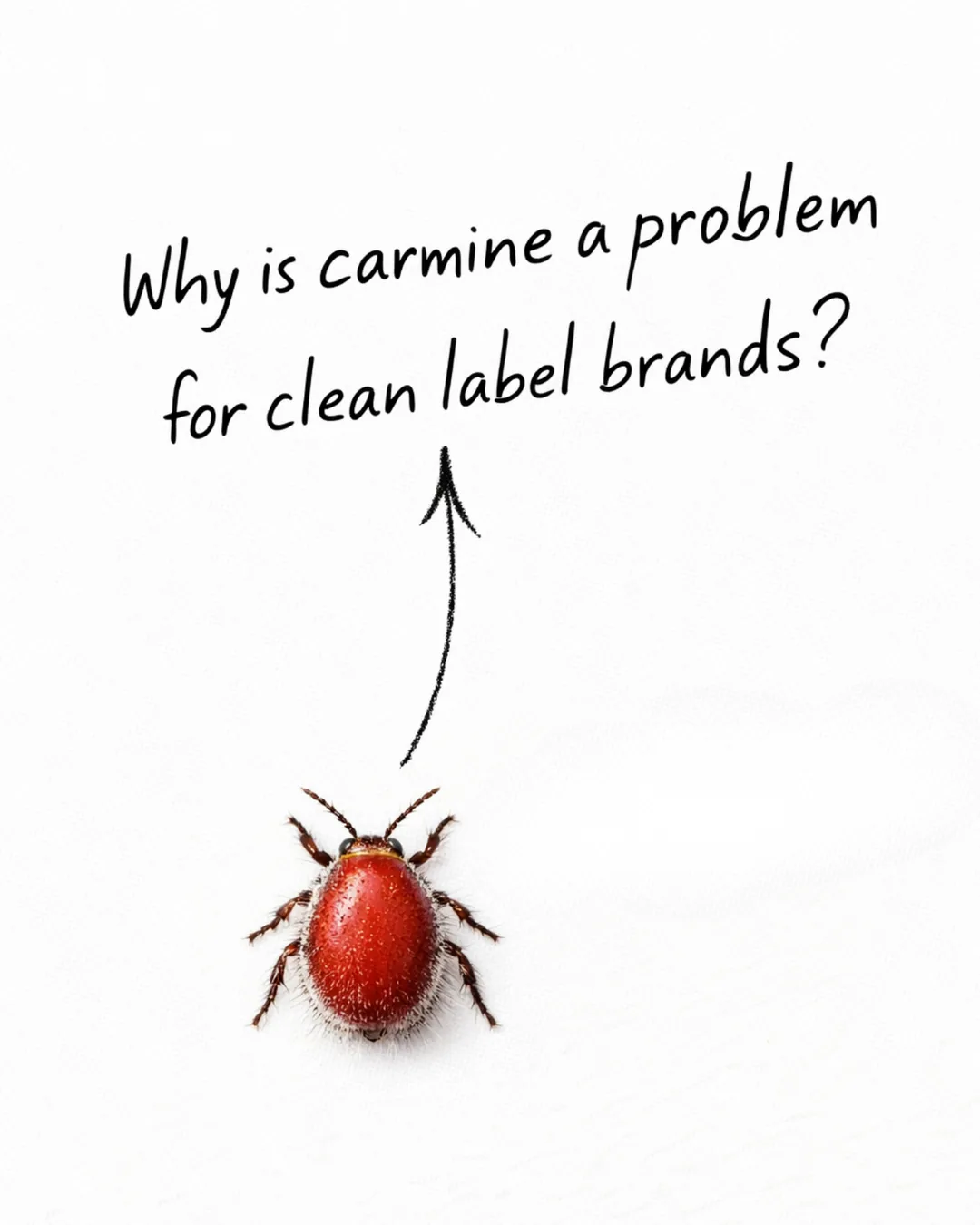
Carmine. The vivid red pigment used in countless candies, yogurts, beverages, and cosmetics.
Carmine. The vivid red pigment used in countless candies, yogurts, beverages, and cosmetics. Sourced from the dried bodies of female cochineal insects, scale insects that live on prickly pear cactus pads. Pre-Columbian Mesoamerican…
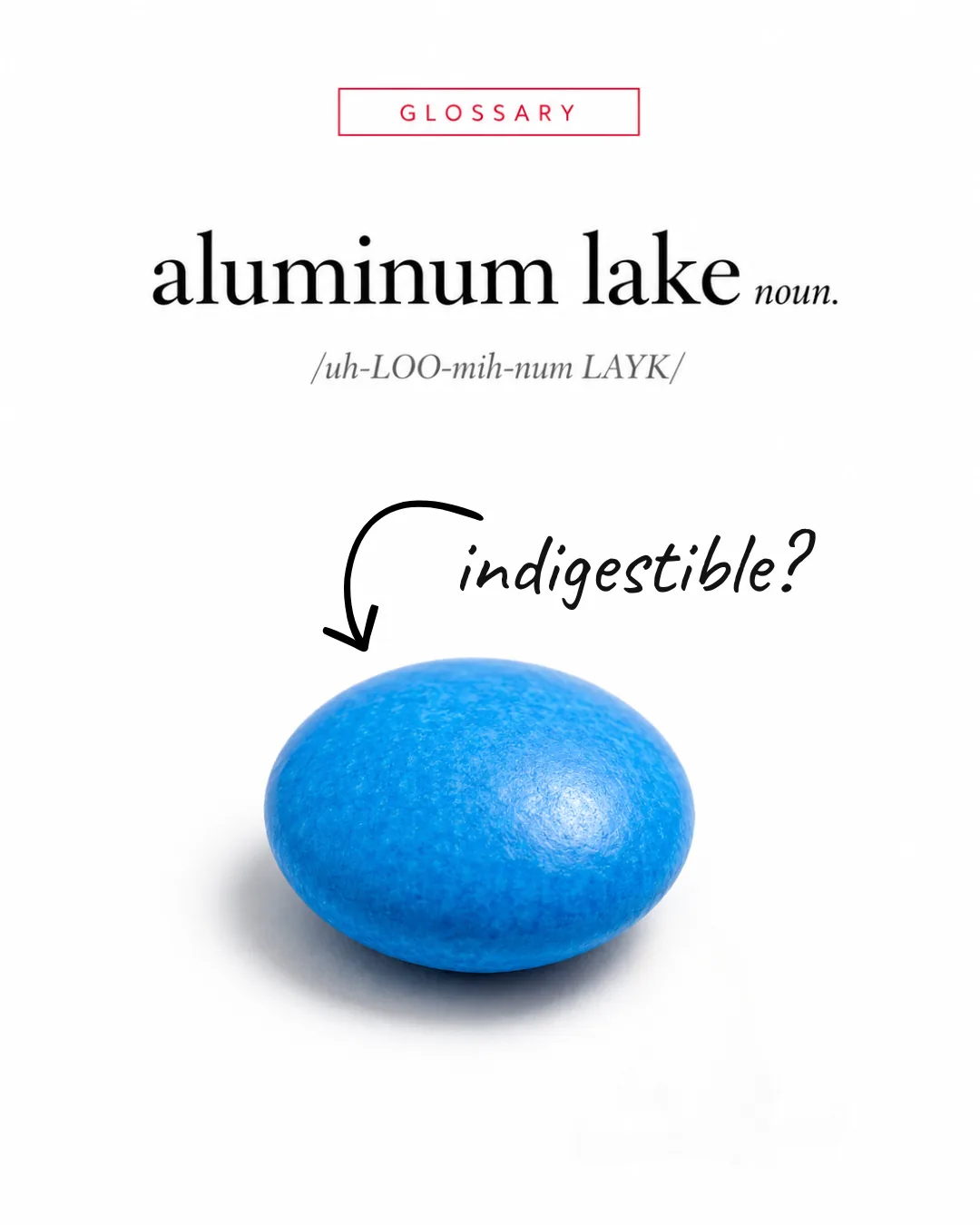
Aluminum lake. The dye that doesn't bleed.
Aluminum lake. The dye that doesn't bleed. The reason an orange M&M can sit next to a green M&M without either of them turning brown. And -- yes -- indigestible. What it is: a water-soluble dye bonded to an aluminum salt to make an…
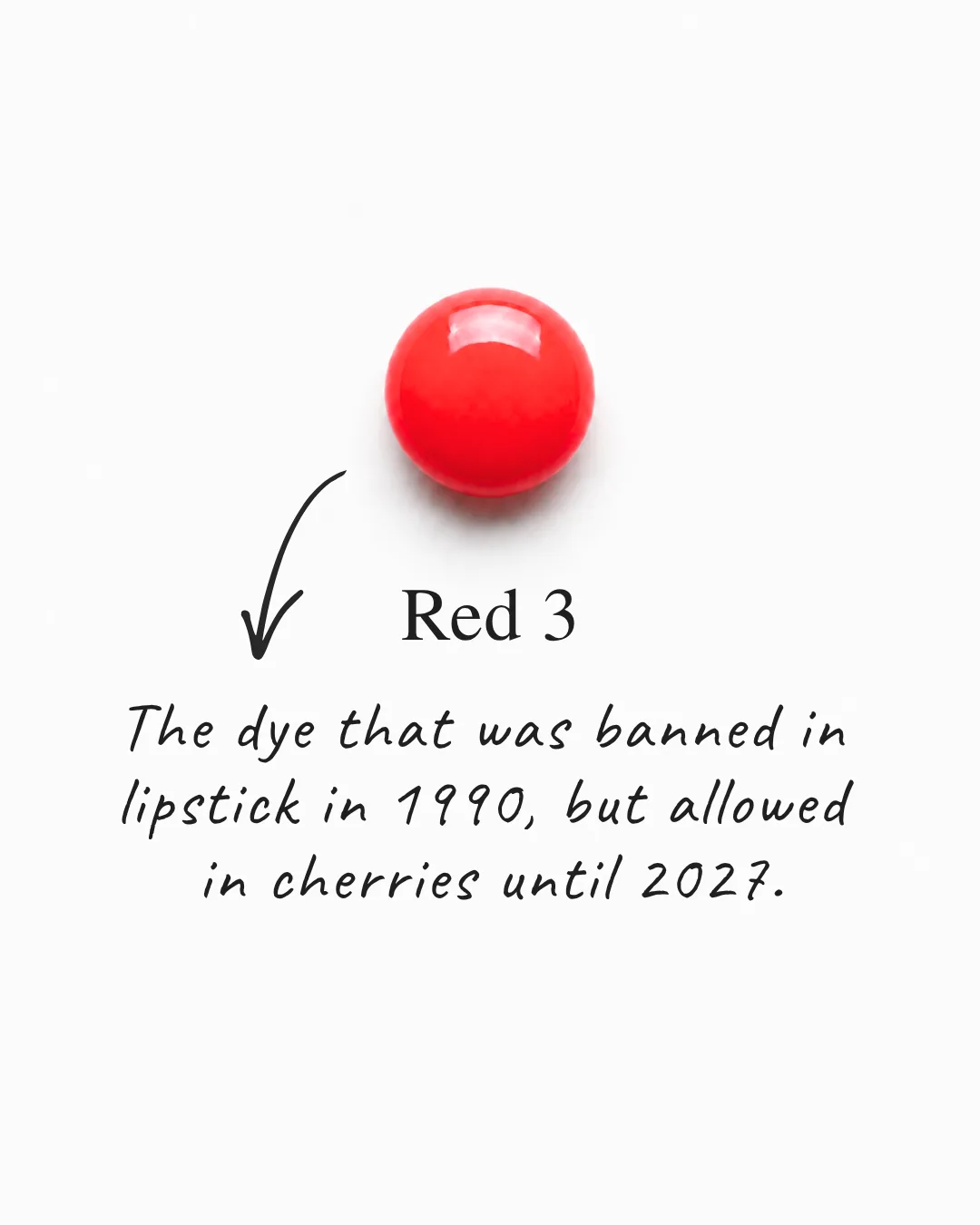
For 35 years, FD&C Red No. 3 was deemed too risky for adult lips but acceptable for children's candy.
For 35 years, FD&C Red No. 3 was deemed too risky for adult lips but acceptable for children's candy. The dye was banned from cosmetics by the FDA in January 1990. The trigger: rat studies linking high-dose exposure to thyroid tumors…
Halo Science featured DyeConverter on the Halo blog.
Halo Science featured DyeConverter on the Halo blog. The pitch: predictive reformulation for natural colorants. Screen candidates against pH, thermal stability, shelf-life, dosage, and regulatory compliance across U.S., EU, and Canada…
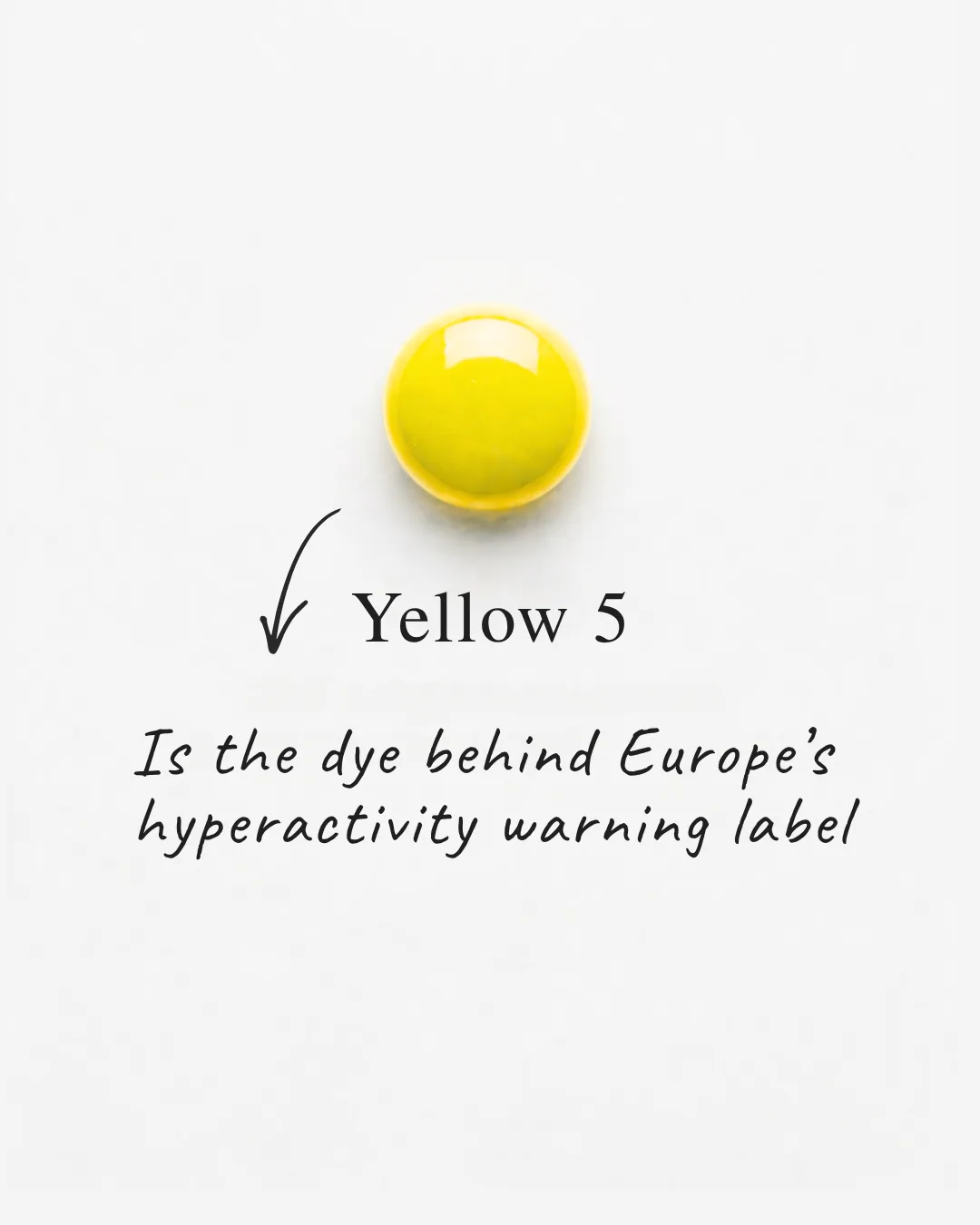
Since 2010, any product sold in the European Union that contains tartrazine (Yellow 5's other name) has to carry a…
Since 2010, any product sold in the European Union that contains tartrazine (Yellow 5's other name) has to carry a label: "may have an adverse effect on activity and attention in children." That warning came out of the Southampton Six…
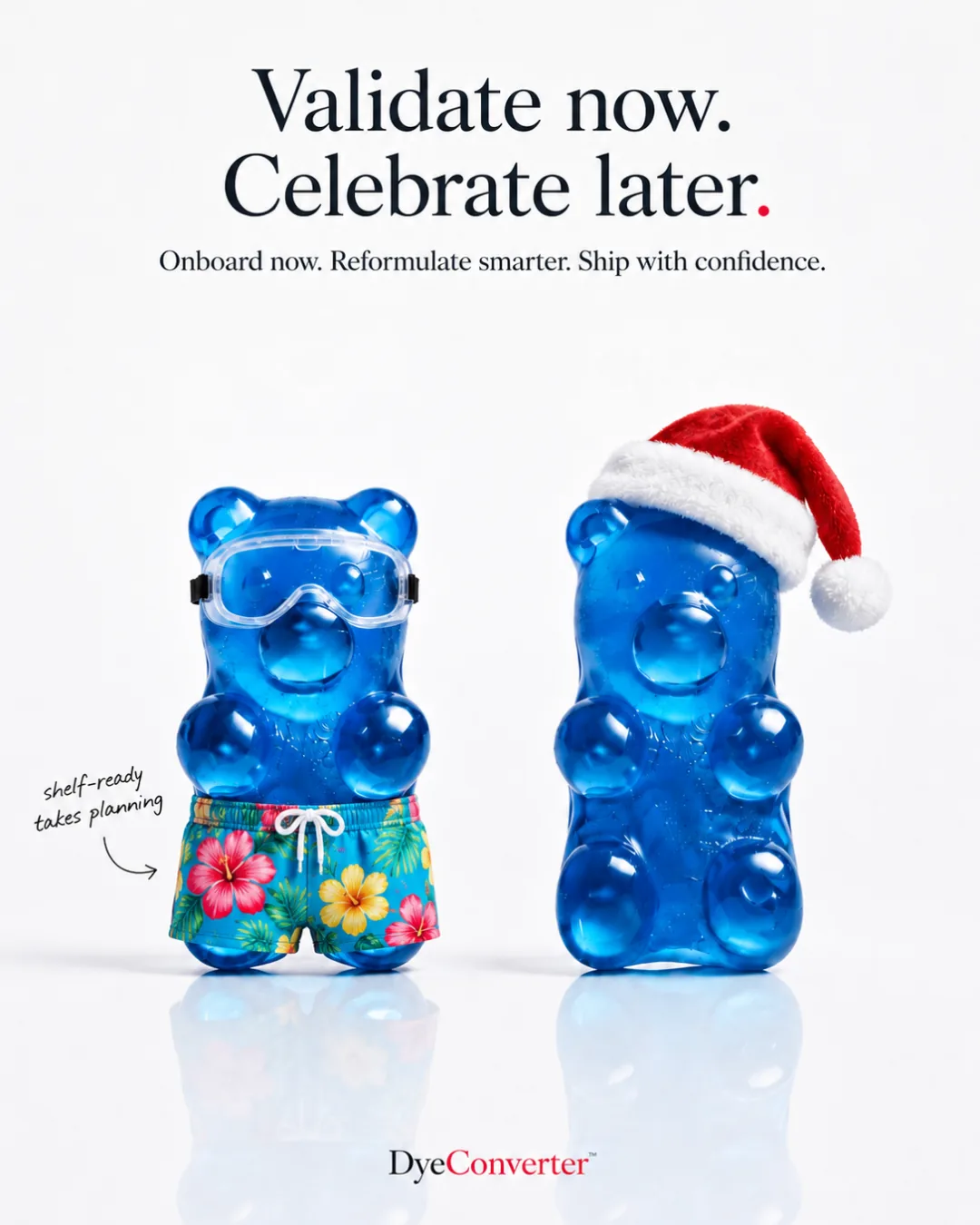
Q2 to Q4. Reformulation to shipping.
Q2 to Q4. Reformulation to shipping. Sounds impossible -- unless the bench isn't the bottleneck. Using the old reformulation playbook, it IS impossible. That playbook gave time... time to research options, time to get samples in, time to…
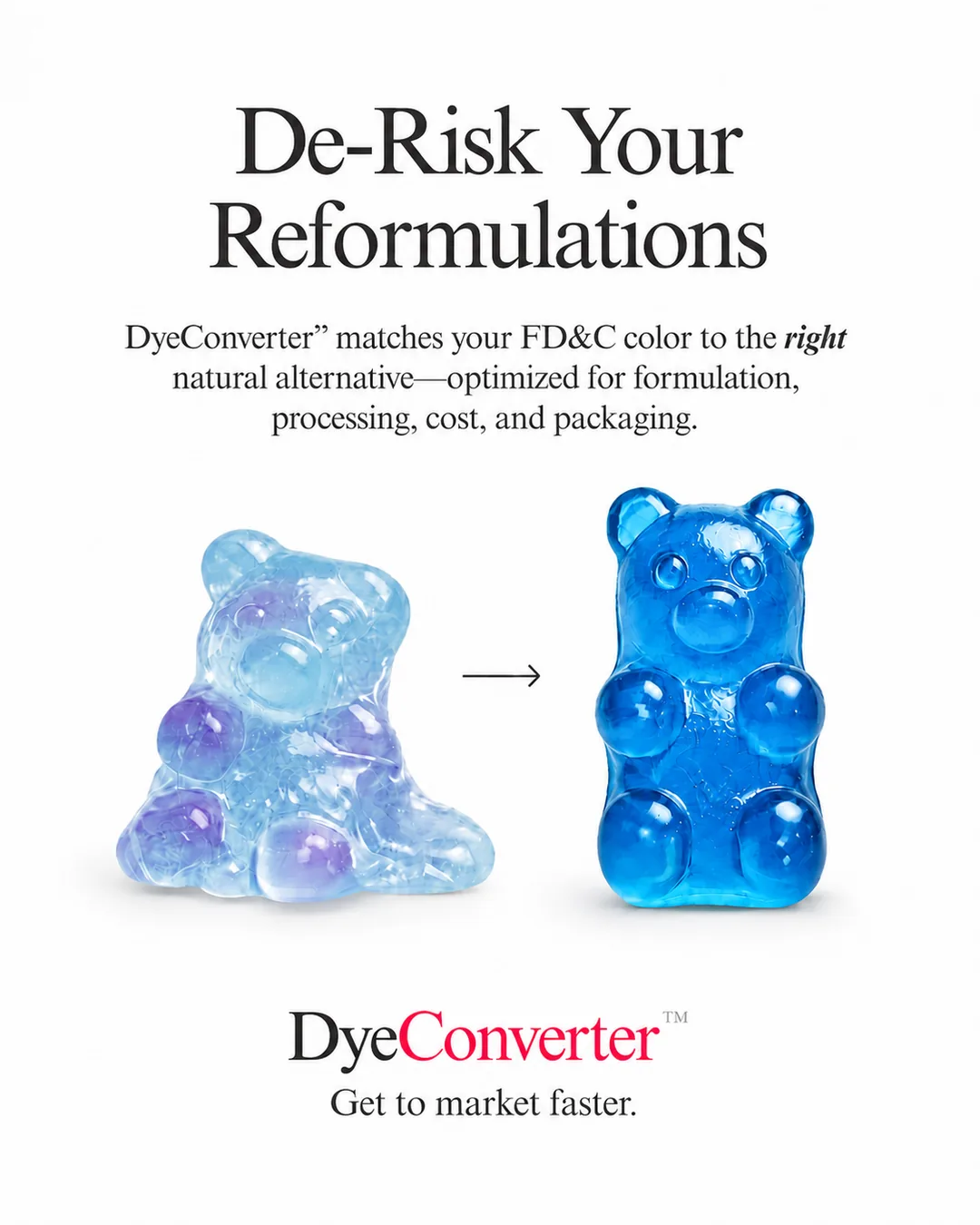
De-risking blue is a different sport.
De-risking blue is a different sport. Most natural color swaps are about finding any pigment that survives the matrix. With blue, the problem starts one step earlier: the practical natural palette barely qualifies as a list. The one most…
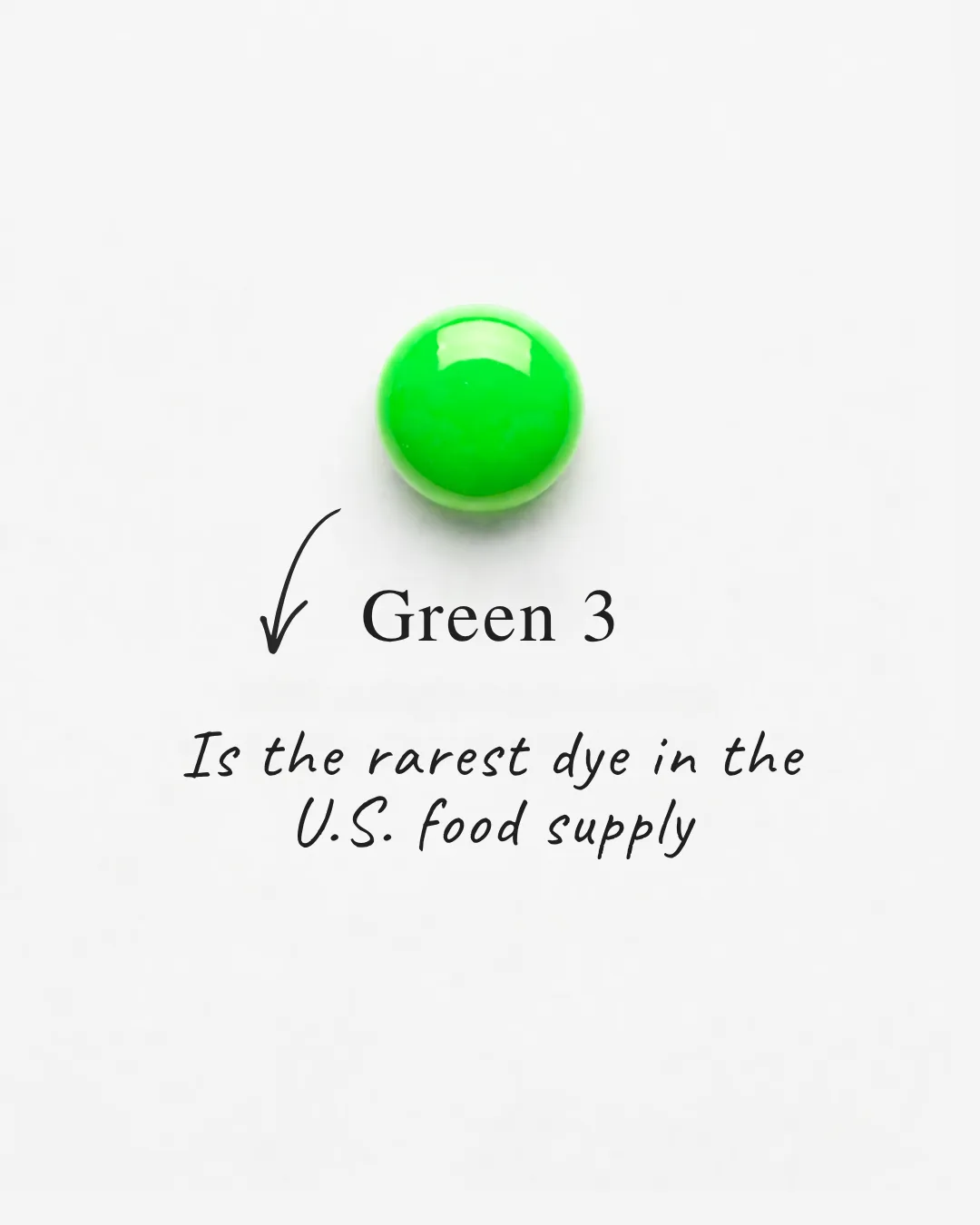
Green 3 is the rarest of the synthetic dyes in the U.S. food supply.
Green 3 is the rarest of the synthetic dyes in the U.S. food supply. By December 2027 it is gone with the rest. That part is the small story. Almost nobody uses Green 3 directly. Mint candies, sherbets, the occasional novelty ice cream…
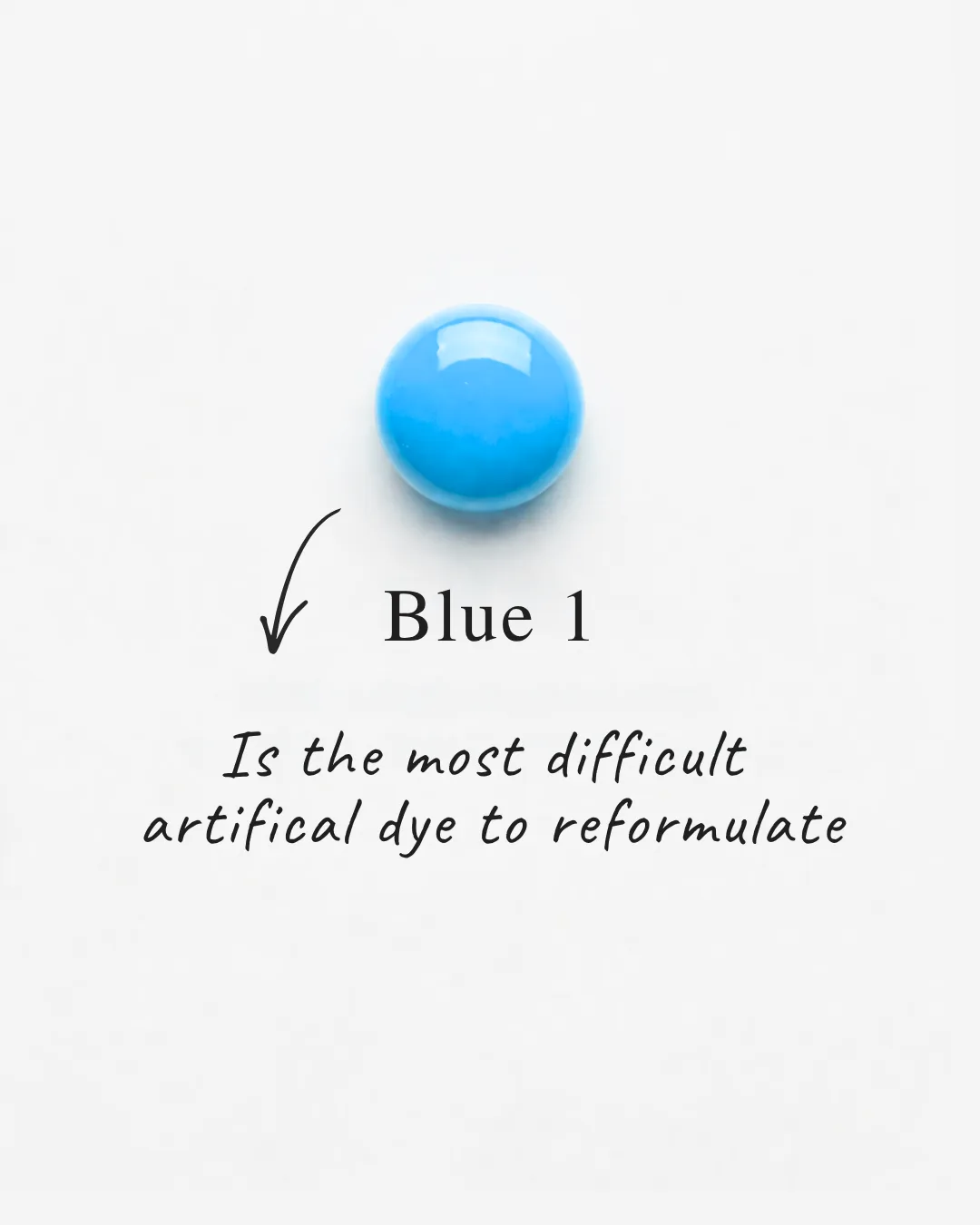
Blue 1 is the hardest synthetic dye to reformulate.
Blue 1 is the hardest synthetic dye to reformulate. Not the loudest. Not the most regulated. The hardest. Two reasons. First, the natural blue palette is the smallest in the pigment world. Red has beet, anthocyanin, lycopene, paprika…
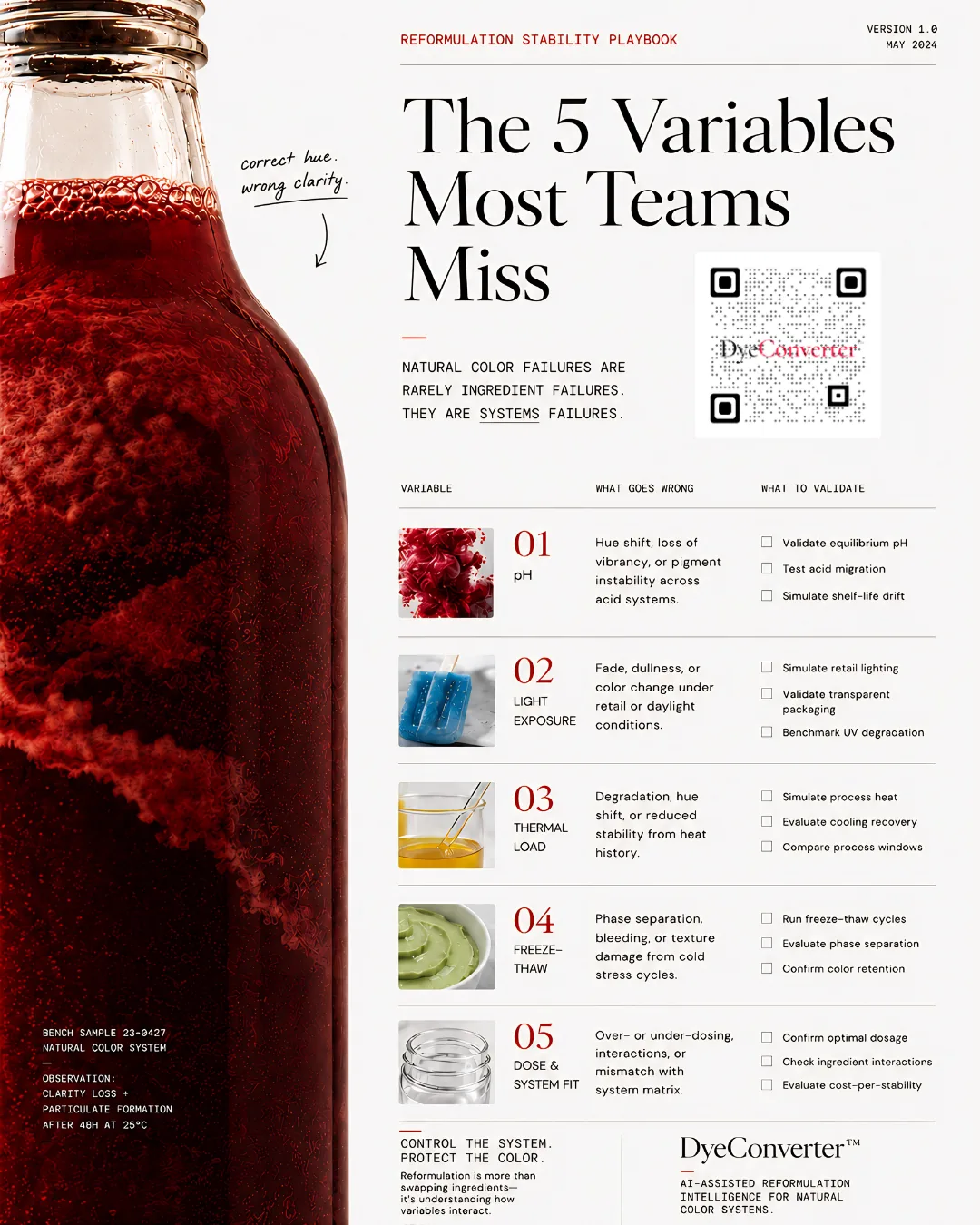
Natural color failures are rarely ingredient failures.
Natural color failures are rarely ingredient failures. They are systems failures. A pigment that looked perfect on the bench drifts on the line. The team blames the dye. The dye was never the problem. The pH moved. Retail lighting cooked…
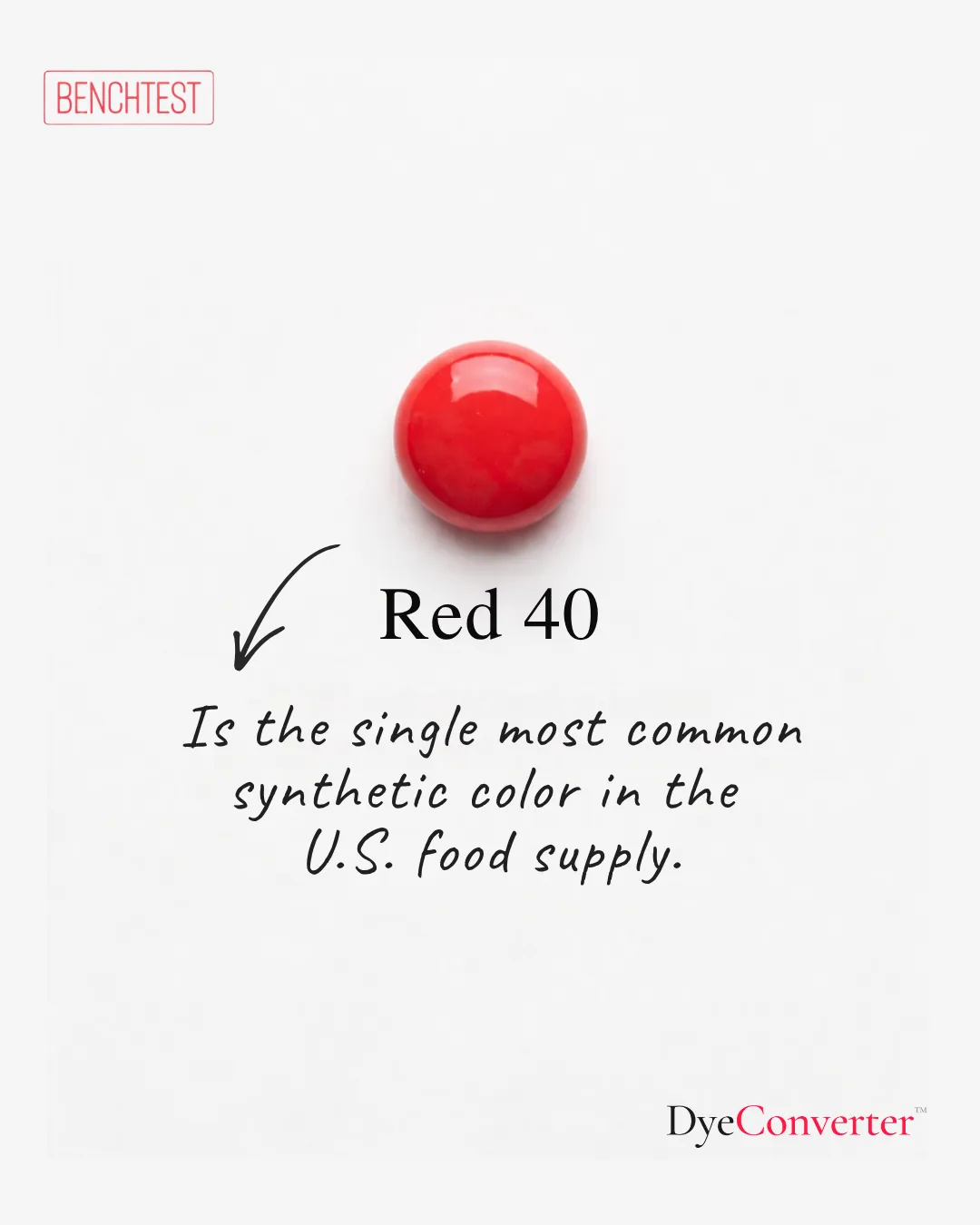
Red 40 is the single most common synthetic color in the U.S. food supply.
Red 40 is the single most common synthetic color in the U.S. food supply. It is in cereal, candy, beverages, baked goods, dairy, snacks, condiments, and supplements. If a product is red, orange, or purple, odds are Red 40 is doing the…
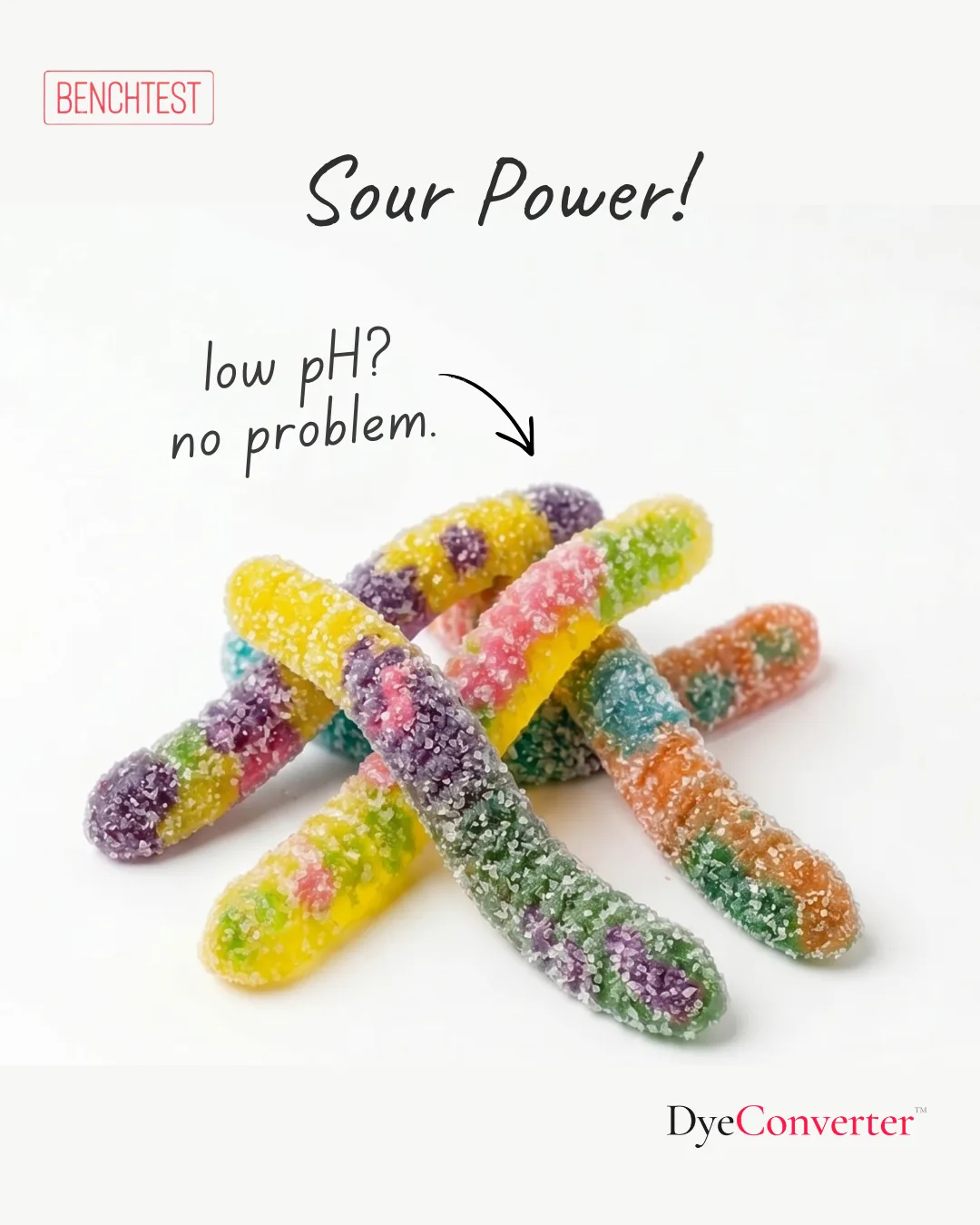
Sour Power. Natural color in sour gummies does not have to mean fighting chemistry.
Sour Power. Natural color in sour gummies does not have to mean fighting chemistry. It is a chance to work with it. At low pH, a lot of natural pigments shift, fade, or morph. Anthocyanins swing from red toward purple. Some blues drift…
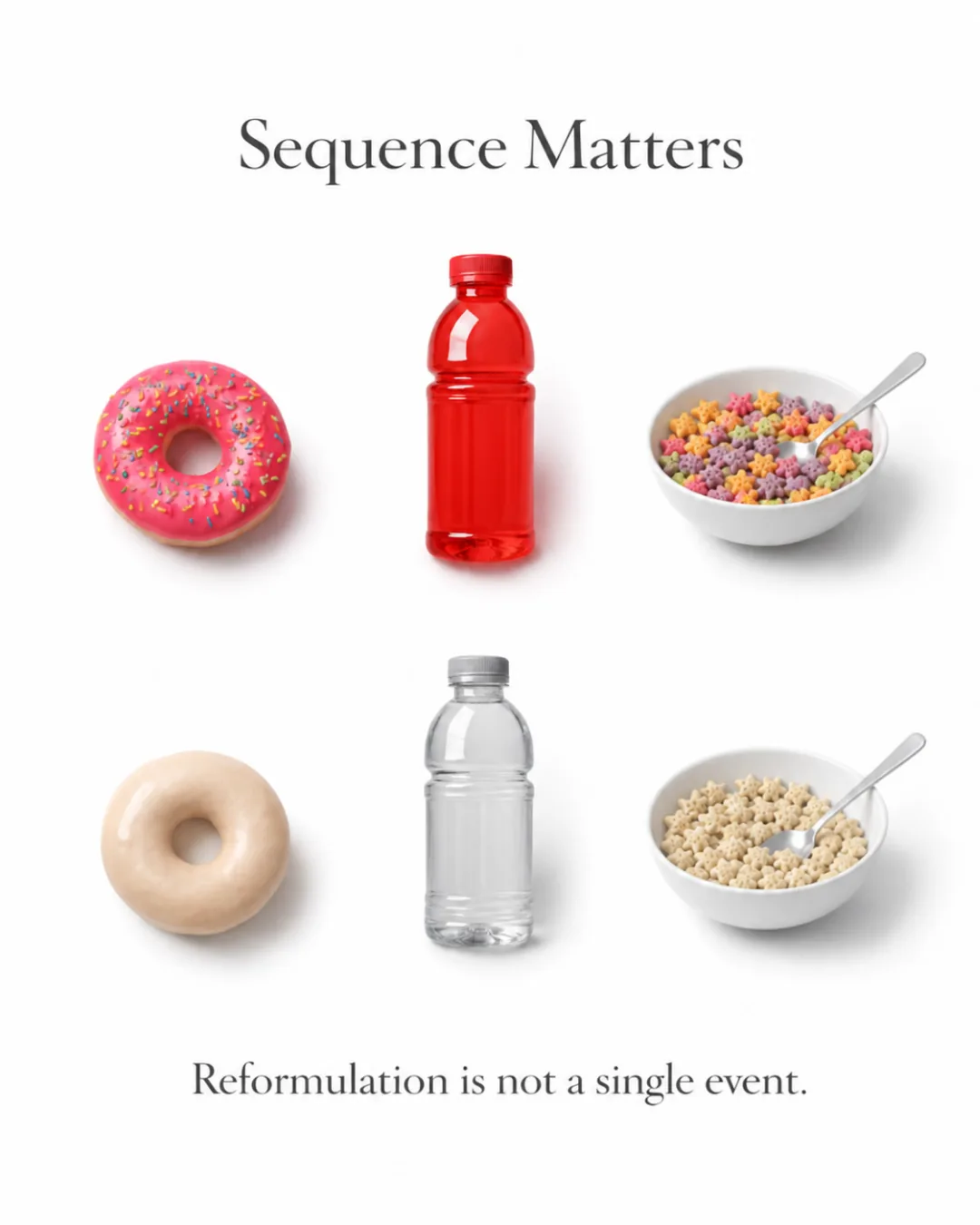
Sequence Matters: The donut, the sports drink, and the cereal aren't solving the same problem.
Sequence Matters: The donut, the sports drink, and the cereal aren't solving the same problem. The donut's pink is a surface application. Frosting meets dye after the bake. Short heat exposure, low water activity, and dye sits on top, not…
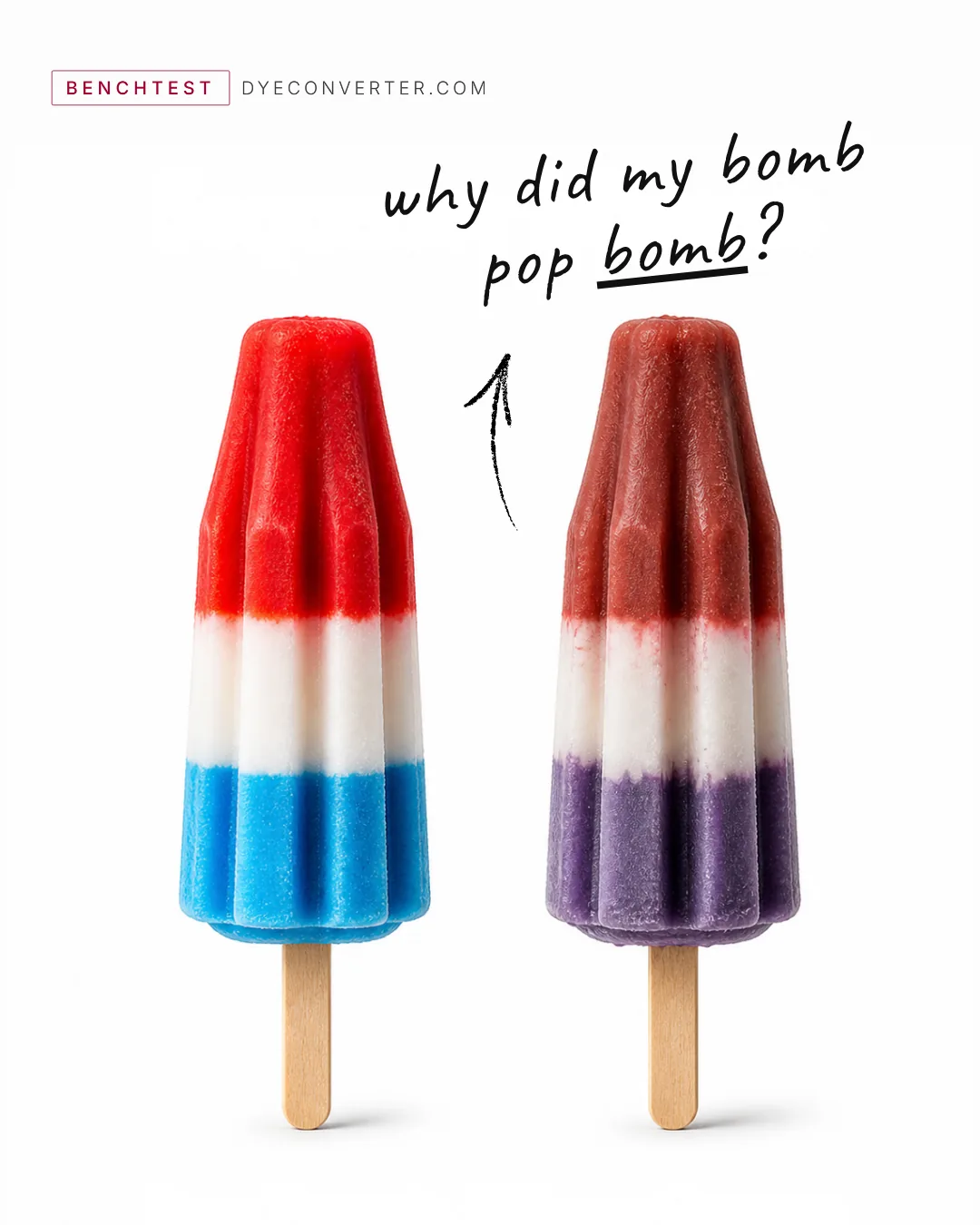
A bomb pop isn't one product.
A bomb pop isn't one product. It's three products stacked. Each layer has its own pH, its own sugar profile, its own freeze curve. When you formulate with synthetic dyes, those layers can ignore each other. Red 40 doesn't care what the…
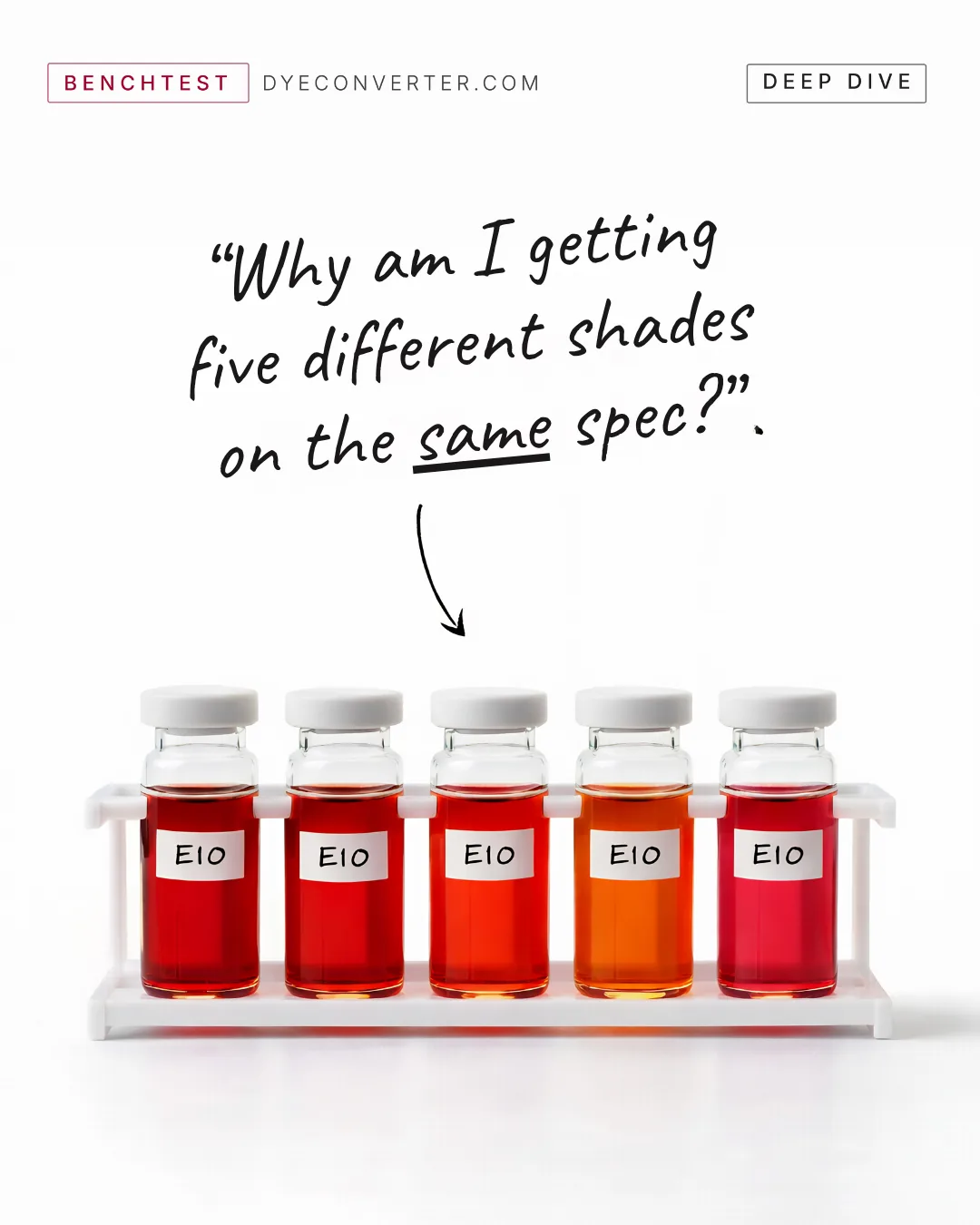
Why am I getting five different shades on the same spec?
Why am I getting five different shades on the same spec? Short answer: the spec measures how STRONG the color is, not WHICH color it is. Imagine walking into a paint store and asking for "red." You'd get handed a fan deck with fifty…
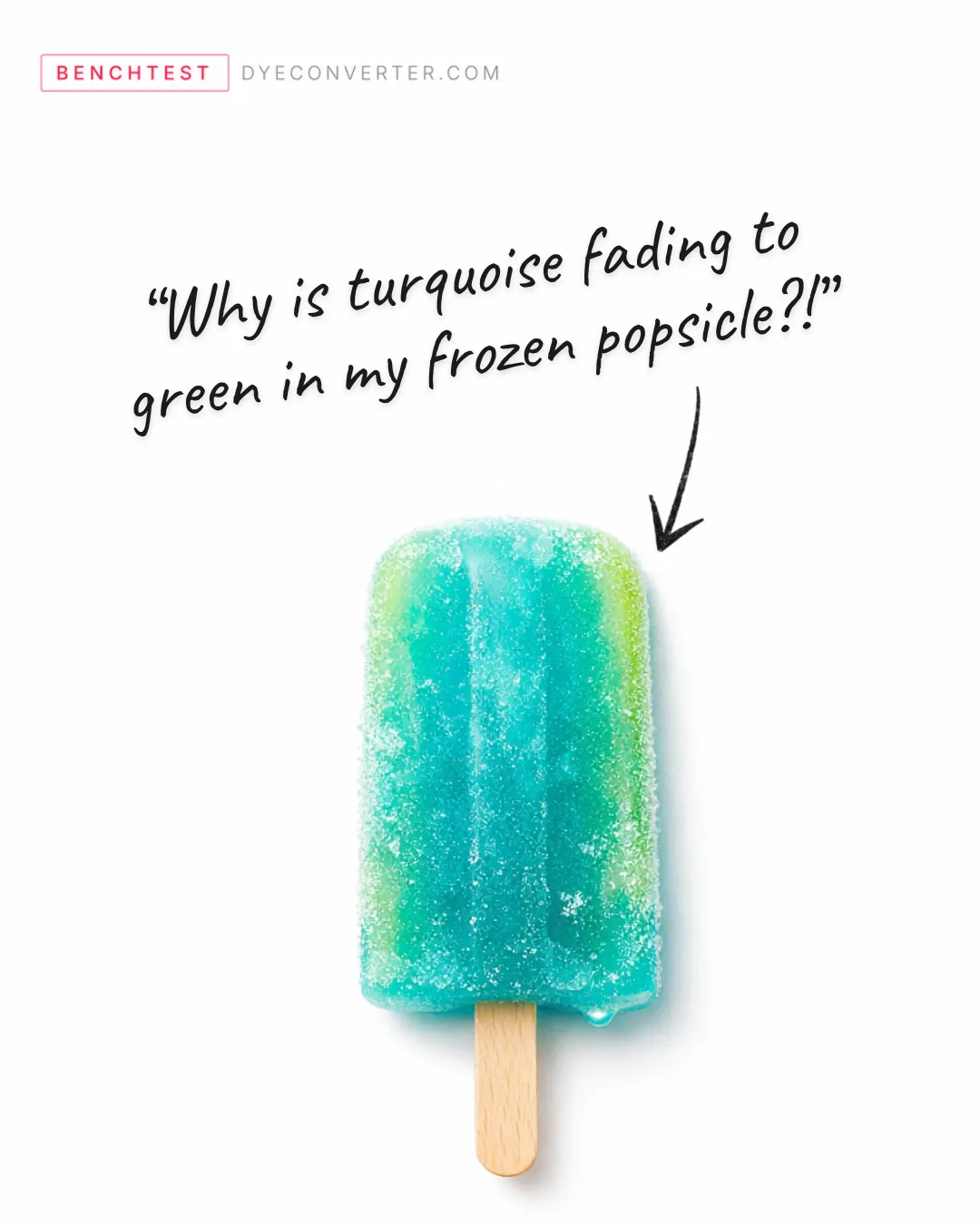
Why is turquoise fading to green in my frozen popsicle?
Why is turquoise fading to green in my frozen popsicle? Short answer: spirulina blue isn't a pigment. It's a protein. And freezing damages proteins. The blue in spirulina comes from phycocyanin -- a phycobiliprotein, meaning a chromophore…
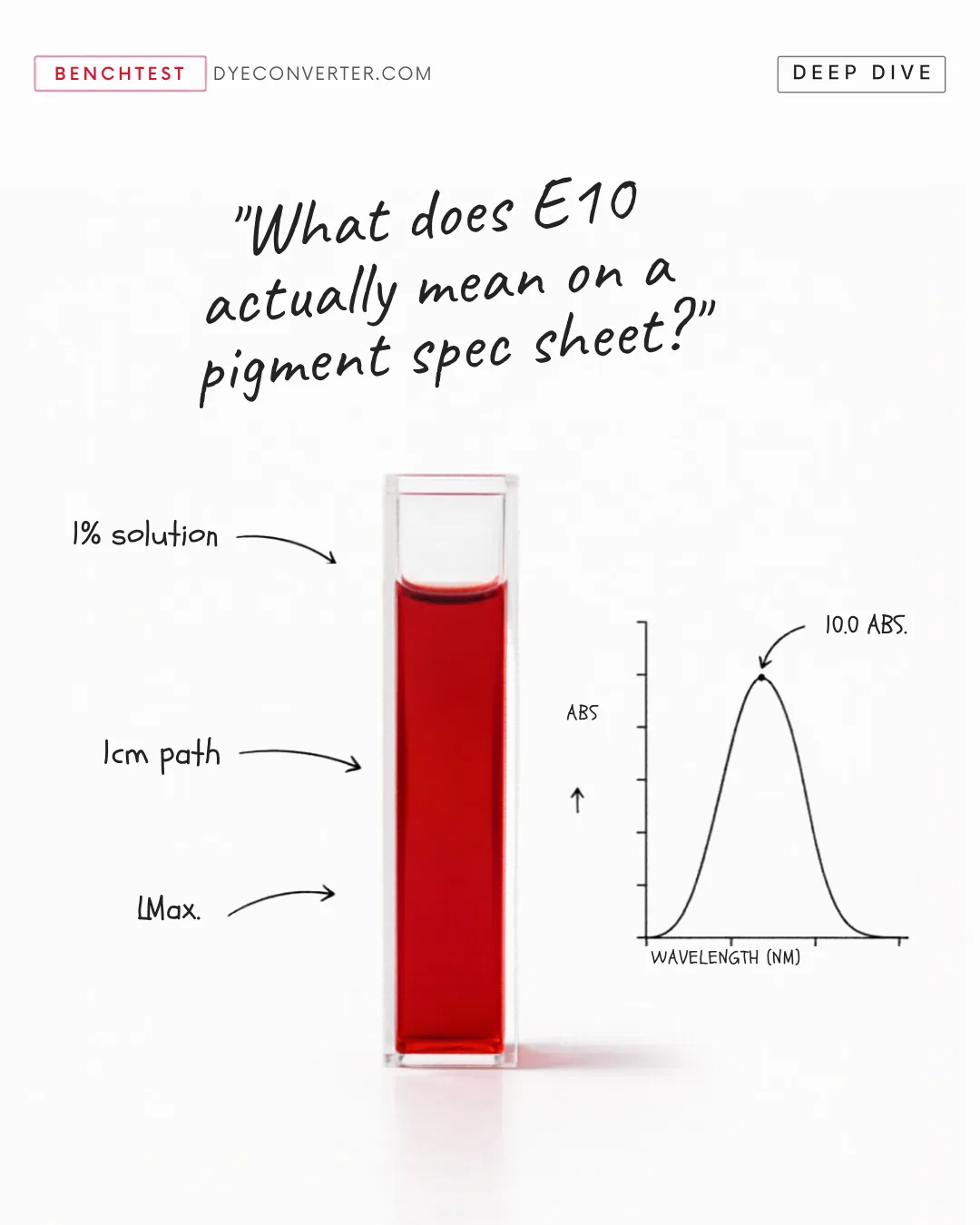
E10 might be the most useful, most misread number on a pigment spec sheet.
E10 might be the most useful, most misread number on a pigment spec sheet. Here's what it actually measures: the absorbance of a 1% pigment solution, read through a 1cm path. At the color's peak wavelength. Plain language? Color STRENGTH…
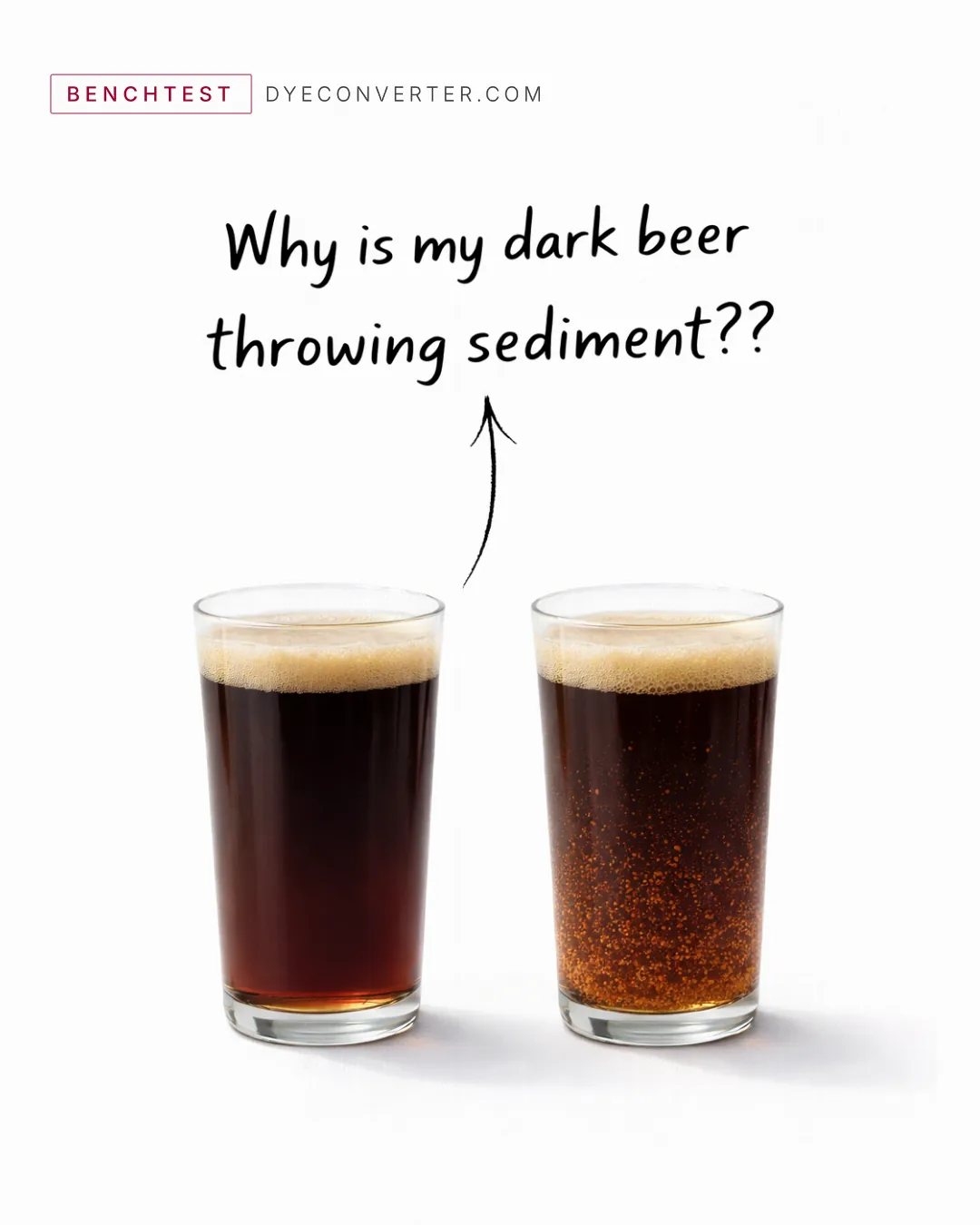
Your dark beer looks great leaving the kettle.
Your dark beer looks great leaving the kettle. By the time it's on the shelf, there's sediment at the bottom and haze you can't explain. This is one of the most common color defects in brewing. And it has nothing to do with filtration…
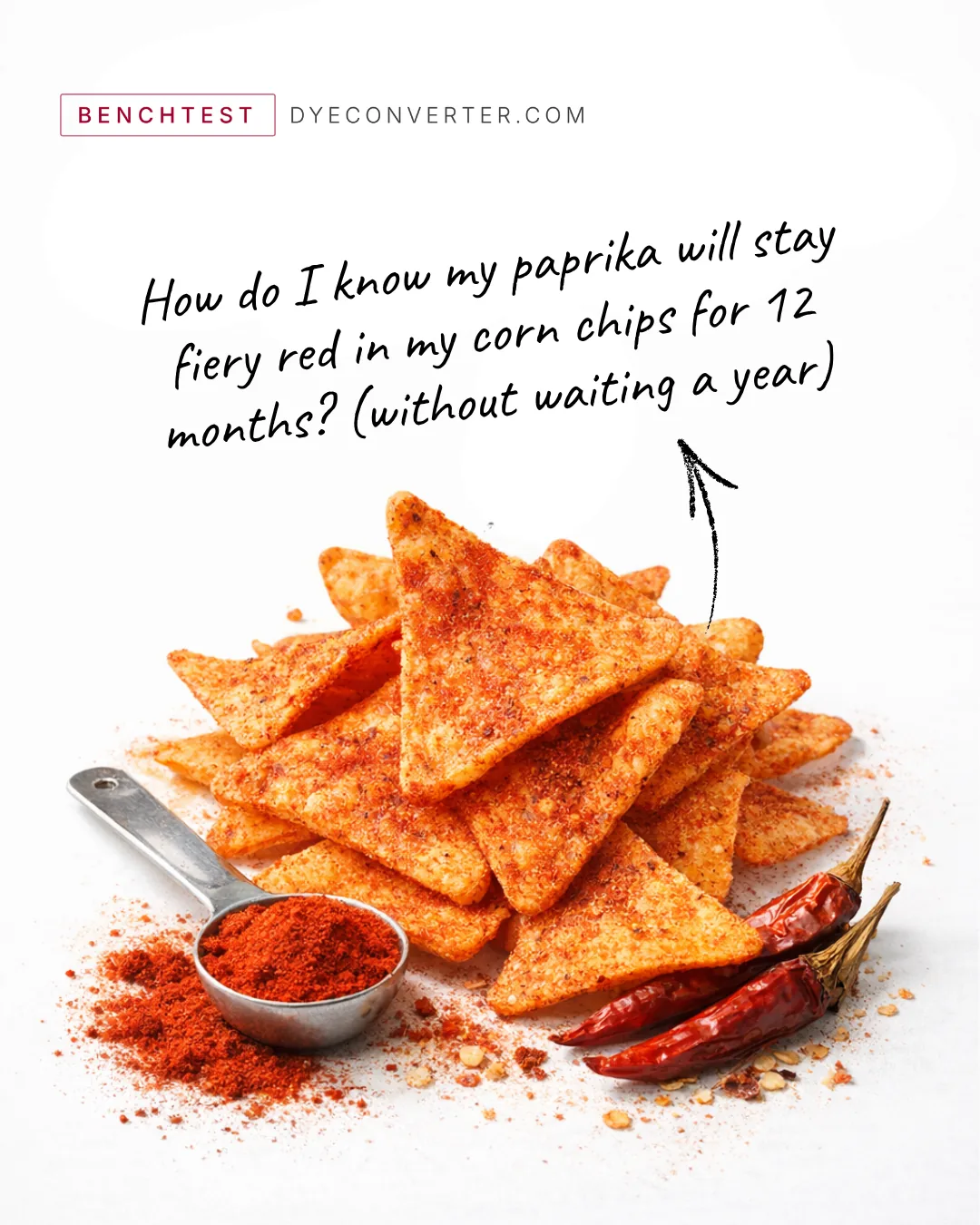
BenchTest #005 -- How do I know my paprika will stay fiery red in my corn chips for 12 months?
BenchTest #005 -- How do I know my paprika will stay fiery red in my corn chips for 12 months? (without waiting a year) Short answer: you cheat. Scientifically. It's called accelerated stability testing -- and it's one of the most…
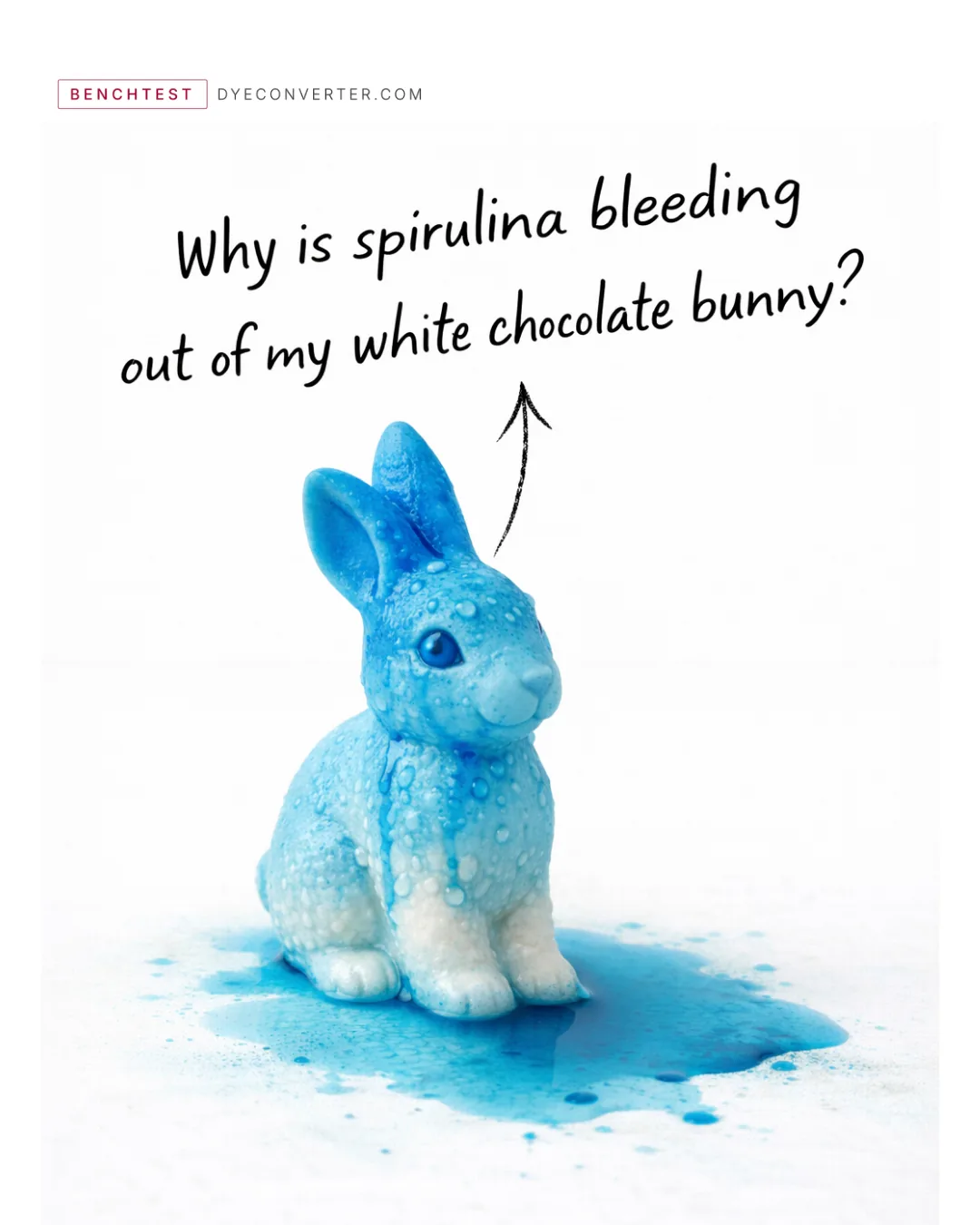
Why is spirulina bleeding out of your white chocolate bunny?
Why is spirulina bleeding out of your white chocolate bunny? Phycocyanin -- the blue pigment in spirulina -- is water-soluble. White chocolate is a fat-based system. The pigment cannot bind into the fat matrix. It migrates to the surface…
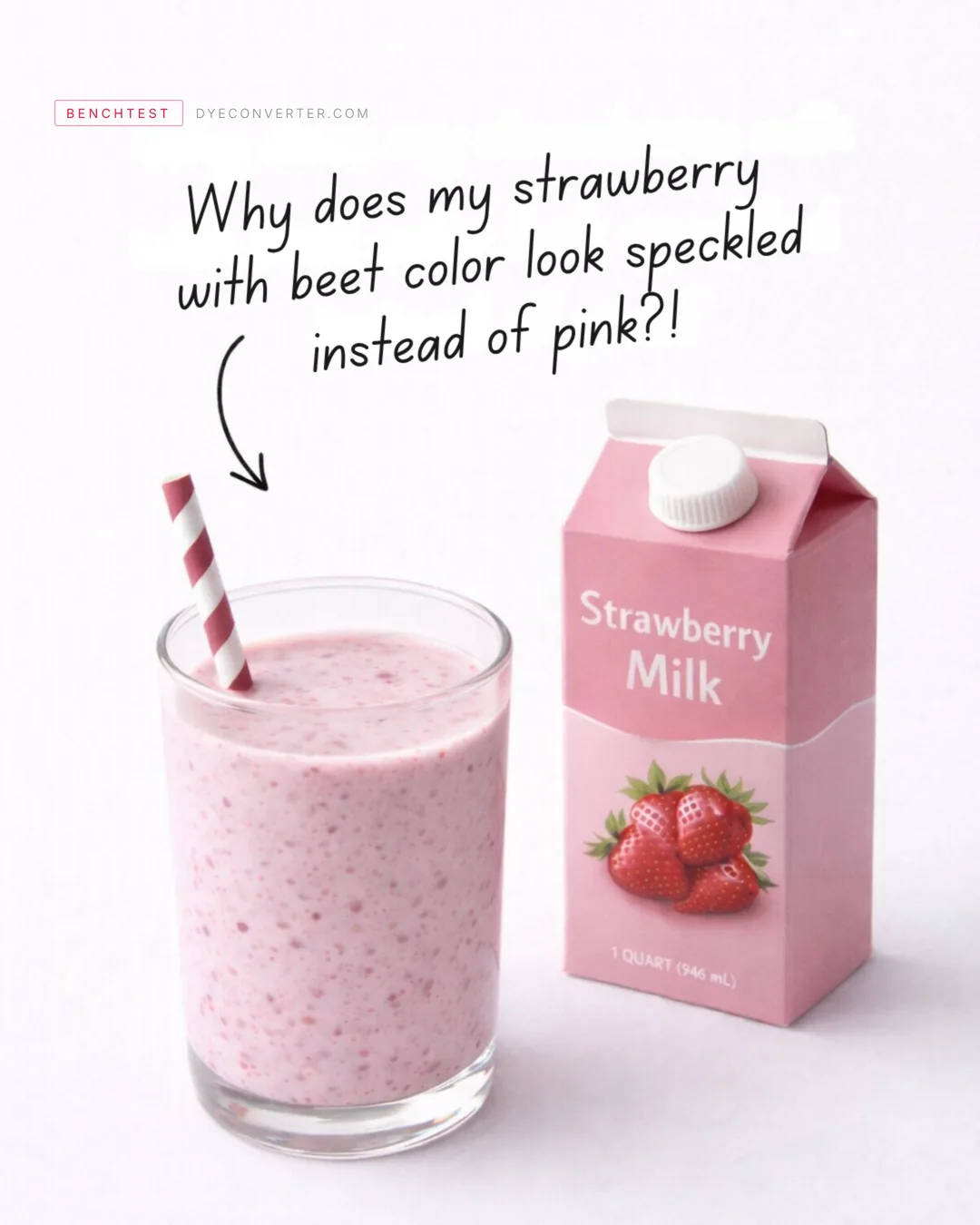
Why does beet color speckle strawberry milk instead of turning it pink?
Why does beet color speckle strawberry milk instead of turning it pink? Short answer: betanin does not dissolve in fat. And milk is full of it. Beet color gets its red from betanin, a water-soluble pigment. When you drop it into milk, the…
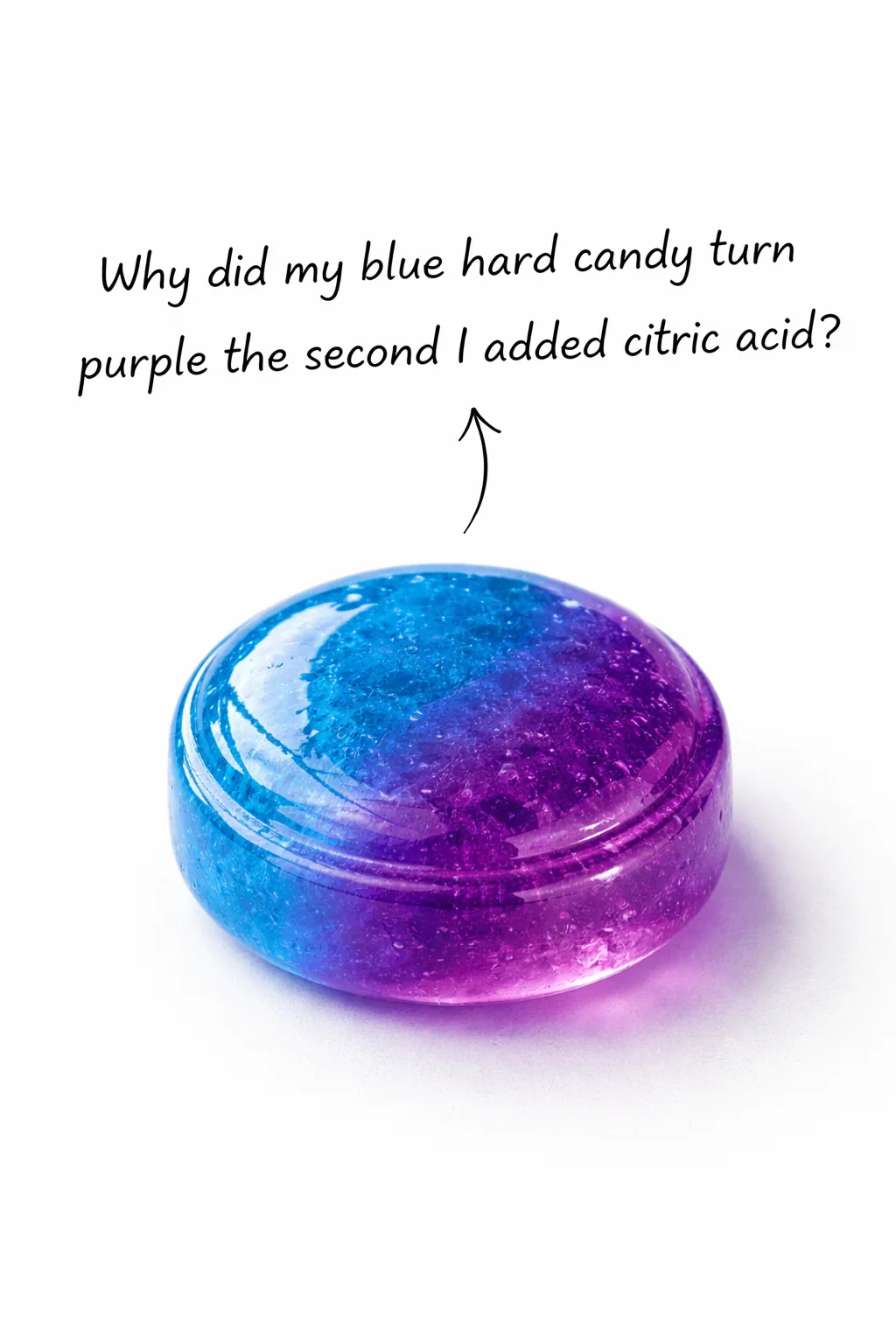
Why did my blue hard candy turn purple the second I added citric acid?
Why did my blue hard candy turn purple the second I added citric acid? Because butterfly pea flower is not Blue 2. It is an anthocyanin. And anthocyanins are pH chameleons. Between pH 3.8 and 7, you get that beautiful natural blue. Drop…
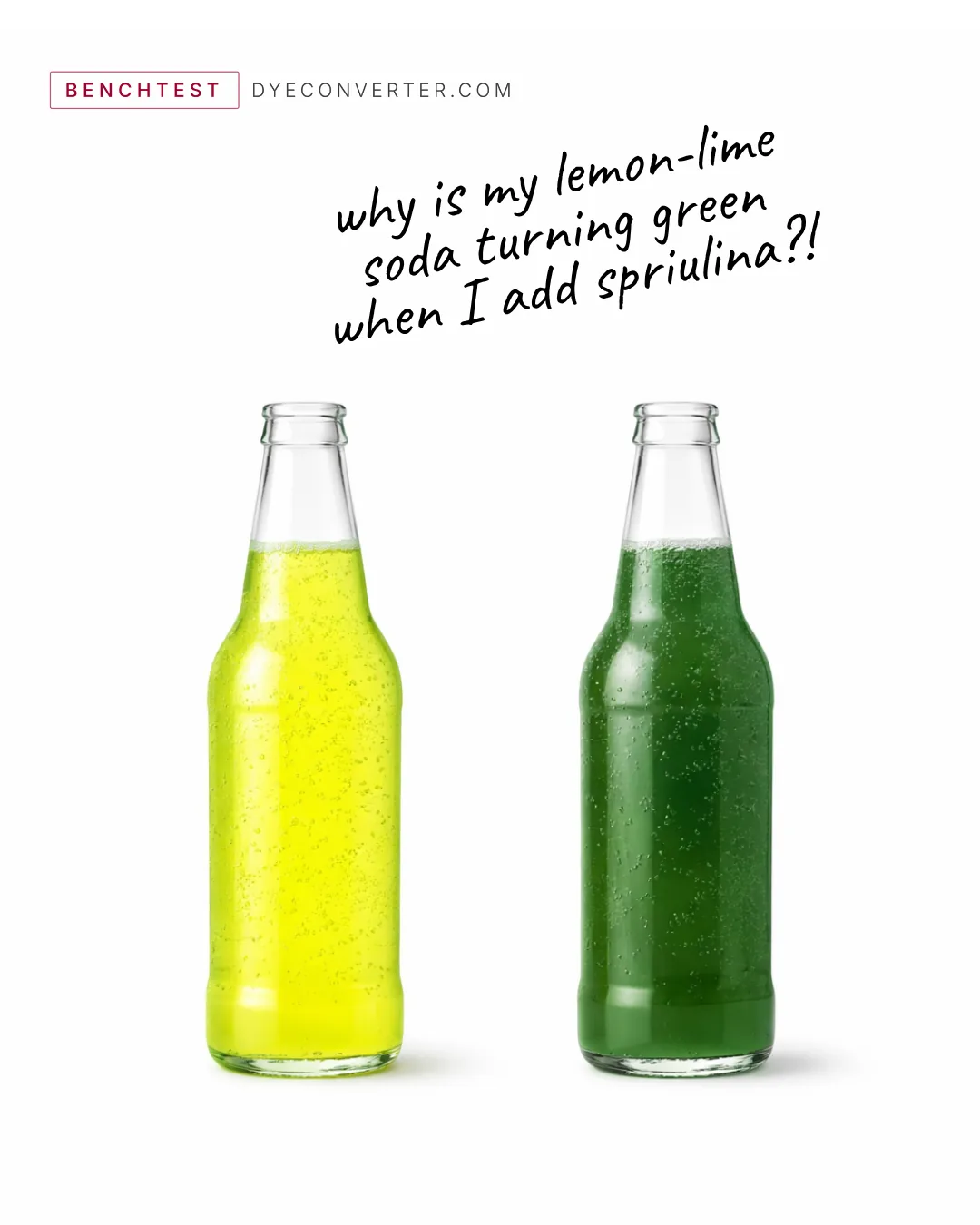
Why is my lemon-lime soda turning green when I add spirulina?
Why is my lemon-lime soda turning green when I add spirulina? Because spirulina is not yellow. It is blue-green. And when you drop a blue-green pigment into a citric acid beverage expecting it to replace Yellow 5, you get swamp water. This…
Why does spirulina fade in gummies?
Why does spirulina fade in gummies? Short answer: the proteins are breaking down before the gummy hits the bag. Spirulina blue comes from phycocyanin. It's a protein-based pigment. And like all proteins, it has a narrow window where it…