Your dark beer looks great leaving the kettle.
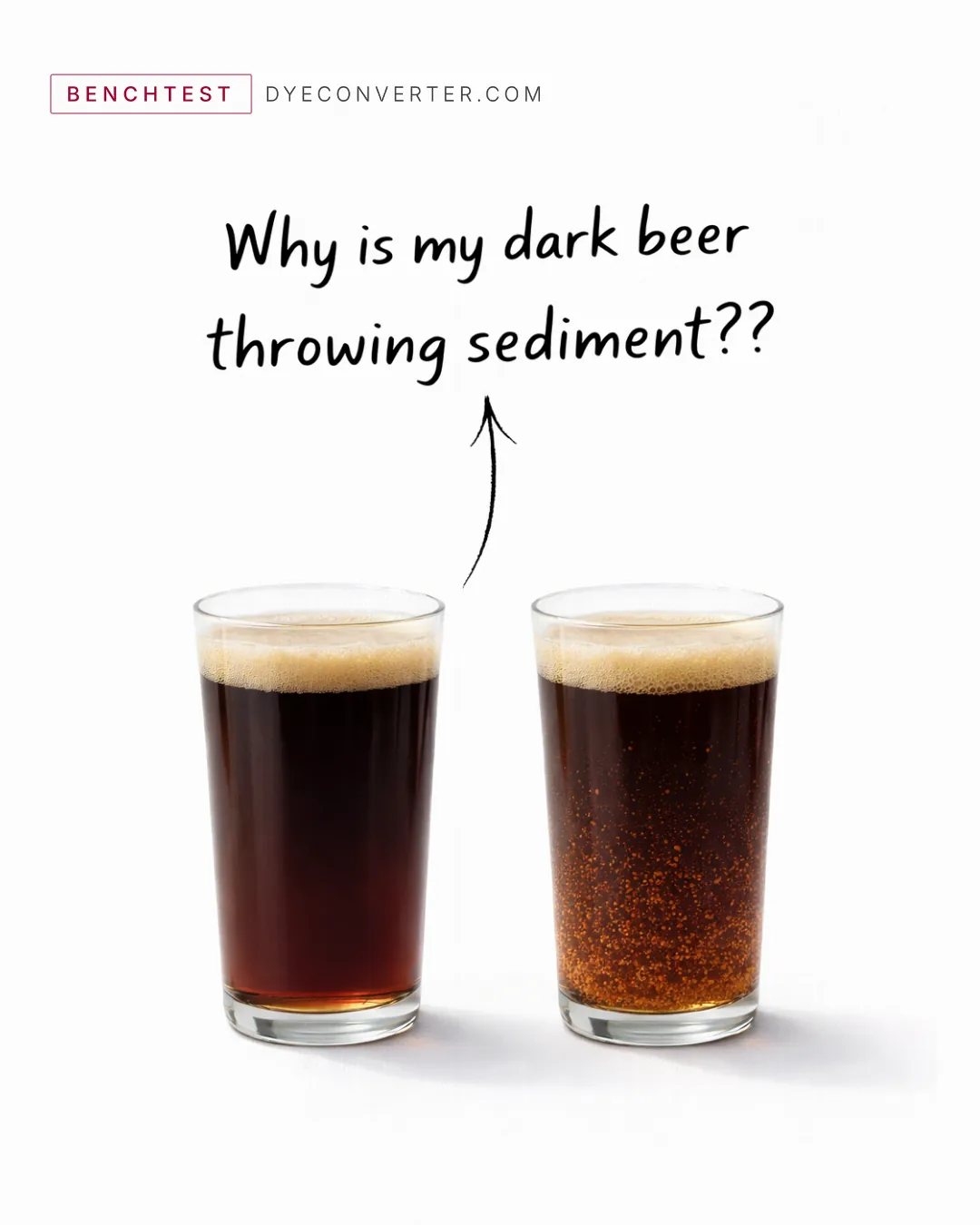
Your dark beer looks great leaving the kettle. By the time it's on the shelf, there's sediment at the bottom and haze you can't explain.
This is one of the most common color defects in brewing. And it has nothing to do with filtration.
Caramel colors are colloidal. They carry an electrical charge. Class 4 caramel has a strong negative charge. Beer proteins from malt carry a positive charge.
Opposites attract. Literally.
The negatively charged color particles bind to the positively charged proteins. They clump. They precipitate. That's your sediment.
The technical fix is a Class III caramel, which carries a positive charge. But in a #CleanLabel world, "Ammonia Caramel" isn't the ingredient list your customers want to see.
The real solution? Use the matrix to color the matrix.
By swapping synthetic caramels for specialty malt extracts or caramelized sugar syrups, you achieve two things:
Ionic Harmony: These plant-based concentrates are naturally compatible with beer proteins. No clumping. No sediment.
Transparent Labeling: You trade an "E-number" or "Caramel Color" for "Malted Barley" or "Cooked Sugar."
Stability doesn't have to come at the cost of your ingredient deck.
DyeConverter™ is built to help you navigate these trade-offs -- matching ionic stability with clean-label demands before the shelf tells you something went wrong.
#futureoffood #cleanlabel #foodfacts