Carmine. The vivid red pigment used in countless candies, yogurts, beverages, and cosmetics.
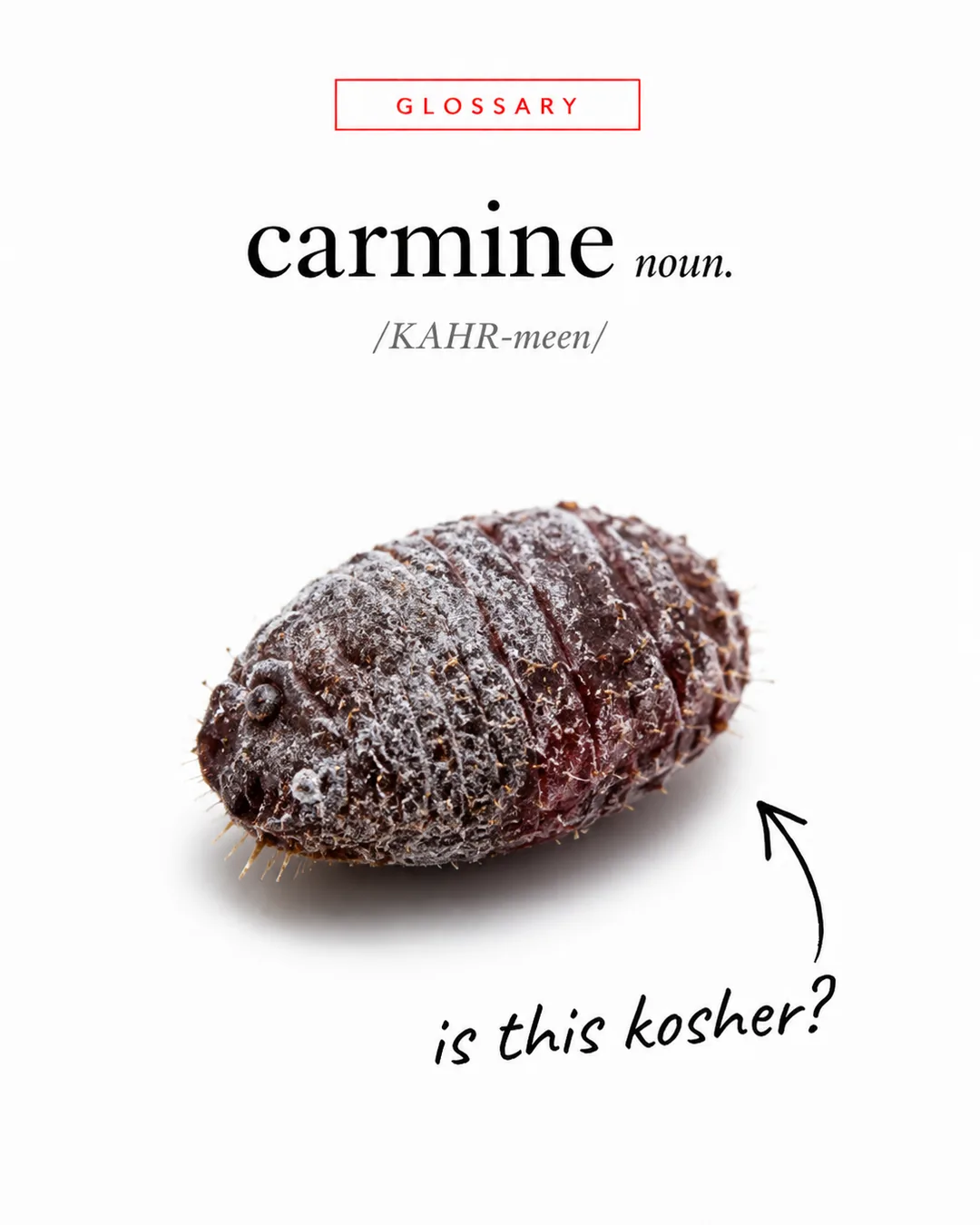
Carmine.
The vivid red pigment used in countless candies, yogurts, beverages, and cosmetics. Sourced from the dried bodies of female cochineal insects, scale insects that live on prickly pear cactus pads.
Pre-Columbian Mesoamerican civilizations were using it before 1500 CE. Spanish conquistadors carried it back to Europe, where it became one of the most valuable exports of the New World, at one point trading higher per-weight than gold. The dye held its monopoly for three centuries before synthetic alternatives emerged in the 1800s.
It is still in active use today. Strawberry yogurt. Some pomegranate juices. Certain artisan-style sausages. Lipsticks and blushes.
Where it gets interesting is the kosher/halal/vegan question. The Orthodox Union and most Conservative kosher authorities do not certify carmine as kosher, because it is an insect derivative. FDA regulations treat it as an animal-derived food additive that requires only the label "carmine" or "cochineal extract." Halal authorities are split. Vegans uniformly reject it.
In 2012, Starbucks publicly removed carmine from its Strawberries & Crème Frappuccino after public pressure. The most visible recent example of a major brand quietly phasing the ingredient out.
It is also one of the most stable natural reds available. Heat-tolerant, light-stable, effective at very low dosage. Which is why it has survived in the food supply despite the controversies.
For brands navigating the trade-offs between natural-color stability and dietary-claim eligibility, the carmine question is exactly the kind of matrix-specific call DyeConverter is built to answer.
#NaturalColorants #FoodScience #CleanLabel #DyeConverter