Aluminum lake. The dye that doesn't bleed.
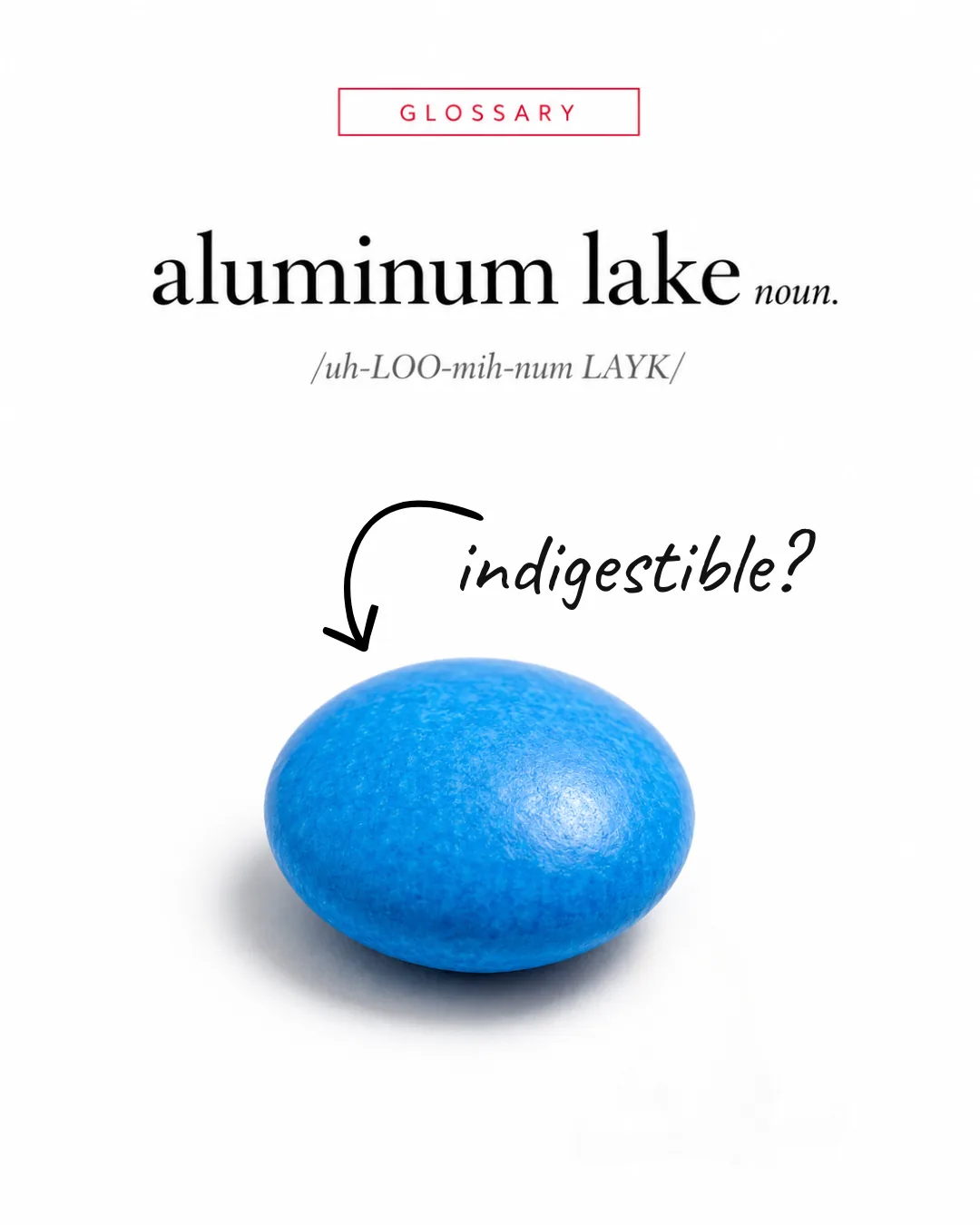
Aluminum lake.
The dye that doesn't bleed. The reason an orange M&M can sit next to a green M&M without either of them turning brown. And -- yes -- indigestible.
What it is: a water-soluble dye bonded to an aluminum salt to make an insoluble pigment. A chemistry trick that turns a color into something that won't dissolve, won't migrate, and won't be absorbed in the gut. It passes through.
Where it lives: M&M coatings. Pill capsule shells. Candy hard-shells. Powdered drink mixes. Anywhere a brand needs color to STAY where it was put.
The FDA-permitted lakes today are mostly built from petroleum-derived dyes -- Red 40 lake, Yellow 5 lake, Yellow 6 lake, Blue 1 lake, Blue 2 lake, Green 3 lake. When the December 2027 phase-out of those parent dyes lands, the lakes are on the same list. Every coated tablet, every printed candy shell, every M&M in scope.
Natural lake alternatives exist (carmine lake leads the category), and natural color systems (beet powder, paprika oleoresin, anthocyanin blends) cover the non-lake applications. All of them behave differently from their synthetic counterparts. Different dose. Different stability. Different migration profile.
This is the first card in a new series: DyeConverter's Glossary. Short-form, factual entries on the chemistry behind the color on your label. The factoid lives on the card. The definition lives in the post.
DyeConverter is built for the brands working out their natural answers before the deadline becomes a recall.
#NaturalColorants #FDA2027 #CleanLabel #DyeConverter