Anthocyanin. A natural plant pigment best known for the deep reds, purples, and blues in blueberries, red cabbage…
Anthocyanin.
A natural plant pigment best known for the deep reds, purples, and blues in blueberries, red cabbage, butterfly pea flower, elderberry, and dark grapes. The chemistry is unusual: anthocyanins shift COLOR depending on pH. Red in acid. Purple at neutral. Blue or green in alkali. Same molecule. Different beakers. Different colors.
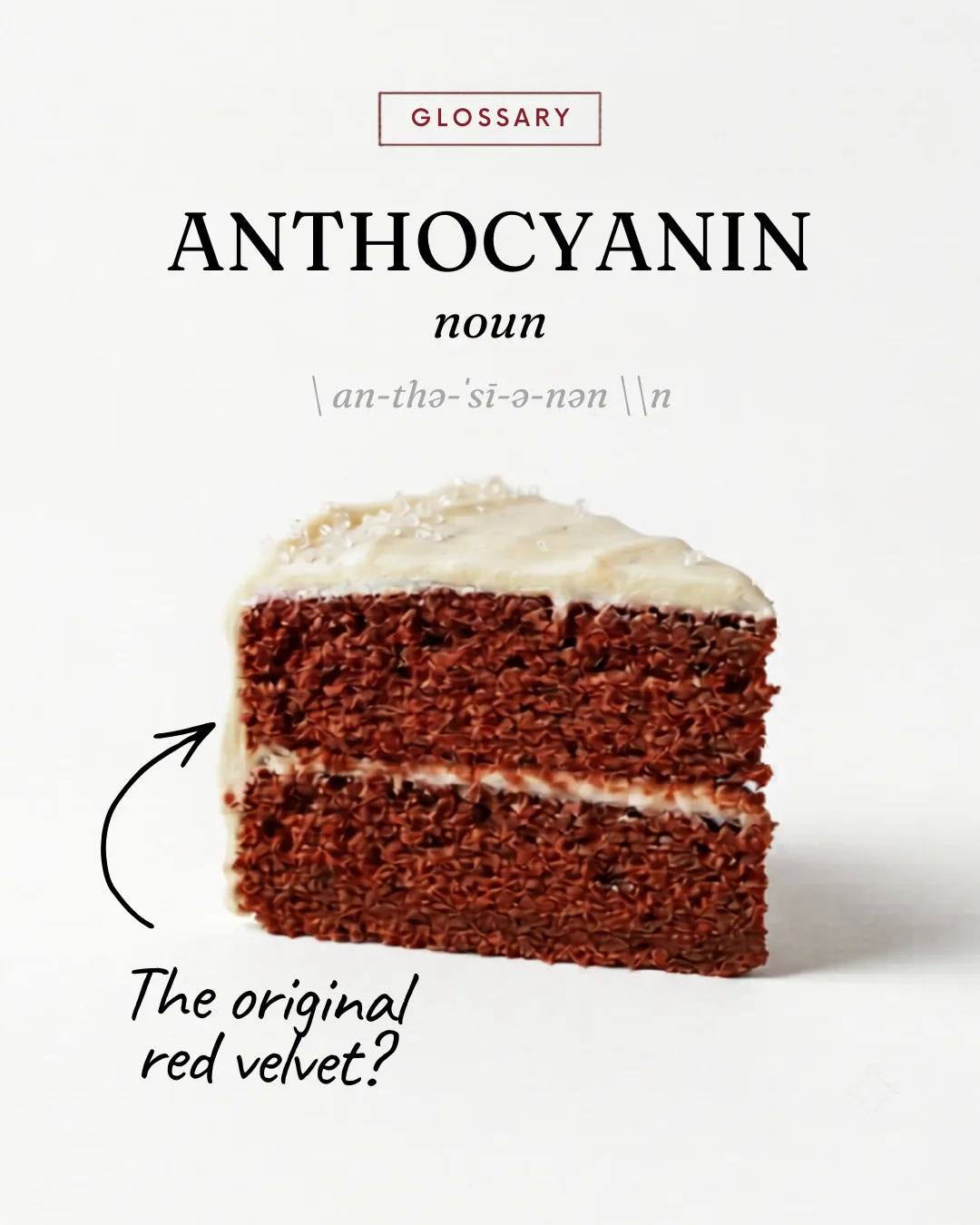
And, as it turns out, partly responsible for the Red Velvet cake your grandmother knew.
Original Red Velvet, the early-1900s version before food dyes were common, used natural non-Dutch-processed cocoa. Natural cocoa contains anthocyanin-class compounds. When the cocoa hit the acidic ingredients in the recipe (buttermilk + vinegar), the anthocyanins shifted toward the red end of their pH spectrum. The result was the subtle reddish-brown hue people called "red velvet."
The cake was named for its velvety texture as much as its color. The vivid red that modern shoppers expect did not arrive until WWII rationing, when beetroot juice was added as a color enhancer. Beetroot's pigment is a betalain, not an anthocyanin. Different chemistry. Different rules. After the war, Red 40 took over.
So anthocyanin is partly responsible for the original Red Velvet's subtle reddish-brown. Just not the bright red that has been on the box for the last fifty years.
Anthocyanins also explain why blueberry yogurt fades, why red cabbage turns blue in tap water, and why butterfly pea tea shifts when you add lemon. The pH chameleon of the natural color world.
For brands working out which natural red survives which matrix, anthocyanin is one of the most beautiful options on the table. And one of the trickiest. pH-sensitive. Heat-sensitive. Light-sensitive. The technical question is never "can we use anthocyanin?" It is "what co-pigment system and matrix engineering does it take to make THIS anthocyanin stable in YOUR product?"
DyeConverter is built for exactly that question.
#NaturalColorants #FoodScience #CleanLabel #DyeConverter