Titanium dioxide. The brightest white in the building, and it adds no color at all.
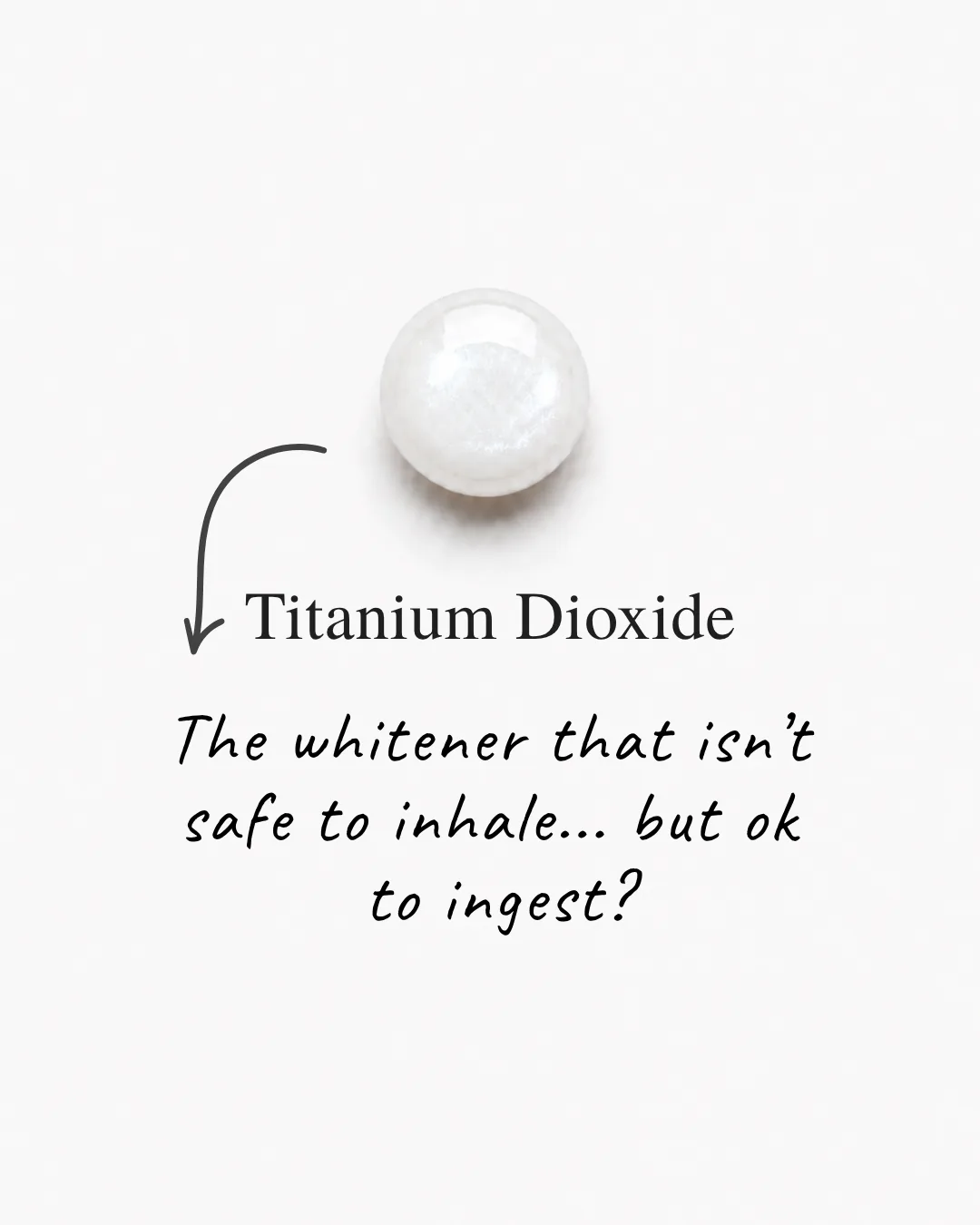
Titanium dioxide.
The brightest white in the building, and it adds no color at all.
It is not a dye like the rest of this lineup. It absorbs no wavelength and tints nothing. It scatters light, and that scattering is what the eye reads as bright, clean, opaque white. The same trick makes it the most-used white pigment on earth: paint, paper, plastic, sunscreen, and the candy shell on the counter.
Here is the part that stops people. The powder carries a workplace warning for the lungs. The International Agency for Research on Cancer lists it as possibly carcinogenic to humans by inhalation, and there are occupational limits on breathing it in. The same compound is cleared by the US FDA as a food additive, up to one percent by weight.
Inhale it: regulated hazard. Eat it: approved.
Europe drew a different line. In 2022 the EU banned titanium dioxide (E171) from food, after its safety authority said it could no longer rule out that the particles damage DNA. The molecule did not change; the risk tolerance did.
For brands reformulating white, it is rarely a one-for-one swap. Opacity without titanium dioxide means rebuilding it from rice starch, calcium carbonate, or milk-derived systems, each behaving differently in the matrix.
DyeConverter is built for exactly that question.
#FoodScience #CleanLabel #FoodAdditives #DyeConverter