Mars is reformulating M&M's without synthetic dye, and two colors have stalled the whole launch: blue and brown.
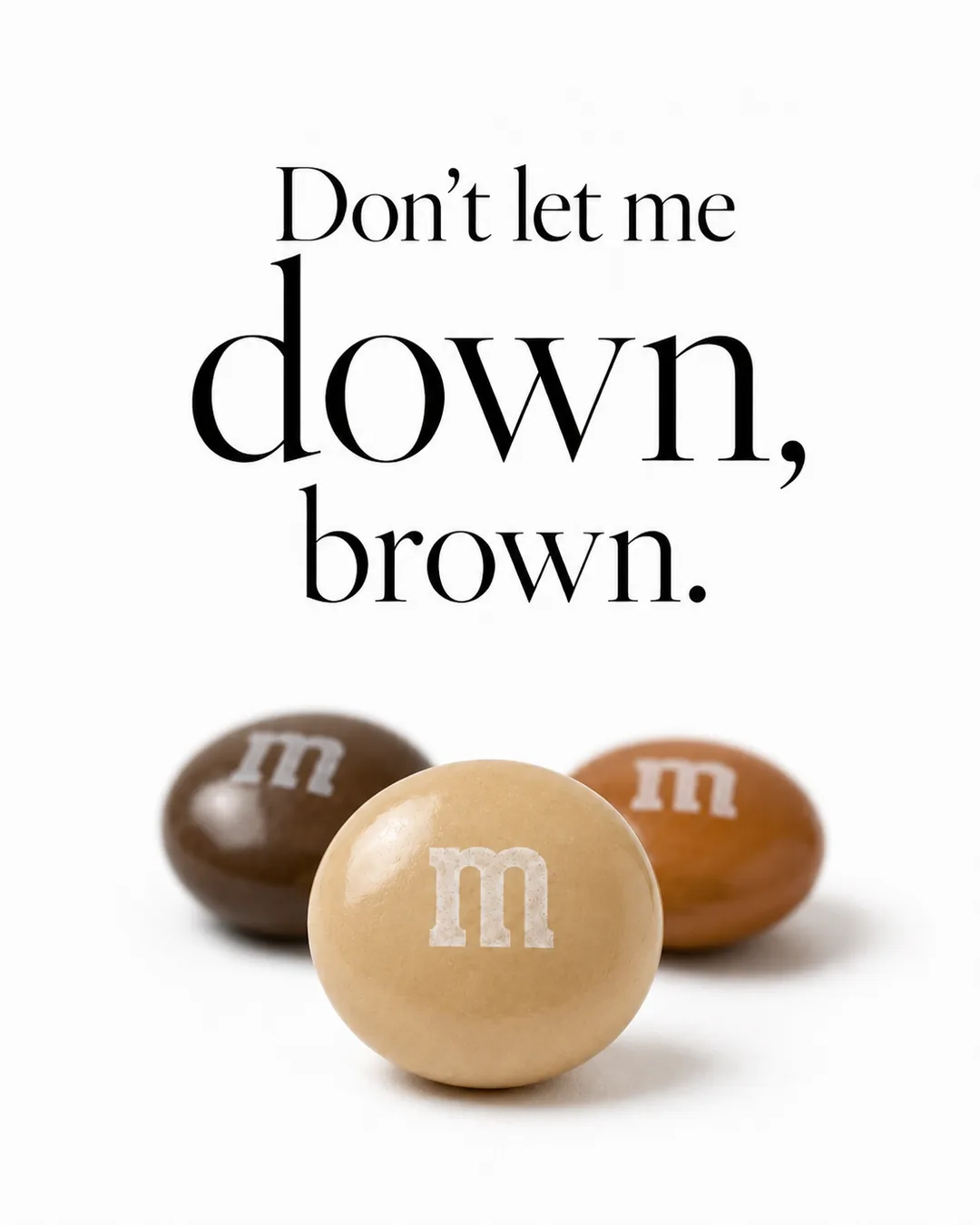
Mars is reformulating M&M's without synthetic dye, and two colors have stalled the whole launch: blue and brown.
Brown looks like the easy one. It is the hardest natural color in the building.
Here's the trick most people miss: brown was never a single dye. The synthetic version was a quiet blend, red plus yellow plus a little blue, stacked until it read as chocolate. Pull the synthetics out and you cannot just drop in one "brown." You have to rebuild the whole stack from naturals.
The good news: the naturals are sitting right there, and they climb the entire range from tan to espresso.
Start with caramel color, Class I. Cheap, stable, water-thin, clean-label simple. On its own it lands a soft, warm tan, the easy end of the spectrum and nearly a drop-in.
Want to go deeper? Layer it. Beetroot pushes it toward mahogany. A whisper of a natural blue like gardenia trues it to a real espresso. Or skip the blend and let one ingredient pull double duty: cocoa, carob, or coffee deliver a deep brown and their own flavor in a single shot, as long as that flavor belongs in the product.
That is the whole secret to brown. Not one magic ingredient, but a short stack of the right ones, tuned to the exact shade and the exact recipe.
Tan is a swap. Espresso is a build. Both are solvable the moment you stop hunting for a single answer.
Brown is the test. Pass it, and the rest of the shelf gets easy.
That is the call I built DyeConverter to make.