Sequence Matters: The donut, the sports drink, and the cereal aren't solving the same problem.
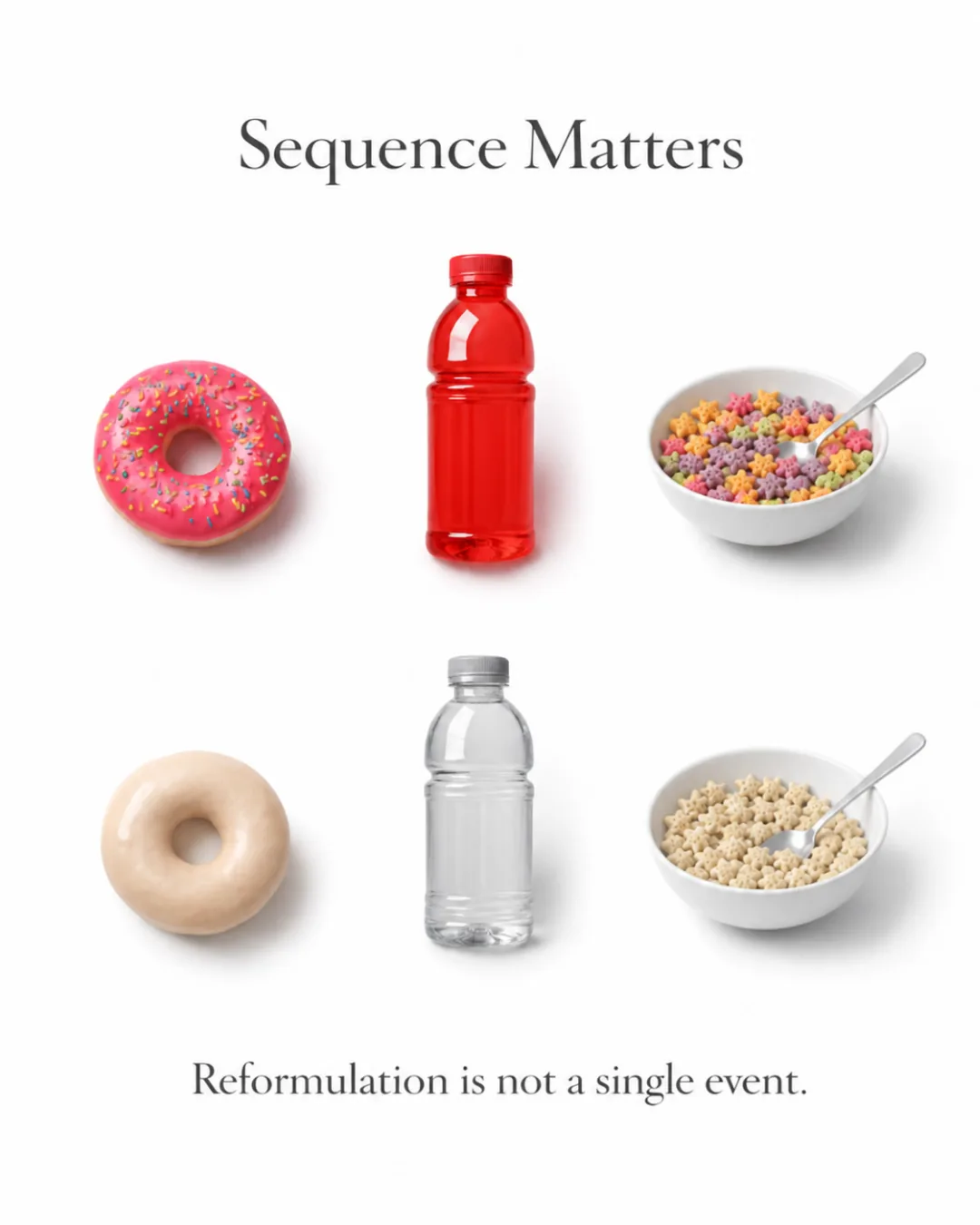
Sequence Matters: The donut, the sports drink, and the cereal aren't solving the same problem. The donut's pink is a surface application. Frosting meets dye after the bake. Short heat exposure, low water activity, and dye sits on top, not in. The reformulator worries about adhesion, freeze-thaw cycles in distribution, and fade under case lights. The sports drink's red is fully dissolved in a low-pH liquid. Citric or lactic acid. Exposed to fluorescent and sun for 18 months on the shelf. The reformulator worries about anthocyanin pH stability, oxidation, light degradation, and mineral chelation. The cereal's stars are dyed at over 300°F during extrusion or surface-coated after. Then they sit dry for a year or more. The reformulator worries about thermal degradation, crumb-color migration, oxidation, and texture. Same FDA mandate. Same color on the label. Three completely different sequences of chemistry to solve. This is what makes the 2027 timeline so deceptive. Brands plan as if "reformulation" is one project. It isn't. It's a different project per category, per matrix, and per shelf-life ask. DyeConverter™ was built to hold all of those sequences at once. The donut sequence. The beverage sequence. The cereal sequence. Each with its own pH window, thermal limit, candidate ingredient set, and regulatory map. Reformulation is not a single event. It's a portfolio of them. #CleanColor #DyeConverter #FDA2027