Same color. Same dose. So why does the low-fat mac and cheese look like it needs a nap?
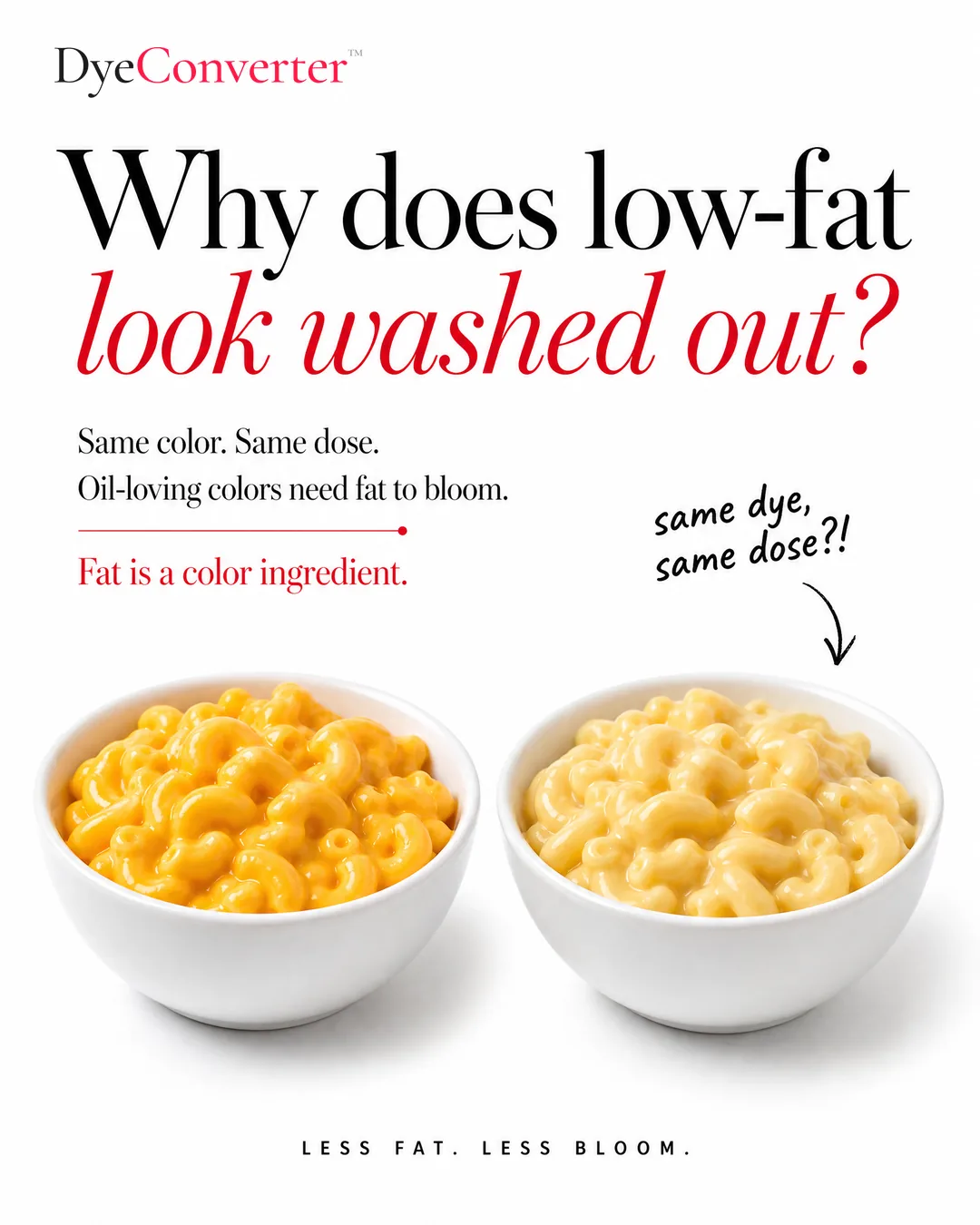
Same color. Same dose. So why does the low-fat mac and cheese look like it needs a nap?
Blame the fat. Or rather, the missing fat.
That golden orange usually comes from annatto, paprika or beta-carotene. They're carotenoids, and carotenoids are oil-lovers: they dissolve in fat and bloom there into that rich, saturated color. Cut the fat and there's less room for them to spread out, so the same dose reads paler and chalkier.
Fat is doing more work than it gets credit for:
• It decides which phase the color lives in. Oil-soluble and water-soluble colors don't trade places easily. • Fat droplets scatter light, which changes how bright or opaque the sauce looks. • When fat oxidizes, carotenoids go down with it, so rancidity and fading travel together.
The takeaway: a reduced-fat reformulation is also a color reformulation. Sometimes the fix is a different form of the same pigment, like a water-dispersible emulsion. Sometimes it's a new dose, or a new pigment entirely.
DyeConverter™ matches natural colors to the whole recipe, fat included, so the lighter version still looks like the one people love. Real dyes from real suppliers.
#FutureOfFood #DyeConverter #FoodScience