Chlorophyll. Yes, the high-school biology one.
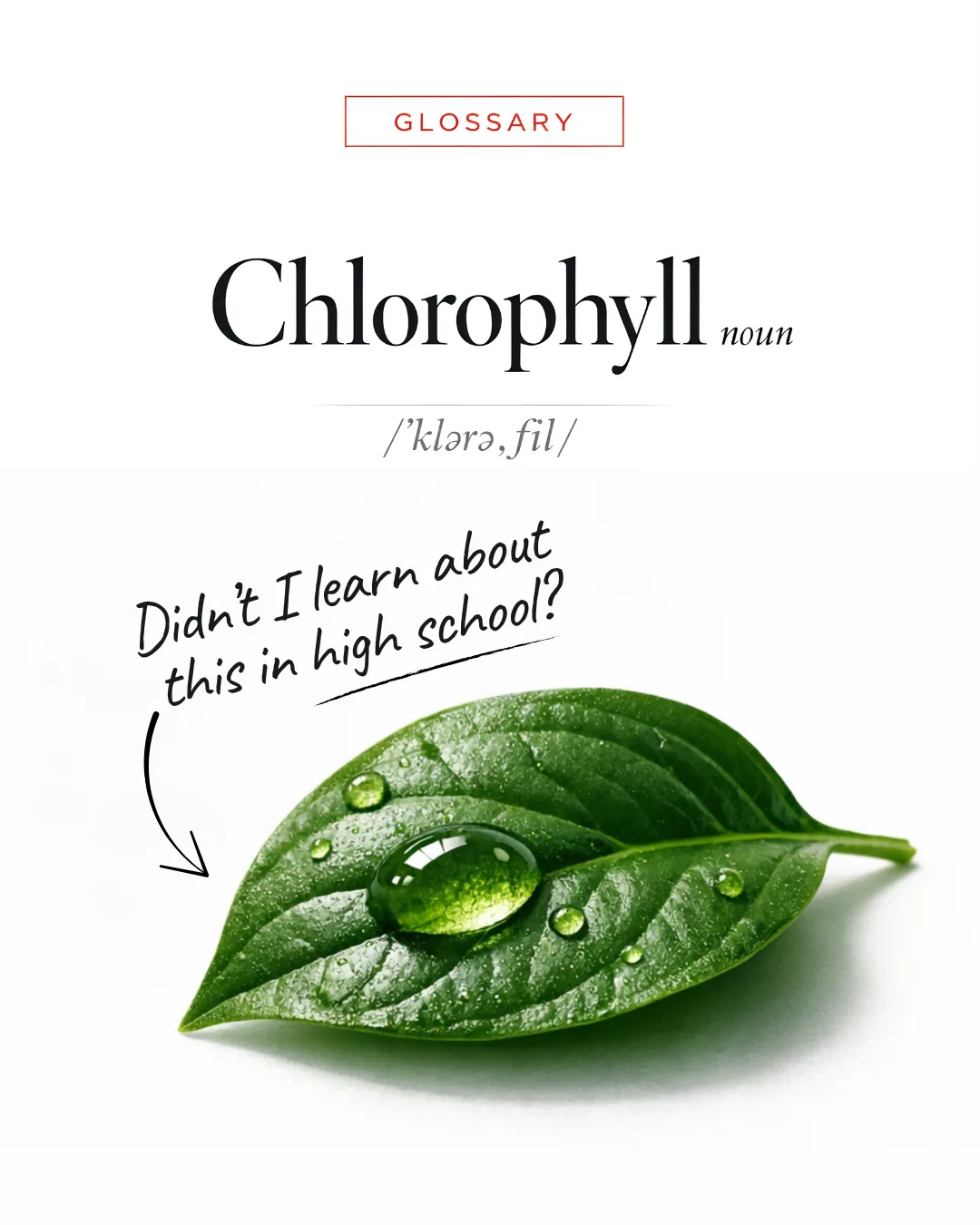
Chlorophyll.
Yes, the high-school biology one. The green pigment plants use to turn sunlight into sugar via photosynthesis. Same molecule, same function, found in every leaf you have ever pulled off a plant.
And one of the most temperamental natural food colorants on the planet.
Chlorophyll is a porphyrin ring chelated to a magnesium ion. The magnesium is what makes it green. Heat the chlorophyll, especially in an acidic matrix, and the magnesium pops out, replaced by a hydrogen ion. The molecule survives. The vivid green does not. What looked like fresh spinach turns olive. Pesto goes army-green within hours. Frozen broccoli holds its color longer than canned for exactly this reason.
Dairy is the other classic chlorophyll killer. The pH and the casein interaction turn matcha lattes gray, mint ice cream toward beige, herb-blended yogurt to a muddy green-brown. The chemistry is unsentimental about brand intent.
For commercial use, the version that survives is chlorophyllin -- a water-soluble copper-substituted derivative where the copper ion replaces magnesium permanently. It is more stable to heat, light, and pH. Listed as E141 in the EU. The natural-color trade-off is that consumers reading the label see "copper" and pause.
For brands pursuing a true natural green that needs to hold through processing and shelf life, chlorophyll is rarely the right answer alone. Blends with spirulina, matcha, or spinach concentrate -- buffered against pH drift, sometimes encapsulated -- are usually where the matrix work lands.
DyeConverter is built for exactly that matrix-specific question.
#NaturalColorants #FoodScience #CleanLabel #DyeConverter