Caramel color. It sounds like something off a dessert menu.
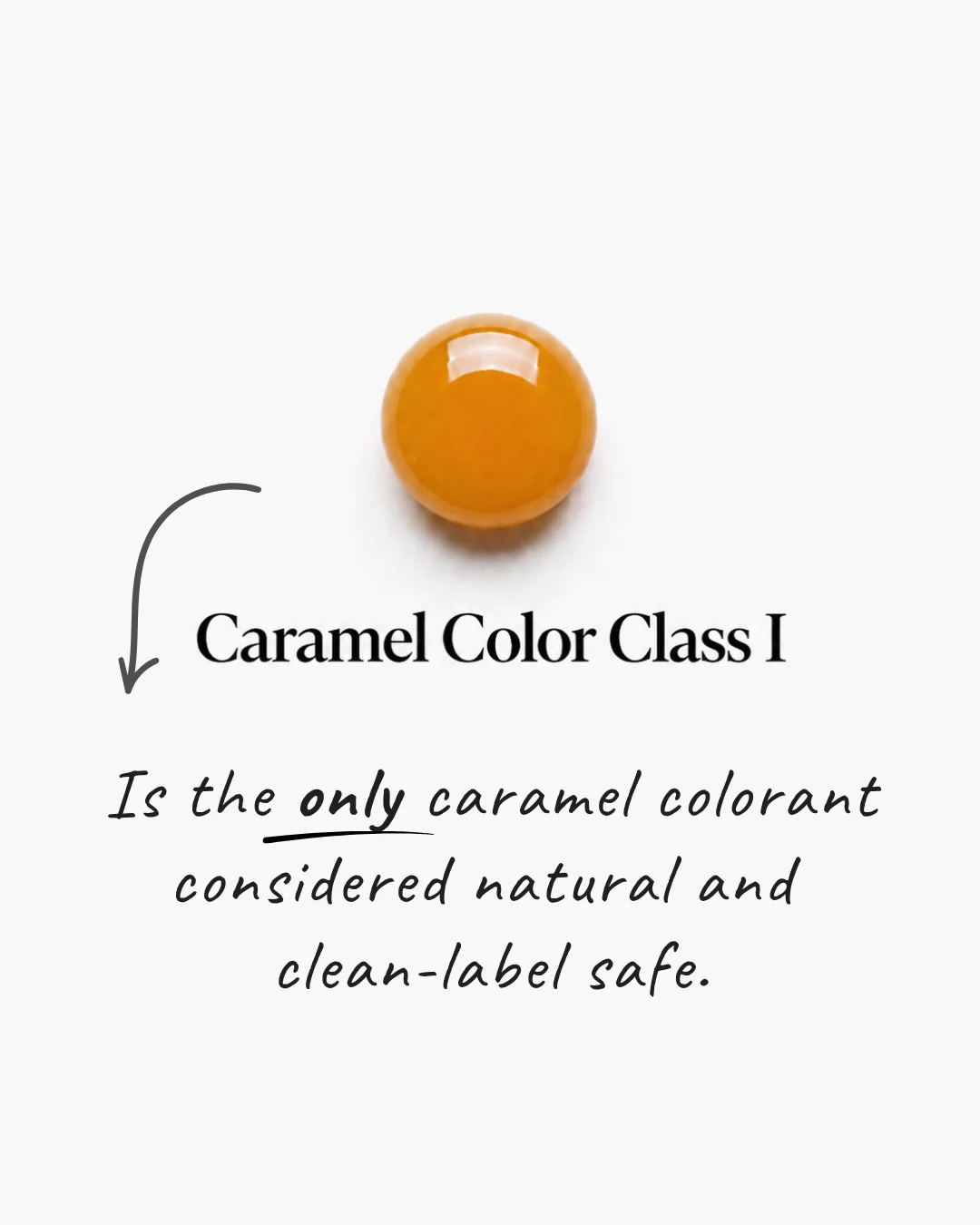
Caramel color.
It sounds like something off a dessert menu. Most of the time it is industrial color chemistry.
There is not one caramel color; there are four. The only thing they share is a brown tone. What separates them is what goes into the reaction.
Class I, plain caramel (E150a). Heat and carbohydrate, nothing else; no ammonia, no sulfites. It is the only one of the four made without either, which is why it is the one positioned for natural and clean-label work.
Class II, caustic sulfite caramel (E150b). Made with sulfites. Shows up in some spirits and vinegars.
Class III, ammonia caramel (E150c). Made with ammonia compounds. Common in beer, soy sauce, and gravies.
Class IV, sulfite ammonia caramel (E150d). Made with both sulfites and ammonia. This is the one in cola and most soft drinks, and the ammonia process can leave behind 4-methylimidazole, the byproduct California placed on its Proposition 65 list.
So the brown in the most consumed soft drink on earth is the class carrying the contaminant question, while the one closest to a kitchen pot, plain caramel, is the only one that fits a clean label.
Same two words on the label. Four very different stories underneath.
That gap between the word and the chemistry is exactly what DyeConverter exists to close.
#FoodScience #CleanLabel #FoodAdditives #DyeConverter